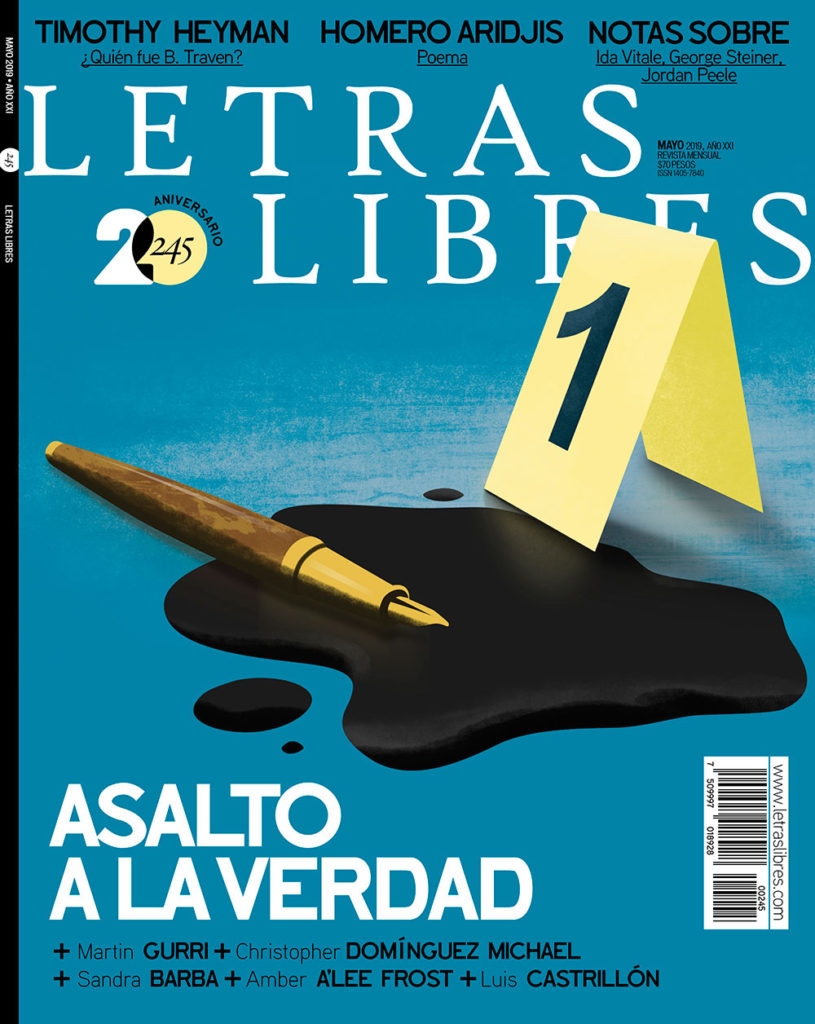
B. Traven, the naturalized Mexican who wrote in German and English, was an internationally best-selling novelist many of whose works were made into into movies, most famously The Treasure of the Sierra Madre, starring Humphrey Bogart. In Mexico he remains immensely respected: recently, decades after his death, his life and works were celebrated with a splashy, crowd-pleasing show at Mexico City’s Museo de Arte Moderno. But who was B. Traven? Where did he come from? Why, really, did he come to Mexico? And why was he so reclusive, and so fond of pseudonyms?
Many a member of the literary cognoscenti will tell you that the B. stood for Bruno. Not so. Ret Marut? Not so. Was he Prussian, Bavarian, Norwegian, American? Any number of claims and theories have been put forth over the years, one or more of which you can ever and always find, depending on who last logged in to edit that Maoist mashup otherwise known as Wikipedia.
In this month’s Letras Libres, 50 years after his death in Mexico City, B. Traven’s true identity has been revealed, and this time by someone whose closeness to the subject and research are flat-out impossible to beat: Timothy Heyman, who together with his wife, B. Traven’s stepdaughter Malú Montes de Oca de Heyman, administers Traven’s literary estate.
Because Traven had wanted it this way, after he died in Mexico City in 1969, his widow claimed that he was the German actor and journalist Ret Marut. But in fact Ret Marut was only another disguise.
Traven’s close friend the cinematographer Gabriel Figuera once claimed Traven was Moritz Rathenau, but for Traven’s biographers, that bit of intelligence seems to have been either overlooked or treated as nothing more than a wisp of a rumor among others. However, Timothy Heyman reveals, B. Traven / Ret Marut was Moritz Rathenau. And more: Moritz Rathenau was the illegitimate son of none other than Emil Rathenau (1838-1915), one of Germany’s richest Jewish industrialists, founder of AEG. His mother was Irish actress Helen Mareck. For his political activities in the violent tumult of post World War I Germany, as Ret Marut, he was condemned to death in 1919, and escaped to remain undercover in Germany. In 1922 his half-brother Walther Rathenau, then Minister of Foreign Relations, was assassinated by an extreme rightwing antisemitic group– an event some historians identify as the beginning of the Holocaust. The following year, as “B. Traven,”– B. for “Plan B”–Moritz Rathenau escaped what would in another decade become Nazi Germany, and– long story short– he lived a long life as an international literary star in wildly productive seclusion in Mexico.
Timothy Heyman’s article with all the details appears in the current issue of Mexico’s most prestigious magazine, Letras Libres.
My favorite rare book historian Michael F. Suarez, SJ gives this excellent talk for TEDxCharlotteville:
#
AND FROM THE MADAM MAYO ARCHIVES…
Poco a poco (bit by bit), since January of this year I have been migrating selected and updated posts from Madam Mayo’s original Google Blogger platform to self-hosted WordPress here at www.madam-mayo.com. Madam Mayo goes all the way back to the Cambrianesquely Blogasonic Explosion, I mean, um, 2006… This past week I’ve worked a bit on the translation posts, among them:
TRANSLATING ACROSS THE BORDER Originally posted October 29, 2015 Edited Transcript of a Talk by C.M. Mayo at the annual conference of the American Literary Translators Association (ALTA)
Muchísimas gracias, Mark Weiss, and thank you also to my fellow panelists, it is an honor to sit on this dias with you. Thank you all for coming. It is especially apt to be talking about translating Mexican writing here, a jog from the Mexican border, in Tucson—or Tuk-son as the Mexicans pronounce it.
I grew up in Northern California and was educated in various places but mainly the University of Chicago. As far as Mexico went, until I was in my mid-twenties, I had absorbed, to use historian John Tutino’s term, the “enduring presumptions.” Translation: I had zero interest in Mexico.
You know that old saying, if you want to make God laugh, tell her your plans?
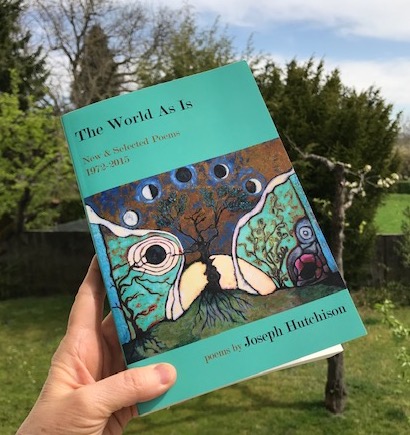
One of the blogs I’ve been following for a good long time is poet Joseph Hutchison’s The Perpetual Bird. We have never met in person but I feel as if we have; moreover, we have friends in common, among them, poet, essayist and translator Patricia Dubrava– and if my memory serves, it was her blog, Holding the Light, that first sent me to The Perpetual Bird. Here on my desk I have Hutchison’s collection of his works of several decades,The World As Is. From publisher NYQ Books’ catalog copy:
“In The World As Is Colorado Poet Laureate Joseph Hutchison gives voice to pain and passion, sorrow and joy, longing and exhalation. His poems seem to result from a wrestling with angels–the angels of transformation we all must confront to survive what Robert Penn Warren called ‘this century, and moment, of mania.'”
From The World As Is (originally in The Rain at Midnight), posted here by permission of the author.
THE BLUE by Joseph Hutchison
In memory of Michael Nigg, April 28, 1969 – September 8, 1995
The dream refused me his face. There was only Mike, turned away; damp tendrils of hair curled out from under the ribbed, rolled brim of a knit ski cap. He’s hiding
the wound, I thought, and my heart shrank. Then Mike began to talk— to me, it seemed, though gazing off at a distant, sunstruck stand of aspen that blazed against a ragged wall
of pines. His voice flowed like sweet smoke, or amber Irish whiskey; or better: a brook littered with colors torn out of autumn. The syllables swept by on the surface of his voice—
so many, so swift, I couldn’t catch their meanings … yet struggled not to interrupt, not to ask or plead— as though distress would be exactly the wrong emotion. Then a wind
gusted into the aspen grove, turned its yellows to a blizzard of sparks. When the first breath of it touched us, Mike fell silent. Then he stood. I felt the dream letting go, and called,
“Don’t!” Mike flung out his arms, shouted an answer … and each word shimmered like a hammered bell. (Too soon the dream would take back all but their resonance.) The wind
surged. Then Mike leaned into it, slipped away like a wavering flame. And all at once I noticed the sky: its sheer, light-scoured immensity; the lavish tenderness of its blue.
C.M. MAYO: You have been the Poet Laureate of Colorado from 2014. What does that mean, and what does that involve? (And how do you look back on that experience now?)
JOSEPH HUTCHISON: As I write this, I’m nearing the end of my Laureate term. It’s officially a 4-year term but mine was extended by a year to bring the selection of the next Laureate in line with Colorado’s political calendar. The PL is chosen by the Governor, and the organizations that administer the program—Colorado Humanities and Colorado Creative Industries—wanted to be sure the new Governor would have that opportunity.
Being selected was a great honor, of course, especially because it was John Hickenlooper who made the choice. He’s a real reader, an English major who started out with the aim of becoming a writer but decided early on that it wasn’t for him. Writing creatively, after all, is more of a calling than an occupation for most of us. If you’re not obsessed, what would be the point?
The best aspect of serving as the state Laureate has been traveling around the state and meeting lots of poets and poetry readers in communities large and small. I was born in Denver, which sits on the eastern plains at the foot of what we call “the Front Range”: 300 miles of the Rocky Mountains stretching from southeastern Wyoming to more-or-less the New Mexico border. Nearly the poets I knew coming up were in this region. So it’s been an exhilarating experience to find so many excellent poets within and on the western side of the Front Range. There is a poetic renaissance going on across Colorado, at the community level, and I’ve gotten to witness it close up. That’s been the main privilege.
I’ve also helped to shape the Poets section of the online Colorado Encyclopedia, which I’d never have been able to do without the PL cachet. The project is looking for more funding at the moment, but in the long run I’m sure it will serve as a resource for teachers around the state. I’ve always thought that the way poetry is taught often ruins it for young readers. It’s seldom taught the way fiction is taught—as a source of knowledge with deep roots in the human psyche; instead, it’s used as an instrument to teach about techniques: meter, rhyme, metaphor, symbolism … blah blah blah. No wonder so many people recoil from poetry once they’re out of school!
Anyway, I’m hoping the Encylopedia will help teachers connect with the poets in their own community and bring them and their work into their classes. I was 22 and in college before I saw a living poet—it happened to be Robert Bly; until then I’d been dabbling with poetry, but after that experience, after I witnessed what poetry could be, I was hooked. My fondest hope that my appearances around the state may have helped some fledgling poet discover that deeper commitment, and maybe encourage people in some community or other to honor that poet’s work when it surfaces in their midst.
C.M. MAYO: One of the things that struck me in your bio is that, although you teach in a university, you describe yourself as a community poet “using language that is at once direct and layered.” Can you talk a little about some of the poets you have taught and/or read who are not part of the academic world?
JOSEPH HUTCHISON: A quick sketch of my writing life. I started writing poetry in high school, continued in college, went on to an MFA. After grad school I floundered—too credentialed to teach in Denver area public schools (teacher glut), under-credentialed to teach full time in a college (no yen for a PhD). Wanted to be a working writer but could write only poetry, which as everyone knows pays nada. Worked in a college bookstore for a several years, buying used text books and later university press and mass market paperbacks. Got invited to apply for a writing job in a bank marketing department (7 years), then a real estate network (3 years), then a software company (2 years), then went out on my own for 2 years, then created a “boutique” marketing company with my wife which sustained us, more or less, for 22 years. All along I was writing and publishing poetry, giving readings, conducting workshops—and teaching off and on as an adjunct. It was only in 2014, just after I had turned 64, that I entered the Academy full time to direct a program in which I had taught as an adjunct once or twice a year for more than a decade.
My point is that I never been an “academic” poet and never written what I think of as academic poetry. To be honest, I’m not sure what academic poetry is, though—like pornography—I feel like I know it when I see it! Essentially, I think of it as poetry written for graduate students, which speaks to the concerns of graduate students: their fascination with “schools” and the recondite reaches of aesthetic theory. In The Satire Lounge I wrote a poem lampooning this kind of stuff, and not just for fun.
The fact that the audience for poetry seems to be growing is a testament to the resurgence of poets who reach beyond schools and theories to address readers where they live. The poets of Merwin’s generation did this—think of Levertov and Rich, Kinnell and Wright and Bly*—and I think we’re seeing a return (with differences, of course) to this kind of poetry.
I have so many poets in mind that it’s probably best just to list some of them, including a few from my own generation: Ted Kooser, Louise Glück, Kay Ryan, Li-Young Lee, Bill Knott, Yusef Komunyakaa, Mark Irwin, Jared Smith, Carl Phillips, Ada Limón, Terence Hayes, Wayne Miller, Ilya Kaminsky, Tracy K. Smith, Wendy Videlock, Rosemerry Wahtola Trommer….
This is kind of silly, now that I think of it. These are just some of my personal favorites. And who knows if they’d all get along if put in the same room together!
C.M. MAYO: How might you describe the ideal reader for your poems and, in particular, for your collection of new and selected poems 1972-2015, The World As Is?
JOSEPH HUTCHISON: Someone capable of being moved emotionally and intellectually by language that aims to express those moments with the inner world and the outer world meet.
C.M. MAYO: Can you talk about which poets have been the most important influences for you as a poet and writer—and which ones you are reading now?
JOSEPH HUTCHISON: Honestly, my earliest poetic influences were Bob Dylan, Paul Simon, and Joni Mitchell—I took up guitar but discovered I had little talent for it.
On the more formal side, I would have to say, in poetry and in no particular order: T. S. Eliot, Walt Whitman, William Blake, Robert Browning, Robert Bly, W. S. Merwin (both his own poems and his translations), Galway Kinnell, Denise Levertov, James Wright, Theodore Roethke, Rilke, Tranströmer, Neruda, Paz, Miłosz, Cavafy, Seferis, Zbigniew Herbert, Zagajewski, Szymborska.
In literature broadly speaking: Hemingway, Fowles, Márquez, Dürrenmatt, Cortázar (the short stories), Raymond Carver, Joseph Campbell, David Loy.
C.M. MAYO: What is the best, most important piece of advice you would give to a poet who is just starting to look to publish in magazines and perhaps publish a first book?
JOSEPH HUTCHISON: Consider your own reading passions among your contemporaries and the generation just prior. Pick maybe 10 whose aesthetic ballpark you feel you’re playing in yourself. Then look at their Acknowledgments pages and see where they’ve published. Track down those publications and see if they make sense for you. Then submit.Submit over and over. When a batch of poems bounces back (this willhappen), read them over, make any changes that have become obvious in their time on the road, then send the batch out again. Do this over and over and journal publication will almost certainly come your way.
I have no good advice for book publication. I despise contests, though I’ve entered them a few times and had a manuscript picked up only once. My other books have come about via query letters or by invitation from a publisher who saw my work in a journal or anthology.
I do recommend that you create a blog. I believe I would never have become PL without The Perpetual Bird, the blog I started in 2008. Since becoming PL, I haven’t kept up with it the way I should, and it’s one of the things I look forward to getting back to!
From The World As Is (originally in House of Mirrors), posted here by permission of the author.
CITY LIMITS by Joseph Hutchison
For Melody
You’re like wildwood at the edge of a city. And I’m the city: steam, sirens, a jumble of lit and unlit windows in the night.
You’re the land as it must have been and will be—before me, after me. It’s your natural openness I want to enfold me. But then you’d become city; or you’d hide away your wildness to save it.
So I stay within limits—city limits, heart limits. Although, under everything, I have felt unlimited Earth Unlimited you
“I do recommend that you create a blog. I believe I would never have become PL [Poet Laureate] without The Perpetual Bird, the blog I started in 2008.”
C.M. MAYO: If a reader who knew nothing of your work were to read only one poem of yours, which would you suggest, and why?
JOSEPH HUTCHISON: This is a tough one! I have personal favorites but have no idea what any given reader might think of them. Off the top of my head, I’d suggest “Touch,” from The World As Is. It’s a sestina, the only successful one I’ve ever written, and speaks on multiple levels to the political and cultural moment we’re in and have been in for a good two decades, if not longer. It’s one that audiences at readings always respond to, which is one indication that it may be worth reading on the page.
C.M. MAYO: You have been a consistently and remarkably productive poet and writer for many years. How has the Digital Revolution affected your writing? Specifically, has it become more challenging to stay focused with the siren calls of email, texting, blogs, online newspapers and magazines, social media, and such? If so, do you have some tips and tricks you might be able to share?
JOSEPH HUTCHISON: I wouldn’t say I’ve been consistently productive. I don’t have a writing routine, but when a poem does rear its Hyacinthine head, I become obsessive—preoccupied, distracted—and I pretty much stop answering emails. I have my blog set up so that my posts automatically flow through to a few social media sites, but I don’t generally visit those sites myself, even less so now that I’ve turned off notifications. Unfortunately, I follow numerous sites for political and poetical news, so that when a poem’s finished, I have to wade through days of unread articles. Overall, I’d say that I don’t feel much of a stake in social media, which is generally antisocial and trivializing. I don’t consider it a writerly medium.
“I don’t feel much of a stake in social media, which is generally antisocial and trivializing. I don’t consider it a writerly medium.”
From The World As Is (originally in The Earth-Boat), posted here by permission of the author.
GUANÁBANA by Joseph Hutchison
After Hurricane Gilbert, this place was only shredded jungle. Now it’s Jesús and Lídia’s casa,
built by him, by hand, weekends and vacations, the way my father built our first house. Years
we’ve watched the house expand, two rooms to three, to four, to five. The yard, just a patch of gouged
sand and shattered palmettos once, is covered now in trimmed grass, bordered by blushing frangipani
and pepper plants—jalapeños, habaneros—and this slender tree Jesús planted three years back,
a stick with tentative leaves then out of a Yuban coffee can, but now thirty feet high, its branches laden
with guanábana—dark green pear-shaped fruit with spiky skin and snowy flesh, with seeds
like obsidian tears. Jesús carves out a bite and offers it on the flat of his big knife’s blade:
the texture’s melonish, the taste wild and sweet—like the lives we build after hurricanes.
C.M. MAYO: And another question apropos of the Digital Revolution. At what point, if any, were you working on paper? Was working on paper necessary for you, or problematic?
JOSEPH HUTCHISON: I still work on paper. I write by hand, with different pens (ballpoint or felt tip, in various colors, depending on my mood), scribbling in notebooks—I sometimes have trouble reading my own writing—and get a poem pretty far along before I type it into Word; even then, I print out each draft and scribble in the margins, draw arrows, question marks, exclamation points, notes-to-self (“Look this up,” “Feels like a quote,” “Weak…,” “Expand…,” etc.): a physical dialogue with the page. I have tried off and on to write on screen but have never succeeded. I read every line aloud as I’m revising (I do this with most prose, too), which is why I end up revising in different locations: I move to wherever my muttering won’t bother my wife. So yes, paper is necessary. When I think of a great poet like A. R. Ammons composing on a typewriter, I confess to feeling baffled.
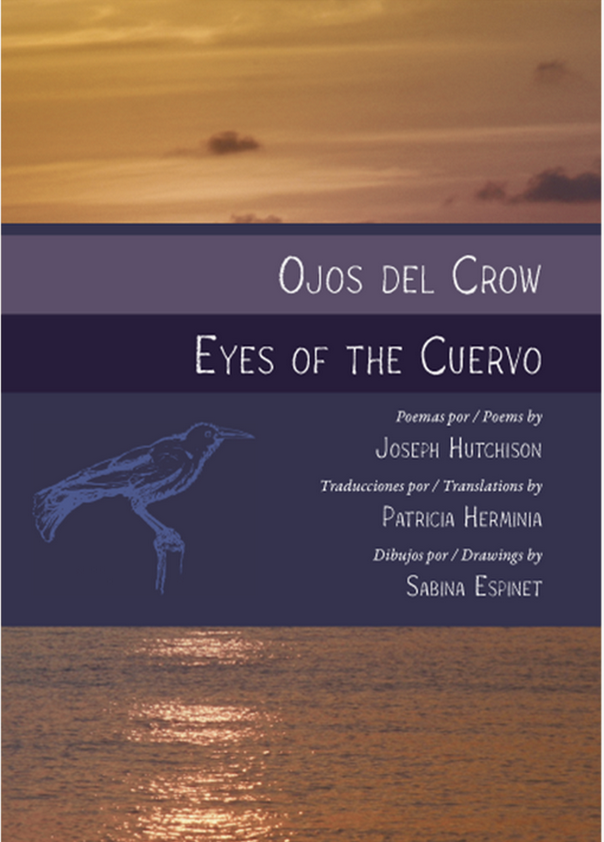
C.M. MAYO: You have recently brought out a very unusual book, the bilingual Ojos del Crow / Eyes of the Cuervo. Can you talk about this a bit, and what prompted you to write it?
JOSEPH HUTCHISON: This is a bit of a long story.
To celebrate our first wedding anniversary, my wife Melody and I went to a beautiful, small seaside resort on the Caribbean coast of Yucatán called Capitán Lafitte, situated between Puerto Morelos and Playa del Carmen. We fell in love with it and started going back every year around our anniversary.
A few years into that routine, our business ran into some problems and we figured we’d have to forgo our annual trip. But Melody came up with the idea of doing a yoga retreat, which she called Yoga Fiesta. This venture essentially paid for our vacation.
When Capitán was severely damaged two years in a row, the owners sold the property, but one of them bought a less damaged hotel a couple of kilometers south, restored it, and opened up the following year as Petit Lafitte. All of our friends from Capitán came back to work at Petit, and Melody moved Yoga Fiesta there as well. (This April will be the 15thannual Yoga Fiesta!) Anyway, the two Lafittes have been inspirational for me, in terms of the natural beauty of that coast, the richness of Mayan culture, and the many friendships that we’ve enjoyed there.
Over the years, I’ve written many poems about the place and the people, and in 2012 a wonderful small press called Folded Word published a selection of these Mexico poems in a book called The Earth-Boat.
A few years later, Patricia Herminia, a former student and good friend of mine, who had been living in San Miguel de Allende and working as a professional translator, moved back to Colorado. She’d seen a copy of The Earth-Boat and wanted to translate the poems into Spanish. I revised a few of the poems and added a few more from my stash, then Patricia and I spent several months off and on bringing them over into Spanish. Another friend, the fine artist Sabina Espinet, provided some evocative illustrations, and Eyes of the Cuervo / Ojos del Crow was born. I consider it an homage to a region that is struggling to maintain its beauty and integrity against a tidal wave North American money.
C.M. MAYO: What’s next for you as a poet and writer?
JOSEPH HUTCHISON: Over the years, as I pulled together poems for various books, I often found that I had to set aside poems that felt worthy but just didn’t fit into the arc of a particular collection. So I’ve “rescued” some of those older poems and am working to see what kind of book they make. So far, so good.
I’m also working on adapting some of my teaching materials into a small book on writing poetry. It’s always seemed to me that we try to use the vocabulary of criticism to talk about the creative process, but the terms are inadequate. Critics analyze (from the Greek root meaning “a breaking up, a loosening, releasing”), while poets synthesize (from the Greek root meaning “put together, combine”). These processes are opposed to one another, and it makes no sense to me that we should approach the creative process using the tools and concepts of criticism. On the other hand, who needs another book of this kind?
*
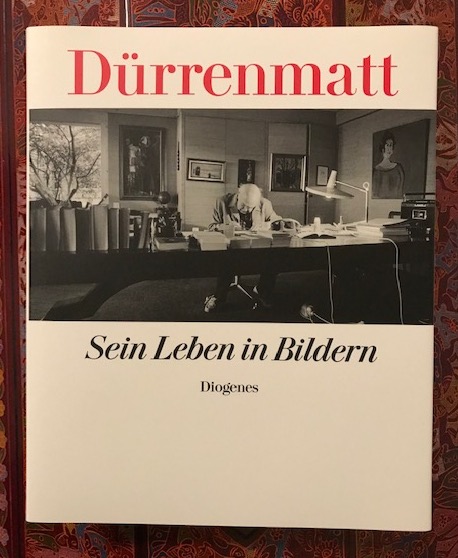
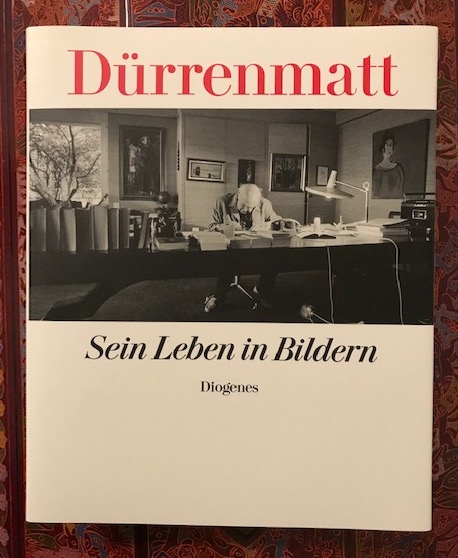
C.M. MAYO: I recently posted on a visit to the home/ museum of Swiss German writer Friedrich Dürrenmatt [the post is here; scroll down to the end for the part about Dürrenmatt], which was prompted by Hutchison’s recommendation, so I asked him:
Which one of Dürrenmatt’s works would you recommend an English-language reader to start with?
JOSEPH HUTCHISON: I suggest The Judge and His Hangman and Suspicion, which are published together as The Inspector Barlach Mysteries. Dürrenmatt’s novels are addictive, frightening and comic by turns, as are his plays. His essays on art, literature, philosophy, politics, and the theater make exhilarating reading, too!
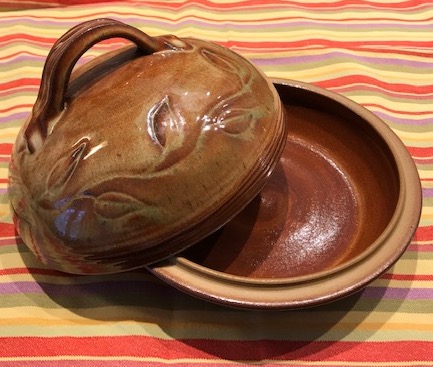
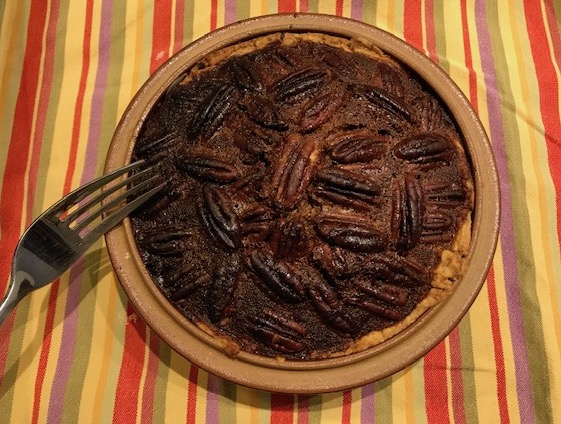
What’s a Texas pecan pie for dieters? It’s the same as the normal pie– loads of pecans, butter, and sugar– but it’s a tiny pie. And I happen to have the perfect tiny Texas pie dish for it– a work of art by Alpine, Texas-based ceramic artist Judy Howell Freeman. It’s one of the loveliest pie dishes I have ever seen. My photo does not do it justice.
C.M. MAYO’S TEXAS PECAN PIE FOR DIETERS (For a standard-sized pie, double this recipe)
Butter Crust: 1 1/4 cup flour 1 tablespoon sugar dash of salt 1/2 cup butter cut into itty bits 3 tablespoons ice water >>Mix it all up! Squoosh it and roll it until it forms a ball; then roll it flat (like a thick little frisbee); then wrap it in plastic or pastry paper and park it in the fridge for at least an hour.
Pie Filling: 2 eggs, beaten 1/4 cup sugar pat of butter (about what you would use to generously butter a roll) 1/2 cup honey (raw– otherwise don’t bother, just get the corn syrup) 1/2 teaspoon each of cinnamon, cardamom, cloves, ginger 1/4 teaspoon ground black pepper (YES DO IT!) dash of salt a couple of handfuls of pecans >>Mix it all up, except for the pecans
>>Roll out the dough and fit to a greased tiny pie pan. Do not leave extra crust around the rim; this is a diet pie! >>Fill ‘er up. Drop the pecans on top. Arrange pecan pieces artistically if you feel so moved. >>Bake pie @ 350 F = (approximately 175 C) for about 45 minutes >>Then cover the pie pan with a lid or foil, and continue baking until a toothpick comes out clean of the pie’s center (takes probably another 30 to 45 minutes). >>Remove from oven and let it set for about 45 minutes. >>To slice, use an extra sharp knife.
(If you do not allow it to cool and if you use a dull knife it will end up on the plate looking like a slobby cobbler.)
Eat this whole pie and you can shovel snow in Siberia in your birthday suit for about two hours! It is meant to serve 4 to 6 people, a tiny slice each. Do not add ice cream!
#
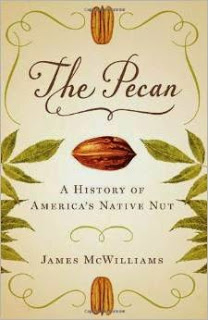
Back in January of this year (2019) I started migrating selected posts from the old blogger platform to this page, www.madam-mayo.com, which is self-hosted WordPress. So far, so swimmingly, as I continue work on the Far West Texas book and related Marfa Mondays Podcasting Project. You can now find not all but a generous number of the Texas posts here, among them, this review of James McWilliams’ The Pecan.
BOOK REVIEW by C.M. Mayo Originally published on Madam Mayo blog, July 5, 2015
Crisply entertaining and chock-full of crunchy
research by a food historian, this apparently delicious little book on
America’s native nut— (and isn’t the cover charming?)— is a horror
story.
It opens, as the darkest do, with a sunny scene of innocence.
Clustered along river bottoms in what would one day become Texas, groves
of pecan trees rained down their bounty for wildlife and indigenous
peoples. For centuries, pecans were their superfood, dense with calories
and nutrition. In the 16th century, Alvar Nuñez Cabeza de Vaca, the
conquistador who shipwrecked en route to Florida and wandered
west, found the Guadalupe River “a river of nuts”— although he had no
word for them but “walnut.” The name “pecan” dates from the late 18th
century.
Those are not pecan trees at Monticello.
The pecan did not do well further north. Thomas Jefferson planted
some 200 pecan trees in Monticello; none survive. Where nuts were
wanted, European walnut varieties proved more popular and versatile, so
the pecan was left to do what it had always done, thrive in its wild
state along river bottoms, mainly in what is today Texas. Notes
McWilliams, “unlike any other fruit-bearing tree in the age of
cultivation, the pecan managed to evade the cultivating hand of man for
centuries after humans began exploiting it for food.”
Yum!
In the nineteenth century, as ranching and cash crops such as cotton,
corn and wheat spread across the South and Midwest, many pecan trees
disappeared; nonetheless, a large number of pecan groves survived,
especially in Texas, because they clung to riverbanks and bottoms, and
proved able to survive a flood other crops could not.
Farmers found wild pecans not only delicious as snacks for
themselves, but good pig feed, and bags of them, easily gathered, could
be sold in new markets in San Antonio, Galveston, and New Orleans. In
the second half of the 19th century, Texas took the lead in pecan
production, but not from formal orchards; for the most part, farmers
gathered wild pecans.
How to sell more pecans? The market wanted uniformity, thin shells,
and dense nut meats. Even the most magnificent pecan tree’s seed,
however, would not “come true,” that is, bring forth a tree producing
equivalent quality nuts. The solution was grafting. As early as 1822 one
Abner Landrum detailed his own successful experiments with pecan
grafting in the American Farmer. It seems no farmer bothered to
emulate that experiment. The market for pecans was still marginal and,
as McWilliams ventures, “it was simply more macho to run a ranch with
cattle than to turn that land over to pecans.”
The Big House at Oak Alley Plantation
In the mid-century 19th century, in the Oak Alley Plantation in Louisiana,
a slave gardener named Antoine successfully grafted an orchard of more
than 100 fabulously productive pecan trees. Decades later, the
plantation’s new German owner, Herbert Bonzano, brought the nuts of
those grafted pecans to Philadelphia’s 1876 Centennial Exposition. And
thus, like so many other fruits before it, the pecan was at last, if
slowly, on the road to industrial production— a road, like that to Hell,
paved with good intentions.
the pecan was at last, if slowly, on the road to industrial production— a road, like that to Hell, paved with good intentions.
For a time, farmers relied on wild pecans, resisting experts’ advice
to graft pecans, perhaps out of innate conservatism and a reluctance to
becoming dependent on nurserymen. Attitudes soon changed. After a series
of insect plagues in the last three decades of the 19th century
decimated major cash crops, the USDA championed chemical insecticides
that, “lo and behold, worked.” Writes McWilliams, “The USDA was no
oracle, but as pecan farmers recognized, history showed it could make
life much easier for those who tilled the soil for a living. So long as
they would listen.” Listen they did.
The 20th century brought increasing industrialization in pecan
production. After World War I, writes McWilliams, “pecan trees were
becoming carefully managed commodities rather than natural aspects of
the southern landscape.” As for shelling, an important source of
employment in San Antonio in the 30s, after some labor unrest, this was
given over to machines.
In World War II the U.S. government gave the pecan industry a push,
promoting the nuts as nutritious replacements for meat; and after
imposing price ceilings to help promote consumer demand, buying up
millions of pounds of surplus pecans (many fed to schoolchildren). By
the late 1940s, pecans were no longer holiday treats or just for
pralines, they were in everything from cakes to cookies to pies, even
salads. McWilliams: “The aristocrat of nuts had become a commoner.”
McWilliams brings the pecan through the rest of its 20th century
history with mail order, frozen foods, processed foods, chain
restaurants, granola, and ice cream; its oil extracted for lubricants in
clocks and guns, its wood milled for basketball court flooring, its
shells collected for mulch, barbecue chips, plywood, pesticides, and
more. By 2011, when the author tours a Texan pecan farm, he is stuck
with dark wonder:
“First, the entire
operation is a streamlined model of mechanization. Vehicles designed to
fit snugly between seemingly endless rows of perfectly aligned pecan
trees spray pesticides, herbicides, and fungicides; they lay mulch,
prune trees, apply fertilizer, and harvest nuts. Other machines disk the
soil and smooth the turf between the trees so that fallen nuts do not
elude harvest. At times helicopters are even brought in for the purpose
of keeping frost from icing the nuts. Propane cannons are on hand to
scare off crows. It occurred to me as we drove from orchard to orchard
that there was nothing ‘natural’ about a contemporary pecan orchard.I was looking at a factory in the field.”
Oh, but it gets stranger. The money isn’t so much in the pecans as it is in shipping trees from the nursery to China. In 2001, Chinese did not have a word for pecan. Today pecans are a popular health food in China, available everywhere from airports to gas stations. It seems a question of time before the Chinese outstrip the U.S. in pecan production.
The future of the pecan, a “chemically saturated activity,” whether in the U.S. or China or elsewhere, looks grim. Arsenals of insecticides are increasingly necessary to combat aphids, beetles, weevils and more. These chemicals also threaten bees and other pollinators (and without them, our food supply as we know it may collapse). Plant diseases are also becoming increasingly resistant to chemical assault. The soil degrades. At some point— perhaps when China has become the top producer; perhaps when some insect or fungus has wiped out enough orchards; or in the wake of some ecological or economic jolt— it may become unprofitable to continue producing pecans in the U.S., the grafted and chemically attended ones for the mass market, that is.
What then will have become of the now few stands of wild pecans? The good intentions of many decades—ye olde single-minded “economic development”— have brought this once thriving wild nut tree to a state of such fragility that, concludes McWilliams, “we may well lose yet another natural thread to the past.”
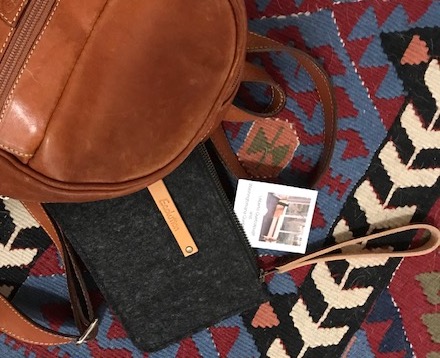
My distraction free smartphone (DFS) stays in this zippered bag within the bag–unless I have a fully conscious, well-considered reason to take it out and use it. My smartphone, a garden-variety iPhone, is not shown because I used it to take this photo. What’s the little rectangle with the picture? I explain below.
As a writer your foremost resource is your creativity applied by the sustained power of your attentional focus.
Your foremost writerly resource is your creativity applied by the sustained power of your attentional focus. The Muse can gift you with a zillion ideas every minute of the day, but if you cannot plant yourself in your chair and stay focused on your writing, your book will ever and always remain an unfulfilled wish, a ghost of your imagination.
Most people have forfeited a more than generous portion of their attentional focus to their smartphones– to checking and scrolling through text messages, social media feeds, games, shopping, news, YouTube videos & etc. Ergo, I would suggest that if you want to get some writing done, don’t be like most people: consider your smartphone use. Very carefully.
And honestly. Yes, smartphones are gee-whiz useful. But when you consider how much of your time and attention they can so easily suck up, day after day after day, you can recognize how exceedingly dangerous they are to you as a writer.
And it’s not a one-for-one tradeoff: The more time you spend diddling with a smartphone, the more likely you are to suffer from what Nicholas Carr terms “the shallows,” making it increasingly difficult to focus for long on anything. In other words, if you’ve got the shallows, with an hour to work on your book, you no longer actually have an hour because you cannot focus on the page for that long.
There are 24 hours in each day. About a third of them are spent sleeping. Once those 24 hours are gone, they’re gone. If you want to fit in the hours and mental energy it takes to write a book, you have to make some choices.
Most people do not write books, and that includes most of the people who say they want to write a book. As if enchanted, they spend a many hours of their every day in a sort trance, looking at screens. I don’t know about most people, but I did not sign up for a stint on the Learning Planet to spend it, as it were, in Plato’s cave doing the watching-puppets-making-shadows-on-the-wall thing.
Of course, everyone’s life is unique in its joys, challenges, and responsibilities. I cannot claim that what works for mine will work for any one else’s. I share my strategies with the smartphone here not in the presumption that they are the only or the universal best, but simply in the hope that, because they have taken me no small trouble to formulate and refine, and they work very well for me, they might prove in some way useful to you as you consider your own strategies with your smartphone, should you be inclined to do so.
Everyone’s life is unique in its joys, challenges, and responsibilities. I cannot claim that what works for mine will work for yours.
Back in January of this year 2019 I posted on my distraction free smartphone (DFS) and in March on reclaiming “quality leisure,” to use Cal Newport’s term, as vital for enhancing not only quality of life, but creative energy. For me, these ideas clap together because, among other things, for “quality leisure” I have my reading, and I now make a habit of carrying a lightweight paperback for when I might otherwise succumb to checkin’-‘n-peckin’ the smartphone.
As I explained in the above-mentioned post, getting a smartphone to “distraction free” is not about simply going into “airplane mode.” Nor is it about rejecting the smartphone. I do use my smartphone; I am grateful to have such a miraculously powerful and convenient communications device and multi-tool. But, made distraction free, my smartphone serves me, I do not serve it– or rather, I do not serve the attention and data-harvesting corporations behind those cannily designed-to-addict apps. (They don’t call the father of captology B.J. Fogg “the Millionaire Maker” for nothing. See for example Ian Leslie’s reporting in The Economist.)
And without “itchy thumbs,” I can better attend to my writing.
I do use my smartphone; I am grateful to have such a miraculously powerful and convenient communications device and multi-tool. But, made distraction free, my smartphone serves me, I do not serve it.
A NOTE ON READING FOR QUALITY LEISURE
Like many writers, I read like a ravenous owl. For my work-in-progress I have been doing a good amount of reading, but alas, these books are generally too large or, in some cases, fragile to carry around; moreover, such reading requires sustained focus and note-taking. (Not a few of these I might term a three-coffee slog…) When I have no other option, I will read a Kindle, using the Kindle app on my iPad– not on my smartphone. Never on my smartphone!
For “quality leisure”/ smartphone substitute reading–that is, something appealing to me to do besides succumb to the siren call of the smartphone– I look for something not work-related that is physically lightweight, and, crucially, that I would, without hesitation, dip into in odd moments.
(Litmus test: would I find it appealing to read while waiting at the tram stop?)
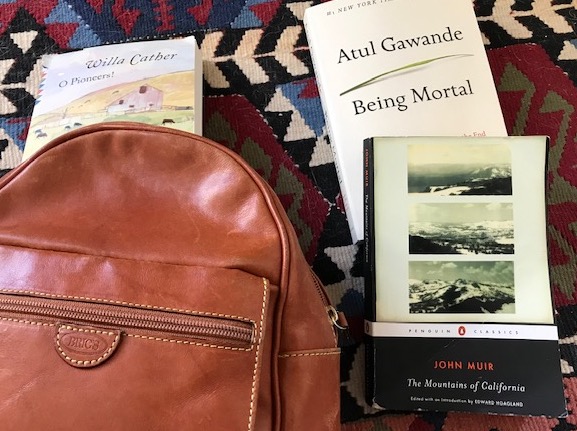
This is the lineup for April: Willa Cather’s O Pioneers!; Atul Gawande’s Being Mortal; and John Muir’s The Mountains of California.
One at a time! An age ago I decided to make it a project to read Willa Cather’s oeuvre. So far: Death Comes for the Archbishop, The Professor’s House, My Ántonia, and as this posts, I have just finished O Pioneers! I can report that, as ever, Cather is sublime.
Since January of this year, so far so good (with the exception of one episode noted below): my smartphone, turned off and zipped in its bag within a bag, remains at once useful to me and distraction free. I do use my DFS for emergency communications –“emergency” being a necessarily elastic term– yeah, if I call it an emergency, then it is (ye olde “self-authority”)– and I also use a select few distraction-free apps such as a camera, calculator, and recorder.
For the full story and explanation of my distraction free smartphone (DFS), plus an app evaluation flowchart, should you be so inclined to consider making your own tailor-made DFS, see the original blog post, “It Can Be Done! This Writer’s Distraction Free Smartphone.”)
FOUR CHANGES SINCE JANUARY
(1) An Anti-Trigger for “the Gotta-Show-a-Photo” Trigger
I’ve become increasingly alert to how often an engaging conversation suddenly disintegrates because someone just has to take out their smartphone to show a photo– here’s my dog, here’s my kid being super cute, here’s me at this awesome place on vacation! The problem is, once taken out, there sits the smartphone on the table– to be picked up again in another moment to Google something, check something, show another something, text, check for texts, make or take a phone call… In short, there goes any coherent civilized conversation with those who are actually, I mean physically, present.
(Moreover, as we increasingly rely on visual media to communicate, we’re losing verbal skills.)
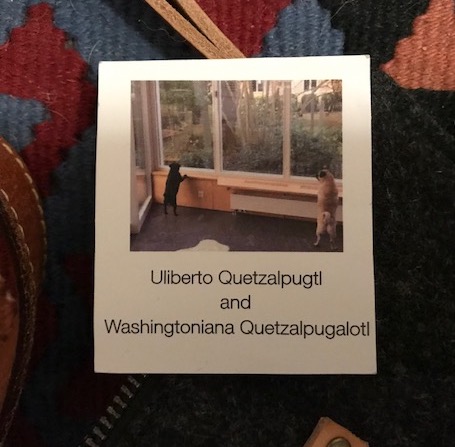
I cannot control other people’s itchy fingers for their smartphones, but certainly, I can address my own tendencies. Here’s my antidote for what I think of as the “gotta-show-the-photo” excuse / trigger for bringing out the smartphone: a little card I keep in the bag with my smartphone. It reminds me to keep the smartphone where it is– in the bag— and take the opportunity to exercise my skills with, you know, like, language.
These are my writing assistants, pugs Uli (right) and Washi (left). I keep this card with my smartphone to remind myself not to pick up the phone to show photos without a seriously considered and very good reason to do so. This little card with their photo, people can see that– plus see their not-so-secret Nahuatl names!
In our culture, my stance on the smartphone, not to mention my carrying this little card with my smartphone, might seem eccentric, even extreme. But I submit that it is our culture, in accepting widespread enthrallment to these djinn-like little screens as normal, that is extreme. As in freaky weird.
Why do I want to avoid showing photos on my smartphone to other people? Because I want to reduce the triggers to pick up my smartphone! Towards an effectively distraction free smartphone, this is not trivial.
In captology expert B.J. Fogg’s terminology, with this little card tucked in with the smartphone, I hereby provide a counter-trigger, should I have been triggered to pick up the smartphone to show some photos. For the full explanation of the DFS, and more about B.J. Fogg’s ideas, see my post, “It Can Be Done! This Writer’s Distraction Free Smartphone.”
(But OK… if I know you, and if I am really fond of you, and you are really fond of me, and you really, truly, truly, very truly really want to see my super cute dogs, I will take my smartphone out and show you photos of them, say, snoozing on the sofa, rolling on the grass, and/or holding the totally awesome squeaky squirrel toy! And even if I don’t know you all that well and you were to show me pictures on your smartphone of your dogs, or your kids, or your totally awesome vacation, I would be polite and say nice things because that would be sweet of you, and I accept, as I must to live happily in this world, that not everyone shares my ideas about what constitutes freaky weirdness.)
(2) Radio Swiss Classic
Another change is that, when traveling, I now use my smartphone for listening to music. (At home I use an iPad, usually parked in the kitchen, for that.) My go-to site is Radio Swiss Classic. No surfing around, no listening to podcasts, no social media, no YouTube, no people jabbering on (as on NPR), just Radio Swiss Classic– Mozart, Beethoven, Bach, Vivaldi, endless free streams of it, 24/7.
Merci beaucoup and Danke schön, Swiss taxpayers.
(3) Uber
And another change is that on a recent trip where timely transportation was otherwise unavailable, I had to download and use the Uber app. Not a bad experience! (I know, I’m late to the parade on this one.)
(4) Texting (…Sigh…) When Required for Certain Financial Transactions and Emergencies
And yet one more, but alas, less felicitous, advent is that for certain online financial operations (and that would include booking a ride with Uber) one now must receive a texted code to confirm the login and/or transaction.
There are some work-arounds: for example, Go Go Grandparent allows you to book Uber rides without a smartphone, using a landline or flip-phone. For some other online financial transactions such as certain credit card purchases and transfers, you can call your bank and authorize skipping this step of a code sent by text message; however, they advise against it for security reasons.
Oh, how I hate texting.
My thumbs are allergic to texting!
Emergencies: I am thinking of, say, being buried in rubble after an earthquake– yes, that might be a good time to text. (Screaming could also help.)
A confession: On that same recent trip, which was to AWP, a ginormously gimungous writers conference held this year at the Oregon Convention Center, I texted with another writer to coordinate a meeting for coffee. I won’t say I regret the meeting– I was delighted to meet with an old friend. But of course, after my friend texted me that she would text me about getting together after the next panel concluded, I ended up checking for her next text. And checking again. And then checking. Just to meet for a 10 minute coffee between panels required multiple texts. I’m on the way. And Be there in 5. That sort of thing.
(On this note, this is one of the reasons I prefer smaller writers conferences where everyone has lunch and/or dinner in the same room, everyone meets in the bookfair or mingles in the hallways outside the panels– I can see everyone I want to see without having to arrange meetings.)
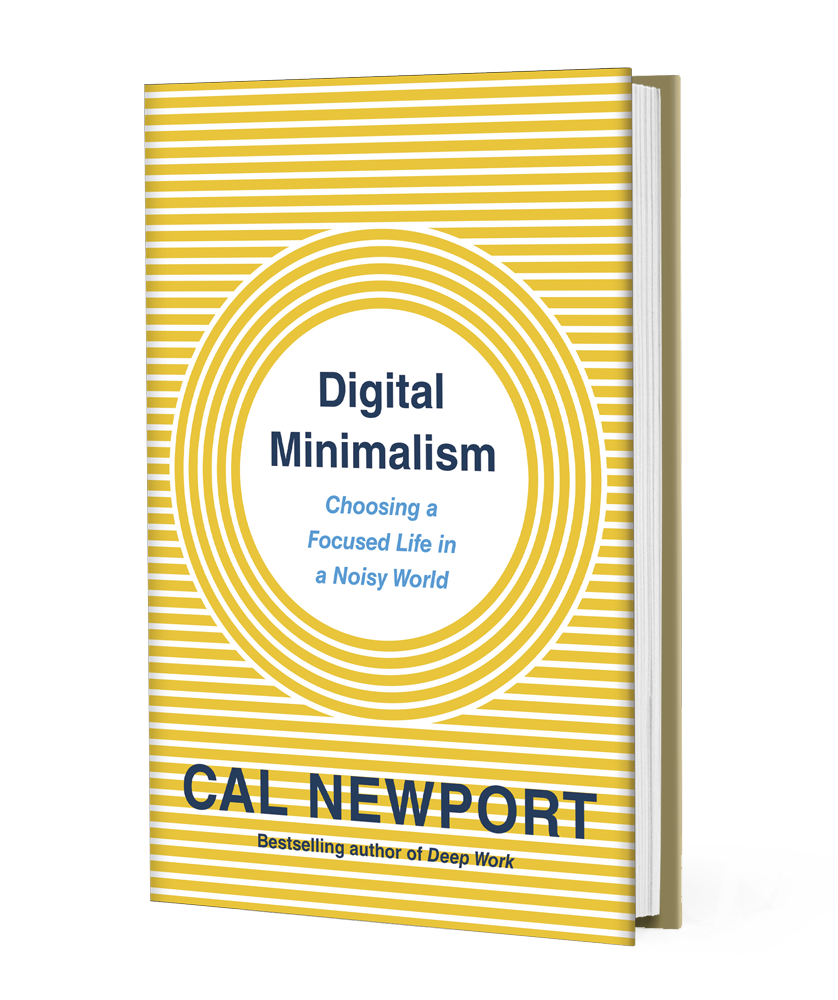
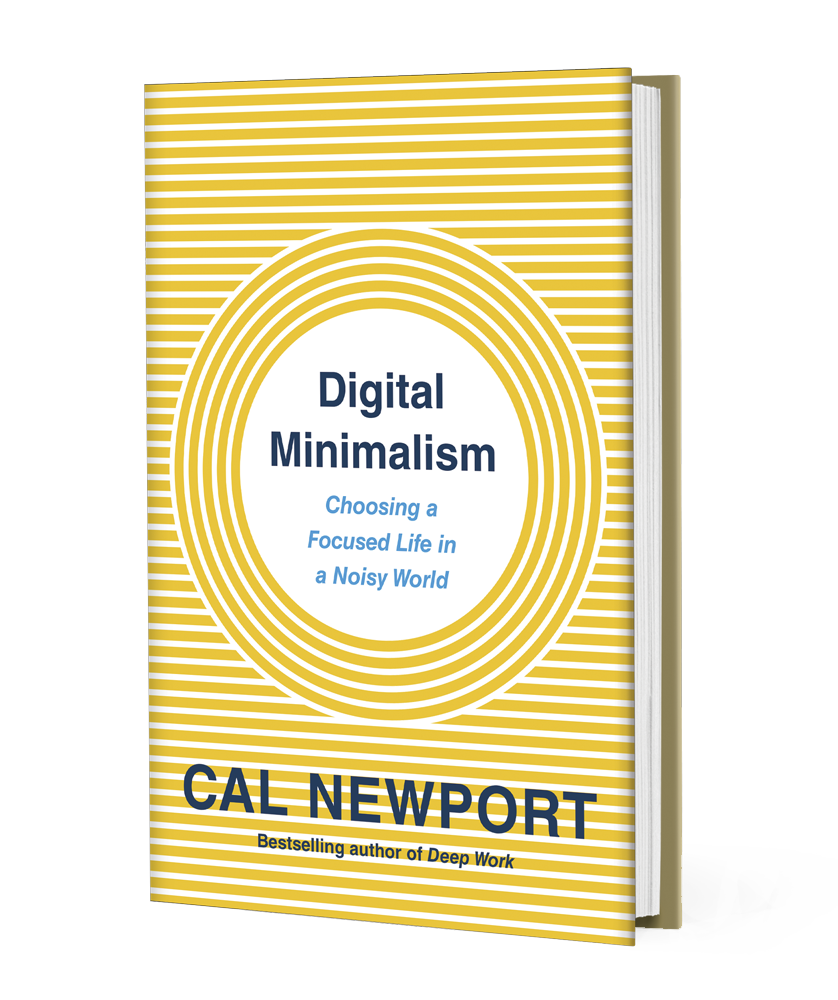
I have been holding the fort against texting and, in particular, Whatsapp, despite heavy pressure from family and friends. When I asked Cal Newport, author of the excellent Digital Minimalism, on his questions forum how he handles texting, he advised that one simply has to “train other people’s expectations.”
Hmmm… There’s a blog post I don’t think I’ll write.
Of course I can appreciate that in certain circumstances texting can be a very appealing and indeed the best method for timely communication. That said, texting can be minimized or eliminated by
(1) prior planning; (2) respecting those plans; and (3) trusting the universe that healthy relationships are possible and that no one will spontaneously combust without constant, tick-like messaging.
What I observe is that just about everyone is checking their smartphone all the livelong day, and expecting to be able to text and thereby expecting to leave everything last-minute flexible precisely because everybody else is checking their smartphone all the livelong day– and night.
Count me out. Apart from my wanting — and my need as a writer–to eliminate distractions from my smartphone, I do not want my relationships electronically intermediated by a corporation, at least to the extent that I can help it. When I’m in a writers conference I want to be in a writers conference, not off in the corner, or doing the smombie shuffle, checking my smartphone for the 157th time since breakfast.
As for communicating with and as disembodied consciousnesses– which is, effectively, what we do when we communicate with each other other than in person– there’s plenty of that going on already with email, the phone, print media and online media, and then, if you buy the idea, after this lifetime, bingo, there’s the whole of eternity for communicating with and as disembodied consciousnesses.
Like I said, what works for me may not work for you.
Just don’t try to text me.
LOOKING TOWARDS THE SECOND QUARTER OF 2019
So, since January, my DFS now has two additional apps, Radio Swiss Classic and Uber, both useful and welcome.
Yes, I will now send and receive text messages, however, only when obliged to do so for financial transactions, and for genuine emergencies– the latter being so rare that one has not yet happened for me whence texting appeared on the scene.
As I write this post, my distraction free smartphone (DFS) remains silently cozy in its zippered bag inside the bag– that bag, for now, in company with the paperback edition of Atul Gawande’s Being Mortal.
FREEDOM APP, YES!
As for the laptop– where I do my email, wordprocessing, blog updates, and any Internet research– I recently installed the latest version of the Freedom app. I hadn’t been too impressed with the earlier version, but this new one is a ludic loop snipper par excellence. It’s curious how well it works.
I don’t need the Freedom app for my smartphone, but if you are struggling with reducing the pull to yours, the Freedom app might be something for you to consider.
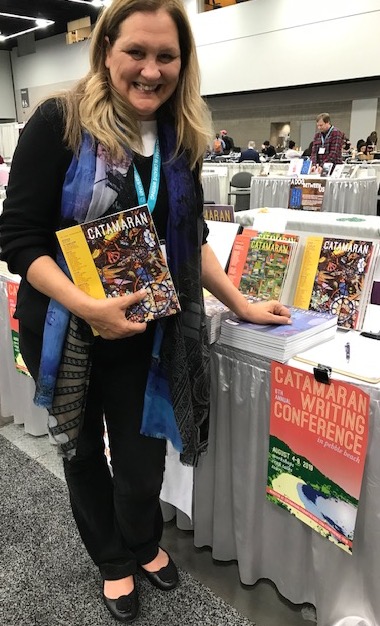
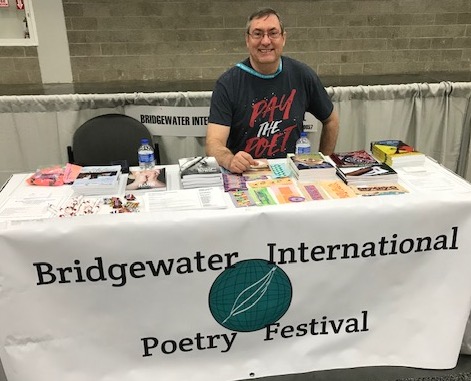
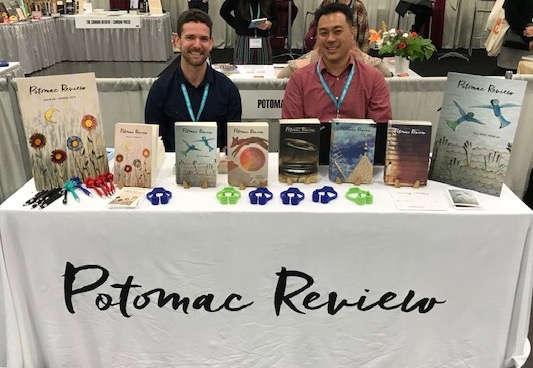
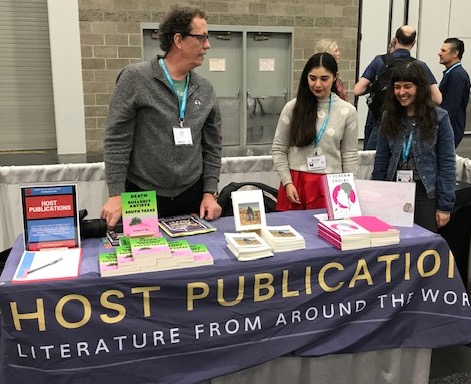
After attending for more years than I can count, in 2014 I swore off the annual conference of the Association of Writers and Writing Programs in lieu of fewer, more narrowly focused, and smaller writers conferences.* If you’re not familiar with it, AWP is huger than HUUUUGE, with an eye-addling and foot blister-inducing bookfair, plus endless panels, scads of receptions (free cheese cubes!), readings, and more readings, and even more readings. Finding friends at AWP oftentimes feels like trying to meet up at Grand Central Station at rush hour. Of the panels that appeal, dagnabbit, they somehow occupy the same time slot. Then try finding a table for an impromptu group of 13 on Friday at 7 PM! But sometimes, never mind, it all aligns beautifully and you can find friends and inspiration and new friends and all whatnot!
*For example, the American Literary Translators Association; Biographers International; Center for Big Bend Studies; Texas Institute of Letters; Women Writing the West.
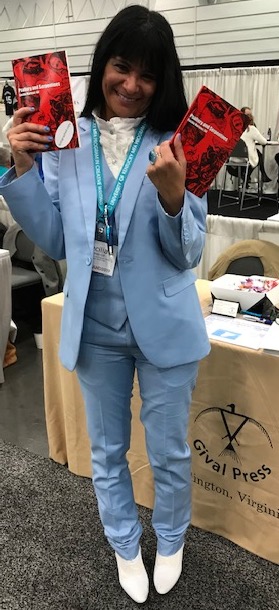
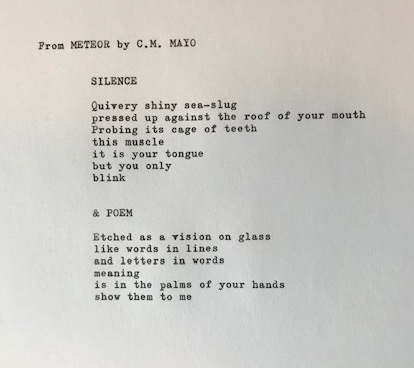
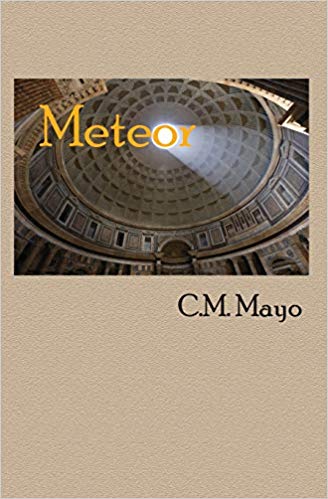
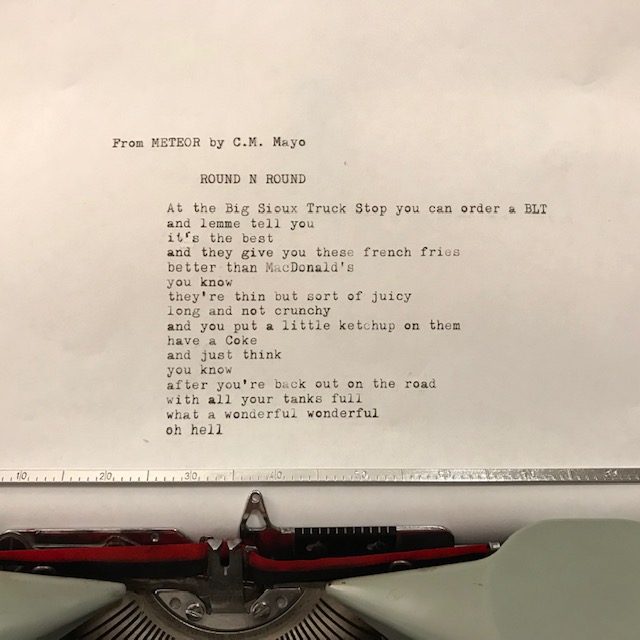
Never say never. What brought me back to AWP this last weekend in March of 2019 was to celebrate Gival Press’s 20th anniversary with a reading from my book Meteor, which won the Gival Press Poetry Award, and a booksigning at the Gival Press table in the bookfair. I also went to see friends and to scout out who’s publishing translations these days, since I have a couple of manuscripts of contemporary Mexican fiction that I’m aiming to place. Yet another reason was for a spritz of inspiration. (And I won’t go on about the lovely and fascinating city of Portland, since this is already a longish post.)
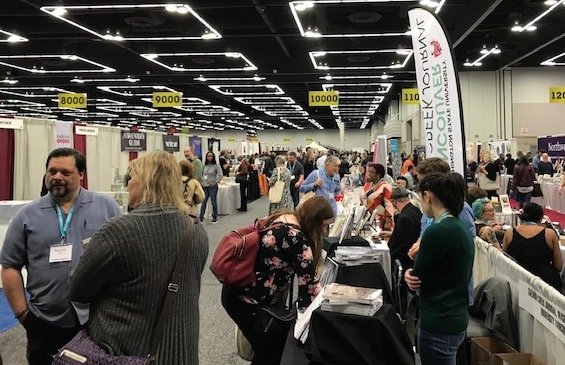
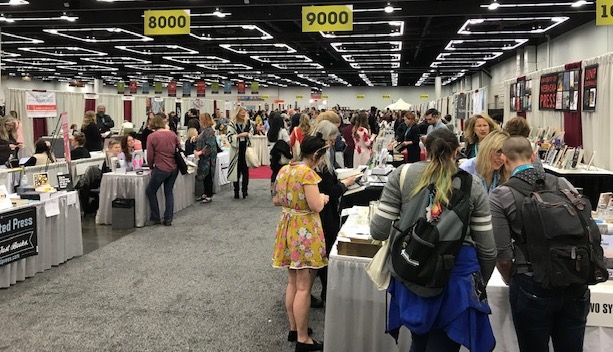
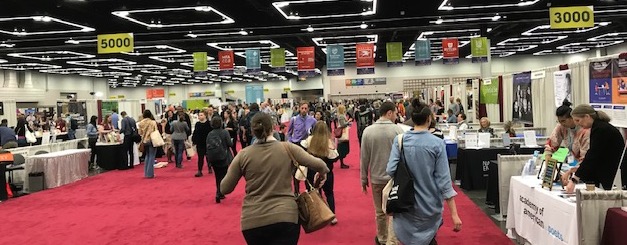
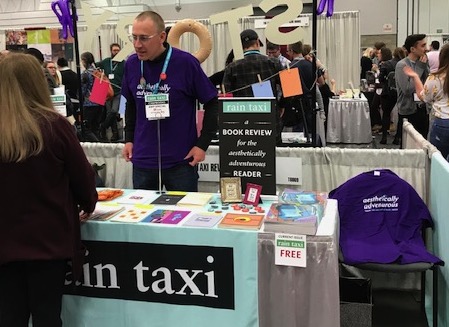
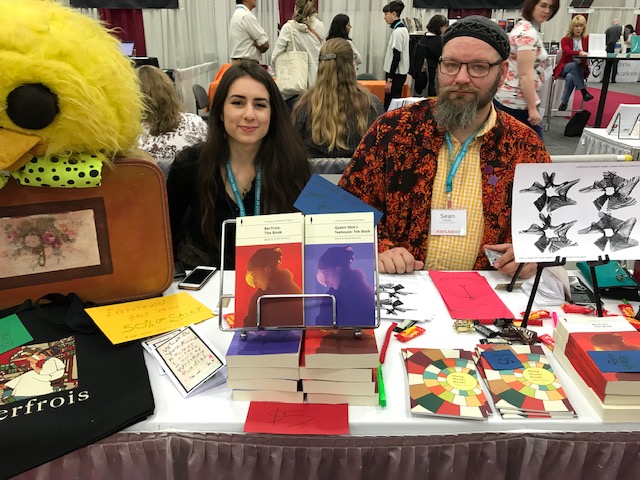
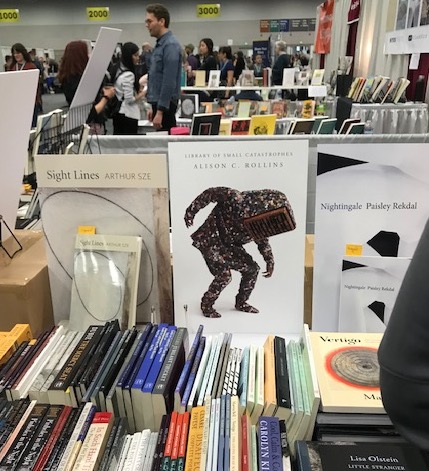
Think no one is reading books and literary magazines anymore? Here are just a few of the multitude of aisles of the 2019 AWP bookfair this year in Portland’s Oregon Convention Center:
The above views are typical, in my experience from AWPs in Austin, Chicago, Palm Springs, New York City, Denver, Seattle… I’m sure I left one out… they all kinda meld together in my memories…
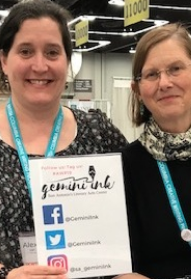
I spent most of my time at AWP this year in the bookfair. Among the shining highlights for me was finding Alexandra van de Kamp, one of my favorite poets, and a fellow literary editor and Spanish translator– we met at a book fair in New York City back when she was editing Terra Incognita and I, Tameme, and we’ve kept in touch for all these years. I think it’s been (ayy) 20. Alexandra now teaches poetry workshops at Gemini Ink, the literary arts center in San Antonio, Texas, where she also serves as Executive Director.
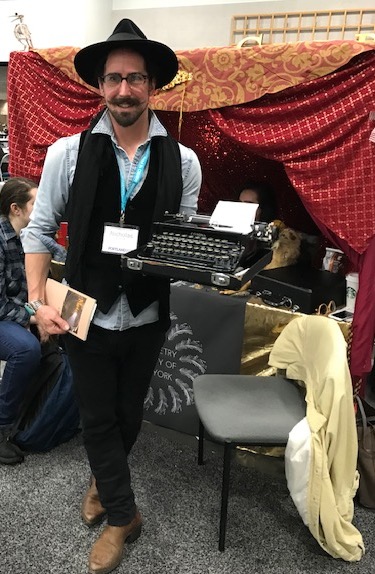
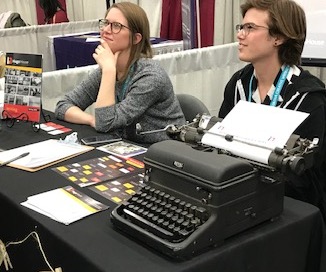
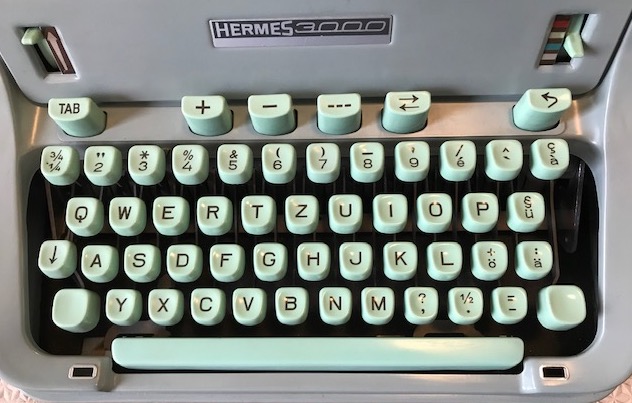
Here’s my favorite table in the bookfair, a cozy red tent constructed by Nicholas Adamski, poet and Chief Creative Officer of The Poetry Society of New York. We had a most excellently awesome conversation about typewriters.
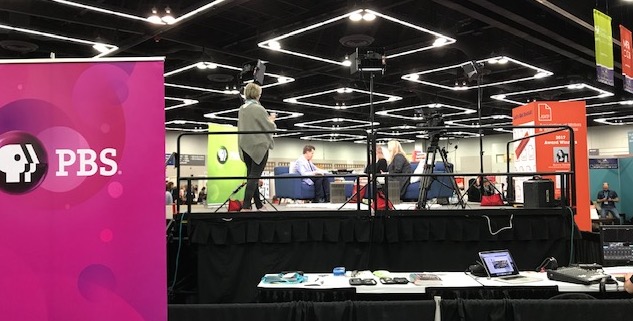
What I had not seen before at an AWP bookfair was this central platform for filming author interviews:
WHY ATTEND AWP?
It takes a pile of clams to attend AWP, plus travel costs, plus time– and that includes recovery time. Everyone has their own reasons for attending, and these might vary from year to year. I’ll speak for myself: In early years I attended AWP in order to promote my literary magazine, Tameme, and that meant standing at the table in the bookfair all day every day– which was fun, mostly, but exhausting (I developed an immense respect for vegetable sellers, I am not kidding). Later, after Tameme danced its jig over the litmag rainbow, I focused on participating on and attending panels as a writer (here’s one I did in for AWP on writers blogs in Seattle 2014; in previous years I participated on panels on writing travel memoir; writing across cultures; translating Mexican writers; and audio CDs– the latter on the eve of the advent of podcasting); exploring the bookfair (among other benefits, you can pitch editors sometimes, and sometimes it actually works); and meeting up with my editors, and with fellow poets and writers and translators. (The American Literary Translators Asociation, which has its own annual conference, also runs a mini-conference within the AWP conference. Ditto the Council of Literary Magazines and Presses, for which many editors and marketing staff attend.)
AWP is the MFA scene (Masters in Fine Arts in Writing). Most of the people attending seem to me to be students, graduates, or faculty of MFA programs. Those who are not, such as myself, are literary writers, poets, translators, and editors, and some staff of university-affliated conferences and independent nonprofit literary centers and organizations. While books and magazines are sold at AWP, this is not the commercial publishing scene. The publishers in the bookfair are for the most part university presses and university-associated literary magazines, and small independent presses and literary organizations. It’s not unheard of at AWP but extremely rare (as in albino antelope) to encounter an agent, or any commercial genre writing (romances, mystery, detective). You certainly won’t find much if anything in the way of the business books, commercial fiction, and celebrity tell-alls that are stock-in-trade for most bookstores.
OFF-SITERIE
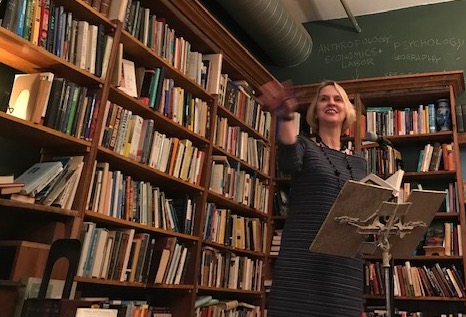
A big draw for AWP is the delicious menu of off-site events, which are listed in the conference catalogue. The first night I arrived, I attended the readings by Leslie Pietrzyk from This Angel on My Chest, and Brad Felver, from The Dogs of Detroit, both winners of the University of Pittsburgh Press Drue Heinz Award for Short Fiction, at Mother Foucault’s Bookshop — a charming venue for two brilliant readings. Here’s my amiga Leslie:
Leslie Pietrzyk reads at Mother Foucault’s Bookshop, Portland, Oregon, 2019
Another offsite event was the Gival Press 20th Anniversary Celebration at the Hotel Rose, in which I participated with a batch of poems from Meteor. (No photos of Yours Truly. Bad hair day.)
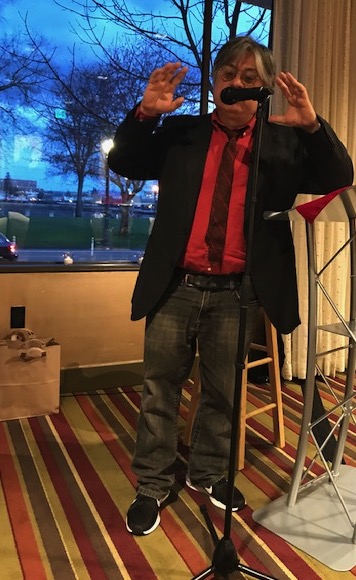
Here’s Thaddeus Rutkowski reading his poem, “White and Wong”:
On the right is Arlyn Miller, founding poet of Poetic License.
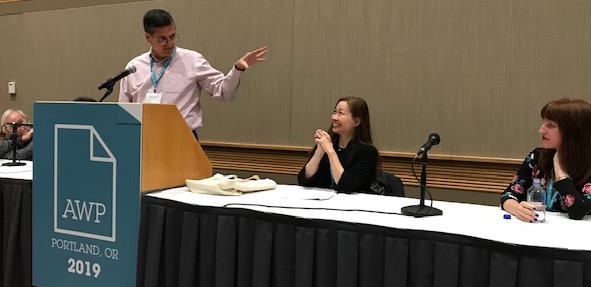
And here is my amigo novelist, short story writer, essayist, and literary activist Sergio Troncoso talking about “How to Overcome Discouragement and Use It as a Motivating Tool”:
AWP Panelists Sergio Troncoso at the podium, left, Charles Salzberg; right, panel chair Christina Chiu and M. M. De Voe. This was my favorite AWP panel ever. And M.M. De Voe’s talk was hilarious, a grand performance. Thank you all! I walked out feeling like the Energizer Bunny! And I think everyone else did, too!
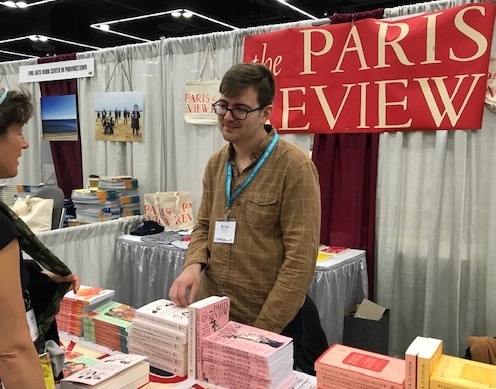
The Paris Review and assistant on-line editor Brian Ransom. One of my short stories appeared in this venerable litmag one waaaaay back in… I think it was 1996, the issue with the naked Egyptian lady on the cover. I actually spoke to George Plimpton on the phone once!
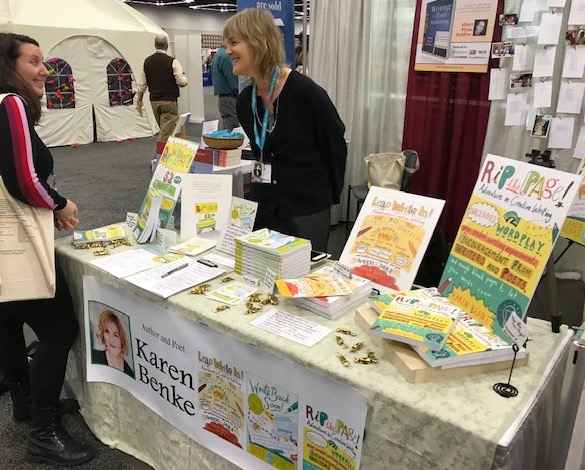
Another amiga, poet and teacher Karen Benke. One of my poems is in her rip-roaring anthology for children, Rip the Page!
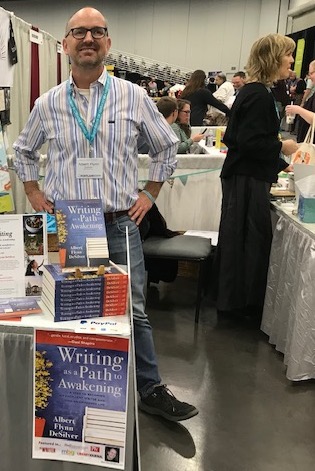
Karen Benke (right) shared a booth with Albert Flynn DeSilver, author of Writing as a Path to Awakening. They both traveled from northern California. DeSilver is also the author of the memoir Beamish Boy.
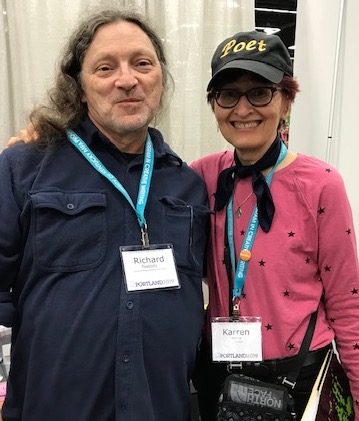
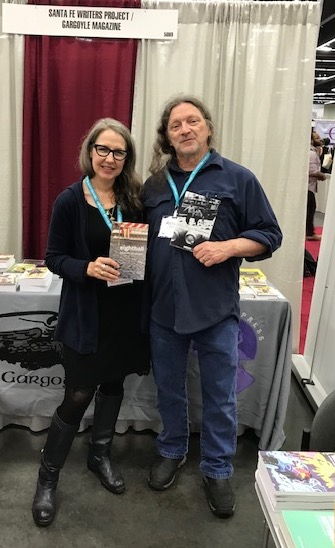
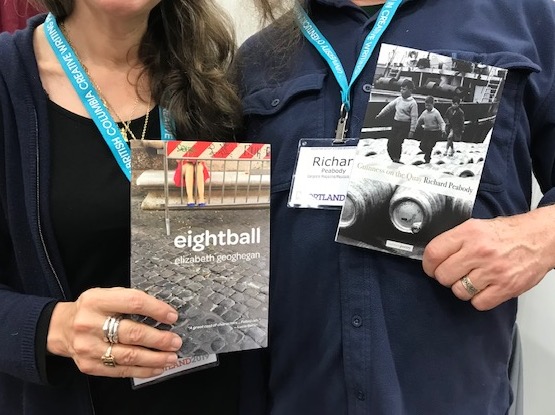
From Washington DC: My amigos Richard Peabody, poet, writer and editor of Gargoyle Magazine, with Karren Alenier, poet and editor of WordWorks. Everytime I see Karren she is wearing that fabulous chapeau. Viva!
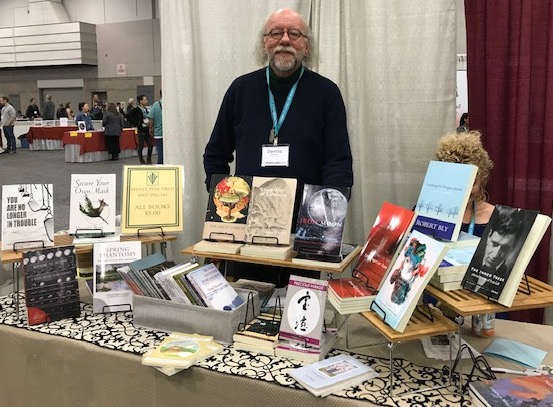
From Buffalo, New York: Dennis Maloney, editor/ publisher of White Pine Press. My sincere respects for so many years of publishing such high quality literature in translation.
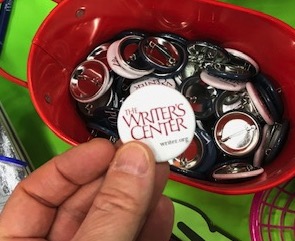
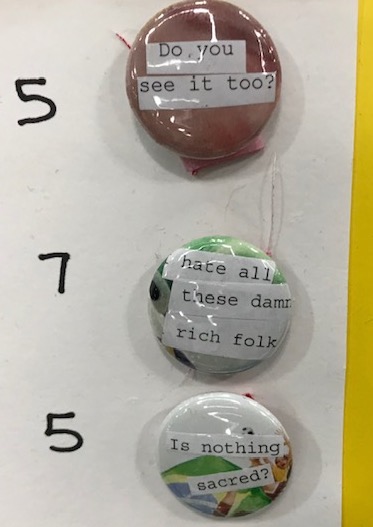
Free buttons! And plenty of Hersheys Kisses, Tootsie Rolls, Sweet & Sours, Starbursts, free pens, more pens, calls for submissions…
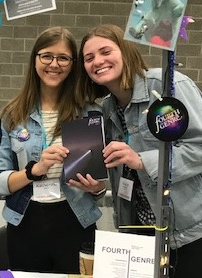
All the way from Michigan! Fourth Genre— a new generation keeps this grand journal of creative nonfiction cooking. (Years ago, ayyyy, 2002, Fourth Genre published my essay about Tijuana, “A Touch of Evil.” )
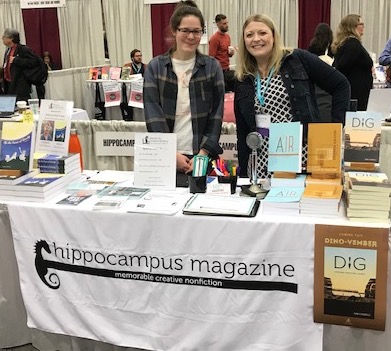
Hippocampus Magazine and Books by Hippocampus. Their debut title is Air: A Radio Anthology. Check out what they’re publishing–a cornucopia of creative nonfiction– at www.hippocampusmagazine.com. Pictured right is founding editor Donna Talarico.
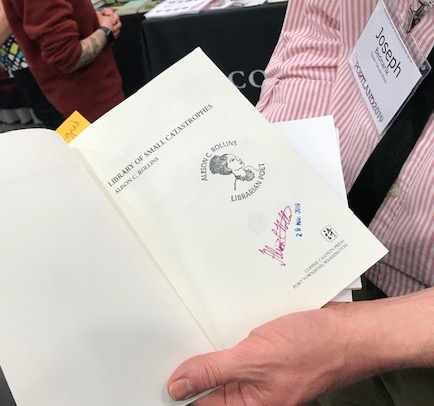
Another inspiration: Joseph Bednarik at Copper Canyon Press shows me how Alison Rollins signs her books: a stamp, a blue date stamp, and grape-colored ink. Yes!
Typosphere alert! This is the table for Hugo House of Seattle.
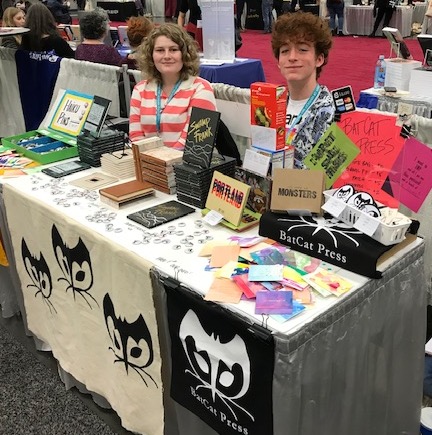
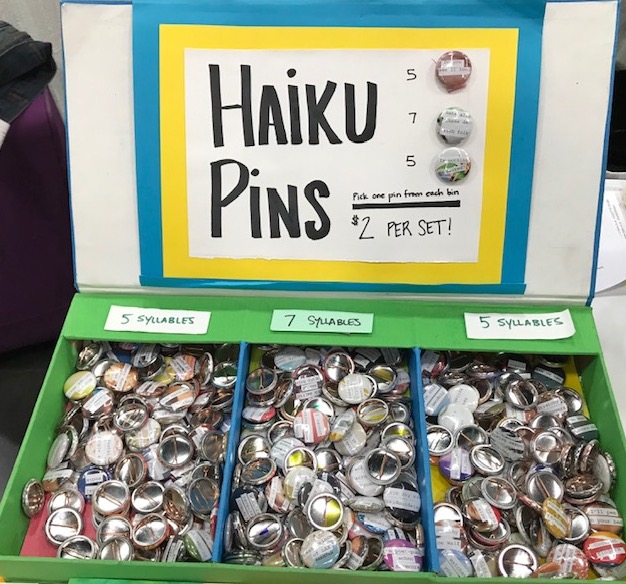
BatCat Press: This is run by highschool students in Pennsylvania and damned if it wasn’t the most energetically staffed and one of the most altogether impressive tables in the entire bookfair. Their handmade chapbooks are gorgeous. Plus they sell haiku pins!
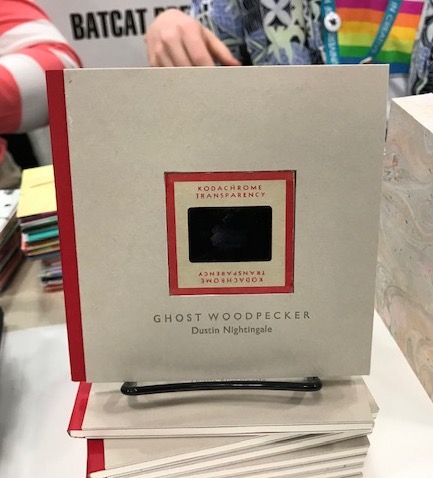
Ghost Woodpecker by Dustin Nightingale, a fine letterpress chapbook from BatCat Press.
Best no-show table. The message in crayon on the top informs passerby that UPS lost their books. (I hope they had as much fun as I did butterflying about the bookfair.)
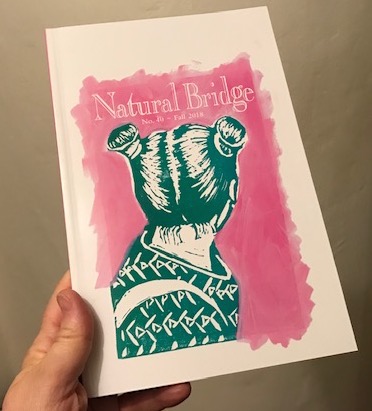
Natural Bridge. Shown here is my copy of issue 40 that arrived at my house before AWP.
The Natural Bridge table was one of many that I missed visiting at the bookfair. Alas, ever and always, there are dear friends, fabulous events, and necessary bookfair tables that one ends up missing at such a hugely huger than huge conference. AWP is not for the FOMO-ly challenged.
UPDATE: Karren Alenier has a fascinating post about AWP 2019, from the point of view of a poetry publisher. If you’re at all interested in the literary magazine and small press poetry scene, this is a must-read.
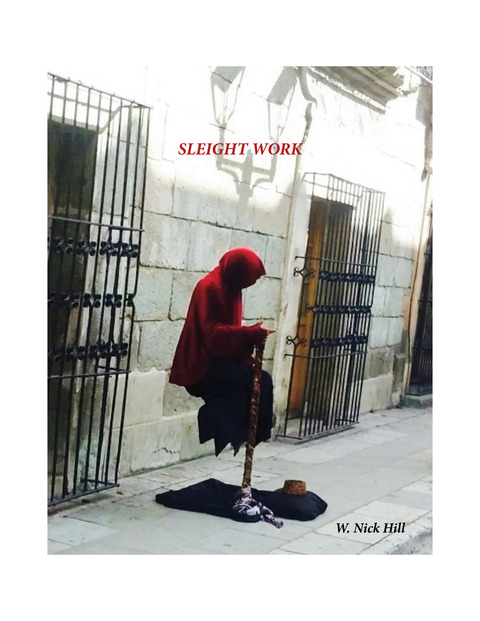
I was delighted to get the announcement for Sleight Work from W. Nick Hill, a poet and translator I have long admired. Sleight Work is licensed under the Creative Commons Attribution Share Alike 3.0 License. The author invites you to download the free PDF from his website and have a read right now!
Here is one of the poems from W. Nick Hill’s Sleight Work which seems to me the very spirit of the book:
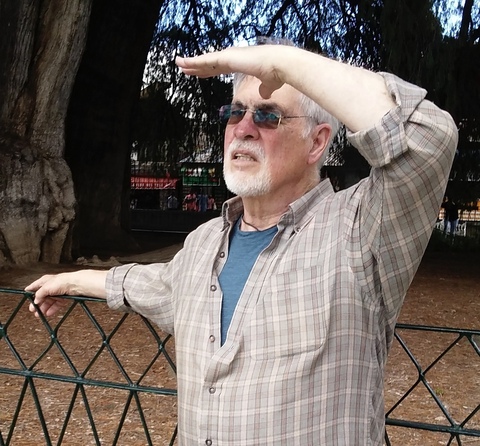
Walter Nickerson Hill was born in Chicago, raised in São Paulo, Brazil, and has spent lots of time in Oaxaca, Mexico. He shared Latin American culture with U.S. college students for a long time. Author of numerous academic reviews and articles, he has also translated the work of noted Latin American novelists and poets including Alvaro Mutis, David Huerta, and Miguel Barnet: Biography of a Runaway Slave. His English versions of poems by Mexican Jorge Fernández Granados’ Principle of Uncertainty, appeared as Constructed on Coincidence (Mid-American Review 2010). He is currently translating Gary Lemons’ Día De Los Muertos into Spanish. Hill has one slim award for a chapbook and will have three collections of poetry after Sleight Work comes out in November 2018. He lives on the Olympic Peninsula with his wife. Visit http://wnickhill.net
Before we delve into the Q & A, another favorite from Sleight Work:
After Hyde’s The Gift by W. Nick Hill
Breathe it in and with your panorama lit up just now to the scope of the cherries’ effervescent blossoming into the ether, their tiny china on a weather-beaten wrought iron pea-colored table with chair, a scent of July in vague Lapins where the leaves would have been were it a Camellia sinensis whose tiny white flowers ain’t tea;
something you have to pass on, give away with an authentic gesture over palm fronds shadowed against the wall in a mauve kind-of-awareness that brings out Matisse in the Mediterranean, probably at siesta like a breath you have to give away to make room for the next
and recognize that’s the way energy flows, like the random steps of the Egyptian Walking onion, its scallion agglomerations all over the garden in clumps the wandering Buddhist monk gave us an age ago that continue on walking around us all this time.
Translate from the breath into an object of delight like the scent of Japan in the white frills on a purple plum in the springtime when it should be and make sure somebody else gets it.
C.M. MAYO: How might you describe the ideal reader for Sleight Work?
W. NICK HILL: My “cousin,” Quentin Deming, M. D., Chip, as he was known, and his wife, Vida Ginsberg, were role models. They treated Barbara and me like royalty, wined and dined us when we visited them in Manhattan and we knew from stories it was like that with any and all. Chip was gracious, cosmopolitan, much loved by his patients and colleagues, idiosyncratic, capable of skate boarding in his red suit on his 70th birthday, and always ready to explain how some part of your anatomy worked. His daughters called recently to tell us he had died peacefully at 99. And that a constant companion in the time up to his end was my book And We’d Understand Crows Laughing. Chip would have been the ideal reader of Sleight Work; Vida too, who was widely admired for her knowledge of theater and her sense of humor. Maybe their daughters, Maeve and Lilith, but I can’t say for sure.
C.M. MAYO: And that cover image!?
W. NICK HILL: I write virtually every morning and those pages pile up fast! When I realized that I was working on something inchoate I began to shape the whole into a collection. Well that’s one of my principal ways of working. But in this case, I began then to look around for an image for the cover, all the while I was also investigating what would happen if I set off on my own, that is to “publish” it on my website. The image on the cover was a cell phone picture I’d taken of a busker on the Andador, the pedestrian walkway in Oaxaca, the city center on Day of the Dead, November 2017. When I’d worked out how the pose was accomplished, I was ready for the fact that the trick was after the fact, your money already in his cup. There’s an easy congress between busking and begging that goes back certainly to the picaresque tradition, and probably from time immemorial. And busking in Mexico, as you know is a worthy art. I’ve seen a Statue of Liberty across the street from an Uncle Sam, Roman Centurions, and so on. Taking money for little work is also sleight work, it’s true, though not a comely used phrase. But there’s a kind of trust the busker maintains in day long poses that she will be supported with contributions, that their bowl will not often be robbed, a presumption not so easily believed perhaps today. And then I don’t mind at all that the cover image invites the reader to consider the relation between a gift economy and the industry of book publishing in which the value of words has become more perhaps than at any other time in history the value of commerce.
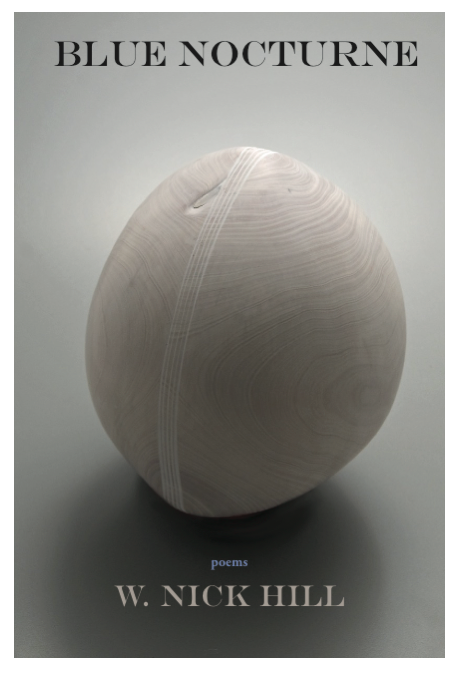
C.M. MAYO: Can you also talk a little about your previous book, Blue Nocturne, and the hexagram poems?
W. NICK HILL: At some point in 2011 I began to compose what I called hexagrams out of a need for a simple meditative practice of writing. With the I Ching in mind, I tried to write those two three line terse stanzas called hexagrams like those I had thrown using coins in the 60s and 70s to find guidance in the words of that venerable book of ancient wisdom. At least I fancied it told me appreciable things. The hexagram’s inner dynamism could change very quickly depending on the lines that moved, so there was always the possibility of surprises, changes. It was known as the Book of Changes, after all. I have also kept up with reading Tang and Sung dynasty poets, though I claim no expertise. I’m just a serial reader of Li Bo, Wang Wei, and many others. That discipline of composition continued for more than 64 days in a row and though I have all of them, only 18 or 19, depending, appear in BN.
Those little poems themselves began to very lightly sketch a
consciousness that was connected to mine but wasn’t exactly. I sensed that this
individual wanted to take himself, or herself, away for extended quiet, as in a
remote cabin in the mountains around here in the Pacific Northwest. The
speaker’s gender seemed to be male but I don’t think that it’s so clear. In the course of this quiet time alone, the
speaker awaits changes for the better that may arise out of paying close
attention to the surroundings, especially nighttime and dreaming, and to the
writing every morning.
Another set of incidents became entangled with these six line practice pieces. During what has become my almost yearly visit to Oaxaca, specifically in 2000, a chance encounter with Una constelación de noches / A Constellation of Nights, a glossy illustrated book of an art exhibit that the Mexican poet Alberto Blanco put together in which he paired paintings and poems. That handsome coffee table book came into my hands in the quiet inner patio under a bougainvillea “roof” at the IAGO, the painter Francisco Toledo’s Institute for Graphic Arts. I have not since seen the book again, though I tried for several years to lay my hands on it. The theme of nocturnes, more easily found in music and painting of course, were still a small literary presence in my memory, particularly Alvaro Mutis’ atmospheric nocturnes that evoked his family’s coffee plantation in torrid lands. This all came together in a rush in 2013 as Blue Nocturne. The color blue, aside from the celestial, came from a personal myth. As a child in Sao Paulo, I found a book with a blue cover in a box in an unused room over the garage, the former carriage horse stable in the old house we occupied. I don’t think I read much of it then because my brother and our friends got our dad to make the space into a floor hockey rink. But the notion of that book surely underlies some part of my desire to make them.
C.M. MAYO: As a poet writing in English, which English language poets would you say have been the most influential for you? And as one who also reads Portuguese and Spanish, which poets in those languages would you say have influenced your own work?
W. NICK HILL: Allow me to answer both the above in one. In Sao Paulo, Brazil, my school mates and I spoke a bilingual mix of English and Portuguese. I loved the way those sounds danced around together! I was very much at home in Brazil. Portuguese wasn’t taught in the high school I went to when I returned to the States, so Spanish became my other language. Consequently, when I read it wasn’t English writers alone that interested me. One of the defining moments in my early life with poetry came in a flash of understanding how García Lorca made a verbal image come alive in “Romance sonámbulo,” from the Gypsy Ballads. So it’s somewhat of a twist to focus on English, but I did pay attention to Modernists, especially Ezra Pound’s ABC of Reading, because I considered it a kind of (very opinionated) handbook of poetry in English, “The Seafarer,” and the ancient Chinese, in translation, of course, a reading habit I continue with Su Tung P’o, Hsieh Ling Yun, P’o Chu-ie, and so on. I also had a lot fun reading e.e. cummings, William Carlos Williams, and for a time I thought a lot of Delmore Schwartz. Over time I went backwards, to Whitman, Dickinson, and sideways to the Beattles, Bob Dylan, and that would now have to include Leonard Cohen.
Much later, I was able to participate in a poetry workshop
for a heady week with Galway Kinnell, Sharon Olds, and Michael Harper. That
experience invited me to be more serious about my own writing. After that I did short-term workshops with
Marie Howe, Cleopatra Mathis, and then, a chapbook workshop with Jason Shinder
at the New School.
I had a career as an academic, Ph.D. in Latin American literature. I wrote a monograph, Tradición y modernidad en la poesía de Carlos Germán Belli that was published in Madrid. Belli is one of the fine poets Peru has produced. He writes about contemporary angst in Golden Age formalisms. I studied with Oscar Hahn, a powerful Chilean poet whose Mal de amor, Love’s Sickness, among many others, made a big impression. Through Hahn, I met Chilean poets, Pedro Lastra, Enrique Lihn, Nicanor Parra, Lucía Guerra, Javier Campos, and others. Javier later became my colleague at Fairfield University. Lihn became a model for my writing for a long time. He and I had long loopy talks about modernity. I was fuzzy whereas he had a clear understanding, some of which rubbed off on me, of what people were calling the Post-modern. I also developed an interest in the Summa de Maqrol el Gaviero, by the Colombian writer Alvaro Mutis. My first serious attempt to translate from Spanish were poems spoken by the existential philosopher cum sailor, Maqrol, The Lookout.
I don’t know how it is for others who teach about
literature, but for me, after a time, when you’ve dealt with so many
accomplished, brilliant writers and poets, it wasn’t so much that I was
influenced by anyone in particular. It was more that I admired specific
characteristics, or that the history of genres of writing became clearer
because of the way Vallejo, for instance, who did have a serious part to play
in what I wanted to do with poetry, the way he broke down previous measures of
value to challenge language itself served as a path. Similarly with parts of
Neruda, whose Odes touched a thread with simple language anybody could
understand, like that of the ancient Chinese in English though because their
poems were formally complex and were sung.
C.M. MAYO: Can you talk about writing your own poems in Spanish?
W. NICK HILL: I began writing poetry in my early 20s and those attempts were in English. After college where I studied sciences and social sciences, I went to Spain to teach English for a year and to try my hand at writing fiction. Literature of all kinds, in both English and Spanish, occupied my reading. Bilingualism was imprinted on me growing up in Brazil. Over the years I’ve drifted away from Portuguese. In any case, when I turned to my own poetry it came out mixed English-Spanish. I wrote a chapbook called Mundane Rites / Ritos mundanos that was third place in the 1997Sow’s Ear Poetry Review’s chapbook contest but they only published the winner. Some of the poems came out in the minnesota review, and others, and in the Américas Review under a pseudonym I quickly dropped, Nicolas Colina. Poems in my chapbook came directly from the Central American conflicts of the 80s and 90s, border issues, as well. One of them was an experiment in the subconscious dialogue between Cortés and La Malinche that interwove Spanish and English. I have difficulty separating my poetry from politics broadly speaking. Because bilingualism involving U.S. Latinxs is contested territory, I drifted away from “code switching,” though I continued to publish in Spanish in The Bilingual Review, Ventana Abierta from UC Santa Barbara, and in Chile. It became clear to me in my teaching that the up and coming programs of studies in the 3 principle groups of Spanish Americans in the U. S. –Mexican Americans, Puerto Ricans, and Cuban Americans– weren’t being represented culturally, in my university anyway, in their bona fide condition as USians who wrote as they lived, in English, Spanish, and mixed up all together. And that’s not even considering interesting writing by Central Americans, Dominicans, and others, nor much attention paid to American Indigenous languages. I got a fellowship to get caught up on Chicano Studies at Yale, and began to develop university courses that addressed those communities, in literary culture at least. After all, at Fairfield University I had a whole range of speakers in my classes: English only speaking Mexican Americans, fluent bilinguals from the Caribbean, and foreign students whose English was good. This was during a time in the 90s and early 00s that I intensified my trips to Mexico, pointedly to Oaxaca where a former student, Kurt Hackbarth, had gone to teach English. He subsequently became a Mexican citizen and writes in both English and Spanish, plays, fiction, and commentary.
I compose in Spanish, not in the same way as in English
exactly, but directly, that is to say I don’t translate, though that too is
inaccurate. There is a mental space, or a consciousness accompanied by
intuition and emotion where languages intermingle. The closest analogy would be
sexual. And it’s in that embrace of languages where I enjoy hanging out.
C.M. MAYO: What is the best, most important piece of advice you would give to a poet who would like to try translating another poet?
W. NICK HILL: After a career of teaching, I no longer want to tell anybody or teach anybody anything. But the practice dies slowly, so rather than begging off, I’ll offer thoughts based solely on my own experience.
I believe, with others, that bringing a poem into another
language is a recreation and a service to readers. I have read that a
translator of poetry should find work that fits their sensibilities. I’ve read
the opposite too. I met someone awhile back who was translating Horace for fun.
So that is probably a good start at advice. Do it because you’re wrapped up in
the words, and the vision, and you like it. But this individual wasn’t going to
try to publish.
“I believe, with others, that bringing a poem into another language is a recreation and a service to readers.”
If publishing is the aim, then get the rights! There are a number of ways to do that, most
of which mean convincing somebody, poet or publisher –whoever holds the
rights– to let you do the work, or accepts the work you’ve done. To do that
you have to become the ideal reader, critic, and boatwoman to cross the mighty
river between languages. Understand where compromises are required in the
target language and decide throughout how to compensate. One way is to shift the untranslatable gerund
over to another one that suggest a similar affect
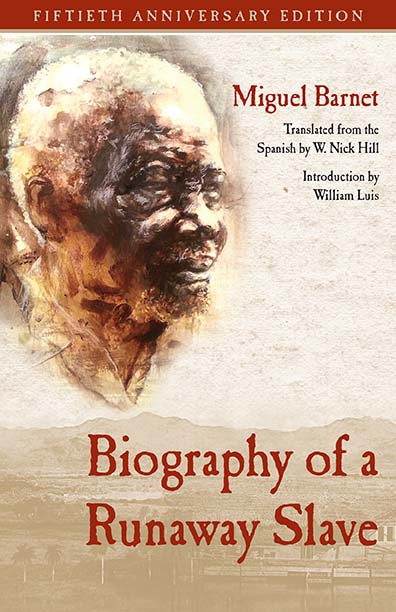
C.M. MAYO: You have also done book length translations, for example, of Miguel Barnet’s Biography of a Runaway Slave. Can you tell a little about this experience and how it affected your own work?
W. NICK HILL: I had been tried out so to speak on Barnet’s lesser testimonial novel, Rachel’s Song, the story of a dance hall girl before Sandy Taylor at Curbstone Press asked me to do Biography. I’m not certain I’d done a very good job with Rachel who was as shallow and frivolous as cabaret life allowed in Cuba in the 20 and 30s when it was a playground for privilege. But apparently it was good enough to give me a crack at Esteban Monetejo’s story. It was a daunting challenge. Esteban was an old man when Barnet interviewed him about the saga of how he ran away from slavery, lived alone in the bush, fought in the War of Independence, and watched the Cuban Revolution triumph before he died at 105 years of age. Esteban was uneducated of course, but he was smart, wily, curious, resolute, was steeped in the lore and rituals of various Afro Cuban spiritual beliefs, and he had a sharp memory. How does such a man sound in English? Though I read U.S. slave narratives, Montejo wasn’t going to sound like them. The details of everyday life he narrated differed greatly from slaves in the U.S. in large degree because Cubans were able to hold on to parts of their heritage from Africa.
As I progressed I realized that in a very real sense as translator I was mimicking Barnet’s role in his relationship with Montejo more closely perhaps than in other translations projects. Hence the confusion of titles between my version and the previous one by Jocasta Innes who knew a lot about ethnography and didn’t want to recognize the newness of what Barnet was doing. She published her translation in England as Autobiography, thus making Montejo into the sole author. What Barnet was after was to present the runaway slave’s voice as clearly and as transparently as white man could convey. And that’s what I tried to convey in the English version of the testimony of a man who was a character, a man of contradictions, tics in his speech, and great humanity, who gave convincing details of what life as a slave and as a free man in Cuba was like before the Cuban Revolution.
I made as literal a version as I could get and then worked
to shape it within all the prohibitions and permissions I was aware of as a
person who bridges the gap between slave and free, Cuba and the United States.
I didn’t try to round Esteban out, I left phrases in Spanish or Yoruba that had
no equivalent because the original already had a Glossary that clarified
details of ethnicity, history, and the like.
I judged it to be acceptable to simply add to it. In all, I tried to fashion a voice of great
humanity in an English that was understandable but particular. A new edition came out from Northwestern
University Press in 2016, with a fine introduction by Professor Wiliam Luis.
C.M. MAYO: You have been a consistently productive writer for many years. How has the Digital Revolution affected your writing? Specifically, has it become more challenging to stay focused with the siren calls of email, texting, blogs, online newspapers and magazines, social media, and such? If so, do you have some tips and tricks you might be able to share?And another question apropos of the Digital Revolution. At what point, if any, were you working on paper? Was working on paper necessary for you, or problematic?
W. NICK HILL: I have been much aided and hindered both by digital media. Before I left teaching I was deeply involved in using the web and programs like WebCT –programs like Chalkboard today– to help students manipulate at their own speed the conjunction of sight and sound that is central to learning another language.
After I left academics, I really dove into writing poetry. I
had already withdrawn from some of those very distractions you mention because I could feel how they drew me further
into time on computers and into a popular culture that relies increasingly on
violence and the propagation of stereotypes. I don’t mean to say that there
aren’t meaty blogs, You Tubes, and the like to enrich one’s thought, but even
so it can be overwhelming, as you suggest. Thus, to say that I’m distracted
from writing by elements of Virtual Reality would be erroneous however, because
I’ve guarded against it. In fact, the
digital has benefitted my writing in two ways.
As I said previously, I published Sleight Work on my website to take advantage of the movement to
ensure access to materials remains as open and free as possible. In the world
of publishing today, there are so many access points to creative work it
boggles the mind. At the same time, so much of it has been infused with
commercialism that I for one find it disturbing. I’m sure there are exceptions,
but much of the discussion of writing on the web and in print revolves around
volume of sales, numbers of prizes, and other markers of what? Subject matter? Craft? Raw writing as a
practice? Justice? Art?
The second way that the Digital Revolution has not
distracted me resides in the fact that I have made it a focus of my work.
Awhile back I became intrigued by the Mesoamerican ballgame that was played in
ancient times and is still played in some few areas of Mexico today. The game,
variously called ullamalitzli, Pok-Ta-Pok, Tachli, was played with a heavy latex rubber ball five hundred
years before Europeans came to colonize. I’ve been writing poems about the
continuity of games in these lands. I have come to see that a continuity worthy
of further exploration exists between the contemporary world of video gaming,
itself a world apart, and those age-old games. This is a body of work that I’m
still actively pursuing.
As for tips, I’d say the policy of following a middle course
between Luddite no contact and game players who rarely see natural light is
called for. And a good healthy skepticism about how electronics will deliver
the biosphere from the predations of capitalism. Anthropologist David Graeber
has my ear when he writes about anarchism in a compelling way in his Fragments of An Anarchist Anthropology.
I have always written on paper first and then make hard
copies of what seems interesting enough to work further. The most unsettling
aspect of this practice is that the pages keep on piling up. Some small
fraction of those words do get digitized. Apart from that who’s going to wade
through all those pounds of paper if I don’t. Which would seem to be a good
argument for going paperless though I can’t shake it.
C.M. MAYO: What’s next for you as a poet and translator?
W. NICK HILL: I’m preparing for another stay in my adopted city of Oaxaca, Mexico where I will finish translating Gary Lemons’ Día de los muertos that Red Hen brought out in 2016 as a coloring book. The chiste, the joke is that I’m translating it into Spanish. More realistically, I hope to polish enough of a sample to interest a poet in Mexico to sign on with me to make it ring true with the goal of seeing about a publisher. I’ve already asked Jorge Fernández Granados, but it was a year ago and was put off-handedly so he’s probably not thinking about it now. I have published a handful of poems from his Principle of Uncertainty, so I’m hoping he is amenable. In any case, Lemons’ work dances with surreal abandon that juxtaposes eccentric, intuitive images of the splendor and suffering of creatures, from burros, to dusty young gringos, and sea tortoises, all creatures encountered in Oaxaca at various times between the late 60s and the 80s. A happy, hubristic effort of mine to render this whirling dervish of words into Spanish.
In addition, I’m going to double down on a bilingual
collection of poems that builds on Mundane
Rites / Ritos mundanos and will poke around in matters related to
Americanismus, a tentative title, for new worldisms. What the adventure of
website publishing has suggested to me is that no existing publisher I know of
will chance it with a book for bilinguals not by a Latinx writer. I’m cognizant
of the political nature of cultural work and don’t want to distract from worthy
goals of U.S. Latin@s. At the moment only on the web could I present a book for
bilingual readers who might understand what I’m celebrating. Perhaps this effort
is akin to the recognition that jazz and blues are universal art forms that
honor African American originators and share their creativity even in the midst
of racism. And then there’s that ball game project at the end of a joystick.
Thanks for giving me the chance to share
with you. Keep up the good work.
Truly, I am not intending to collect typewriters. All shelf space is spoken for by books!! Last week I brought home a 1967 Hermes 3000 because (long story zipped) my 1961 Hermes 3000 is temporarily inaccessible, and it was bugging me that my 1963 Hermes Baby types unevenly and sometimes muddily (which could be a problem with the ribbon, but anyway), and I had a deadline to type my short story “What Happened to the Dog?” for the anthology COLD HARD TYPE (about which more anonread it here).
Well, obviously I had to buy another typewriter!
I dare not buy anything but a Swiss Hermes. The one I could find in my local office supply shop was a refurbished 1967 Hermes 3000 with a Swiss-German QWERTZ keyboard. I’ve had to get used to the transposed Y and Z keys; otherwise, kein Problem, and es freut mich sehr to have the umlaut.
A QWERTZ Swiss German keyboard (American keyboards are QWERTYs)
Of my three Hermes typewriters, this 1967 3000 is by far the smoothest, easiest to type on, and most consistent. I venture to use the word “buttery,” in fact.
Herewith, typed on the 1967 Hermes 3000, “Silence” and “Poem,” from my forthcoming collection, Meteor:
Typed today but originally published in Muse Apprentice Guild in, ayy, 2002. I think it was.
If you’re going to the Great American Writerly Hajj, I mean the Associated Writing Programs Conference, come on by my reading– it’s a free event– I’m on the lineup with Thaddeus Rutkowski, Cecilia Martinez-Gil, Tyler McMahon, Seth Brady Tucker, John Domini, Teri Cross Davis, Elaine Ray, William Orem, Jeff Walt, and Joan G. Gurfield for the Gival Press 20th Anniversary Celebration Reading on Friday March 29, 2019 @ 7 – 10 PM, Hotel Rose, 50 SW Morrison St, Portland OR.
The following day, Saturday March 30, 2019, @ 10-11:30 AM, I’ll be signing copies of Meteor at the Gival Press table (Table #8063) in the AWP Conference book fair.
You can also find a copy of Meteor on amazon.com. And read more poems and whatnots apropos of Meteor on the book’s webpage here.
Those of you who follow me here know that I am fascinated by attentional management and the creative process. Of late I have posted here on my advances in email management; finding time for writing (gimungous swaths of it!); and most recently, my distraction-free smartphone (which post includes an app evaluation flowchart to tailor-make your own, should you feel so inclined).
That last post about the smartphone appeared on the eve of the publication of Cal Newport’s Digital Minimalism. Because I am a fan of Newport’s books, especially Deep Work, which I recommend as vital reading for writers, of any age and any level of experience, I expected Digital Minimalism to be good. As I noted in that post, if nothing else, in broadening our ability to think about the technology we use, Newport’s term “digital minimalism” is an important contribution in itself.
Reader, Digital Minimalism is beyond superb. It is a healing book, on many and profound levels, and I believe that it is not only vital reading for writers, but for anyone who finds themselves staring at a screen more often and for longer than they know is good for them– and, alas, these days, that would be just about everybody. (Including parents.)
In Digital Minimalism Newport says much of what I have said here at Madam Mayo (I found myself nodding, yes, yes, at almost every page), but he goes thirty miles higher and a loop-de-loop beyond.
And perhaps most importantly, for the general reader looking for something in the burgeoning self-help genre addressing the behavioral addictions of our Digital Age, as a tenured professor of Computer Science at an elite university, Cal Newport has authority rarer than an orchid in the Sahara.
My intention in this week’s post is not to provide a full review of Digital Minimalism, but rather to focus on one chapter, “Reclaim Lesiure,” and, more generally, the importance for writers of quality leisure.
QUALITY LEISURE
Writes Newport:
“The more I study this topic, the more it becomes clear to me that low-quality digital distractions play a more important role in people’s lives than they imagine. In recent years, as the boundary between work and life blends, jobs become more demanding, and community traditions degrade, more and more people are failing to cultivate the high-quality leisure lives …crucial for human happiness. This leaves a void that would be near unbearable if confronted, but that can be ignored wih the help of digital noise. It’s now easy to fill the gaps between work and caring for your family and sleep by pulling out a smartphone or tablet, and numbing yourself with mindless swiping and tapping. Erecting barriers against the existential is not new–before YouTube we had (and still have) mindless television and heavy drinking to help avoid deeper questions–but the advanced technologies of the twenty-first century attention economy are particularly effective at this task.” (p.168)
I think that bears repeating.
“Erecting barriers against the existential is not new–before YouTube we had (and still have) mindless television and heavy drinking to help avoid deeper questions–but the advanced technologies of the twenty-first century attention economy are particularly effective at this task.” — Cal Newport
Newports recounts the experience of a writer who tried to go cold turkey from digital distractions. As that writer summed it up, it was “Torture.” Writes Newport:
“[He] felt uncomfortable, in other words, not because he was craving a particular digital habit, but because he didn’t know what to do with himself once his general access to the world of connected screens was removed.” (p.168)
Then:
“If you want to succeed with digital minimalism, you cannot ignore this reality… The most successful digital minimalists, therefore, tend to start their conversion by renovating what they do with their free time–cultivating high-quality leisure before culling the worst of their digital habits… When the void is filled, you no longer need distractions to help you avoid it.” (pp.168-169)
NOT THE DREAMTIME OF A CHARTREUSE MOON OR, THE PERILS OF PROCRASTINATION
As anyone who has taken on writing a book or three knows, only in the dreamtime of a chartreuse moon do they “write themselves.” It happens. But the experience is more often one of initial enthusiasm soon weighted down by one frustration and then twenty-nine others, delays for good reasons, for stupid reasons, more frustrations, distractions galore… and so, slowly, or quickly, a slide into the warmly inviting moist sand of procrastination.
Some books escape this trap. Most do not because the writer soon feels bad about having procrastinated–oh, very bad– and on top of this, in march the clanking, hammering, pounding round-n-round of woulda-coulda-shouldas… which makes the mere thought of the book so disagreeable that… eventually… it sinks deeper into the quicksand… and deeper…. And there it dies.
So how did I manage to write so many books, including the epic historical novel, The Last Prince of the Mexican Empire? A novel, moreover, that deals with Mexico’s most complex transnational episode and recounts it by means of a Jamesian roving omniscient point of view? Whatever you may think of my novel, were you to read it, I am sure you could agree that it was not a modest undertaking. I won’t tote up all my challenges and frustrations over the eight years I needed to research and write it. For purposes of this blog post, the answer to the question is that, apart from a perhaps unusual streak of tenaciousness in my personality, when the going got really funky with The Last Prince of the Mexican Empire, I happened upon the lifesaver–I grabbed it!– of psychologist Neil Fiore’s The Now Habit.
And now here I am in the midst of another multi-year book project– multi-year by its nature–but also one that, alas, has been interrupted by two other books, a death in the family, and two household moves… I was starting to sense a bit of dampness there in the encroaching sand, as it were. But then, in one of the boxes I opened after my latest move, I found again my dog-eared copy of The Now Habit. I reread it, and I can report that Fiore’s advice is as consolingly golden as ever.
And then, after reading Cal Newport’s Digital Minimalism, in the light and freshness of that, I sat down and went through The Now Habit yet again.
It was eerie to be reading Fiore’s The Now Habit in 2019, for it appeared in 1989, before anyone, outside a coterie of high-tech scientists and miltary people, had more than a notion, if that, of the Internet.
When I first read The Now Habit in the early 2000s, email had become a thing, but only a few writers had one of those newfangled things called “websites.” I did not yet know of a single one with a blog (I don’t think I’d yet heard of blogs). Cell phones were just phones. To get to school, we walked a mile in the snow without shoes (just kidding). For mindless procrastination there were trashy fiction, newspapers, magazines, and TV on tap, ever and always. In short, writers have always had to battle procrastination, albeit relatively low-octane stuff compared to the engineered-to-be-addictive apps of today.
But back to the question of quality leisure.
Of immense value for me in Fiore’s The Now Habit was the chapter “Guilt-Free Play, Quality Work.” Speaking to us from a time essentially free from “digital distractions,” Fiore says much the same thing as does Newport: for health, happiness, and productivity, we need quality leisure– or, as Fiore calls it, “guilt-free play.”
Writes Fiore:
“Attempting to skimp on holidays, rest, and exercise leads to suppression of the spirit and motivation as life begins to look like all spinach and no dessert… we need guilt-free play to provide us with periods of physical and mental renewal.”
It’s counterintuitive: when we seriously, urgently want and need to get work done, why first schedule play?!
Writes Fiore:
“Enjoying guilt-free play is part of a cycle that will lead you to higher levels of quality, creative work. The cycle follows a pattern that usually begins with guilt-free play, or at least the scheduling of it. That gives you a sense of freedom about your life that enables you to more easily settle into a short period of quality work. Having completed some quality work on your project, your feeling of self-control increases, as does your confidence in your ability to concentrate and to creatively resolve problems. In turn your capacity to enjoy quality, guilt-free play grows.” (p.82)
Play and work enhance one another in this cycle:
“…You are now well-rested, inspired, and ready for greater quality work. Guilt-free, creative play excites you with motivation to return to work.” (p.82)
I would urge anyone who wants to overcome procrastination to carefully read Fiore’s The Now Habit; he has much to say about the ways over-work can lead to procrastination, and the precise way to schedule guilt-free play with what he calls an “unschedule,” and how to overcome blocks to action. (Much of this good old-fashioned, yet oft overlooked, common sense, for example, what he calls “Grandma’s Principle,” that your scheduled guilt-free play should come after a good, solid half hour of quality work– “your ice cream always comes after you eat your spinach”.) My purpose here is not to review Fiore’s book however, but to focus on the counterintuitive importance for writers of quality leisure.
“GUILT FREE PLAY” AND “QUALITY LEISURE”
First, it should be triple-underlined that the “quality” of leisure is not necessarily related to its cost. Golf resorts, wide-screen TV manufacturers, purveyors of recreational vehicles, time-shares, sports equipment, Princess Cruises, et al would like you to imagine that what they’re selling is “quality leisure,” and the more expensive the upgrades the better!
But “quality leisure” could be an activity as pennywise as sitting in a chair in your livingroom and knitting a scarf from a ball of yarn that had been stashed in your closet for the past 20 years. Or, say, baking peanutbutter cookies; playing with your dog; walking out to the park and tossing around a frisbee with a friend. Biking to your public library to read War & Peace. Or playing baseball, curling, taking a yoga class, doing yoga on your own in your backyard, or on the beach at dawn! Scottish country dancing, baking bread, watching Casablanca at your local film school’s movie festival. Learning to play the guitar or the kazoo. Baking lasagne. Casting bronze sculpture! Or squishing together a super weird alien head the size of your fist out of papier mache!
In sum, “quality leisure” can be pretty much any activity that you truly enjoy doing and that you find energizing. (Hint: TV watching and pecking at the smartphone don’t count. Neither does bar-hopping or sitting around toking weed.) Newport has more to say about identifying and pursuing quality leisure. Before I return to that, a brief note about the “artist date.”
THE ARTIST’S WAY
By this point I imagine that many of you writerly readers may be thinking, didn’t Julia Cameron say something like this in The Artist’s Way?
Indeed she did. Cameron’s concept, a potent one, is what she calls “the artist date.” The idea is that this is scheduled quality leisure (to use Newport’s term) / guilt-free play (to use Fiore’s) but you go alone— absolutely not with someone else–and do something that nurtures your artist self. For me it might be something like a visit to a museum, reading a Willa Cather novel for an hour in a favorite coffee shop, or attending an organ concert. (In one of my most challenging moments in writing The Last Prince of the Mexican Empire, one “artist date” I made for myself was to attend a planetarium show. Of all things.) Some people might like to get out the crayons or the Play-Dough. Of course, there’s no formula; what nurtures one artist, or writer, might not another.
So, advises Cameron, if you want to get some good writing done, go forth, by yourself, at a scheduled time, and do some fun and possibly wacky-nerdy thing!
Cameron’s The Artist’s Way was originally published in 1991, before the tsunami of digital technologies swept over our world, and yet like Fiore’s The Now Habit, it offers wise and timeless advice for writers. Cameron has a New Age spiritual slant, however, and that isn’t every Atheist’s slug of coffee. With that caveat, I warmly recommend The Artist’s Way.
CAL NEWPORT’S LEISURE LESSONS
Back to our computer professor and attentional focus expert Cal Newport and his latest, Digital Minimalism. In the chapter “Reclaim Lesiure,” Newport offers specific insights into which types of leisure are most effective for filling the void otherwise taken by low-quality digital distractions, and for enhancing well-being and productivity. These are those endeavors that:
(1) “prioritize demanding activity over passive consumption”;
(2) “use skills to produce valuable things in the physical world”; and
(3) tend to be those “that require real world, structured social interactions.”
Newport is not talking about eliminating digital technology, and in fact he points out ways in which websites, email, social media and more digital technologies can assist us in engaging in more and higher quality leisure. There is, Newport concedes, “a complex relationship between high-quality leisure and digital technology.” In my own case, I recently found out about and registered for a university extension course (which I attended in person) on a website. Many similar examples of how texting, social media, and YouTube, can assist and enhance real world meetings and activities no doubt pop into your mind. Newport stresses: “The state I’m helping you escape is one in which passive interaction with your screens is your primary leisure.”
“The state I’m helping you escape is one in which passive interaction with your screens is your primary leisure.” — Cal Newport
Newport concludes his chapter “Reclaim Leisure” with four practices, each amply explained, argued, and with illuminating examples:
Fix or build something every week;
Schedule your low-quality leisure;
Join something;
Follow leisure plans, both seasonal and weekly, stating both the objectives and the habits you aim to establish.
AND TO CONCLUDE WITH FRIEDRICH DÜRRENMATT
Here is an example of one writer’s quality leisure activity: Swiss writer, playwright and artist Friedrich Dürrenmatt (1921-1990) painted the bathroom adjacent to his office. This is a partial view, of side wall, back wall, and ceiling. I decline to publish here the principal appurtenance.
Thanks to poet Joseph Hutchison, who recommended Dürrenmatt’s work to me, as I am temporarly living in the area, I made it, shall we say, one of my “quality leisure” activities to visit the house / museum, now the Centre Dürrenmatt Neuchâtel. (I would also call this visit “guilt-free play,” to use Neil Fiore’s term, but not an “artist’s date,” as Julia Cameron defines it, because I did not go alone.)
In the museum:
In English: “I can play with this world: that is my freedom as an artist.”– Friedrich Dürrenmatt
Here is the writer at his desk, as shown on the cover of this book (which I would translate as Dürrenmatt: His Life in Pictures):
Uh oh (I can begin to see how this gets out of hand!) I just brought home a second vintage Swiss-made typewriter, a 1963 Hermes Baby, which is a sight lighter at 3.6 kilos (just under 8 pounds) and more compact than my 1961 Hermes 3000. It is in excellent working order, klak, klak!
He has not expressed himself verbally on the matter, but it would seem that my writing assistant would prefer that I use the MacBook Pro. Also, geesh, it was ten minutes past suppertime.
From Meteor, my collection which will be out from Gival Press later this month:
>More about the Hermes Baby at the Australian blog ozTypewriter and at the Swiss Hermes Baby Page by Georg Sommeregger (in German, but Google translation available).
Meanwhile, whilst strolling about the Rio Grande outside of Albuquerque, my fellow COLD HARD TYPE contributor Joe Van Cleave ponders the Typosphere, its relation to digital media, and the ultimately analog origins of the digital: