Third Monday Convo

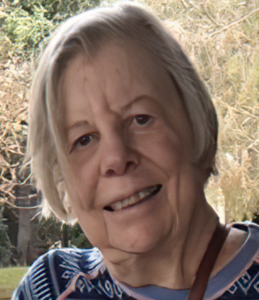
Welcome to this third Monday “convo,” my conversation with another writer, on this occasion one of the most accomplished and original literary novelists in Washington DC. But nope, she didn’t write a political thriller or some crunchy tome of historical fiction. Promising to be a poetic and moving read, Solveig Eggerz’s Sweet Potato, forthcoming this November 12, is a coming of age novel set in small town Virginia.
You will find no AI-generated writing here. If I say I wrote it, I wrote it. And precisely because I do a lot of writing I don’t have the wherewithal to wrangle with a comments section. But I do welcome your comments. Write to me directly at pugandbee (at) protonmail (dot) com.
To subscribe, visit the Substack mirror site.
Click here to go directly to this same post on Substack.
CONVO: SOLVEIG EGGERZ ON SWEET POTATO
When I first came across Solveig Eggerz’s novels I was struck by what an unexpected window into another world they were— Iceland, specifically. Back in 2011 I interviewed her about her novel Seal Woman and in 2021, for this blog (previously titled “Madam Mayo”), posted a Q & A about her novel Sigga of Reykjavik. As Eggerz said in that latter interview, “My interest in the 20th century history of Iceland led me to write. I wanted to show how Iceland struggled for independence from Denmark, how isolated Iceland was from the rest of the world until May 10, 1940 when Churchill’s occupation force arrived, and how Iceland’s independence hung in the balance during World War II.”
Her latest novel, Sweet Potato, again focuses on a woman seeking to claim her power, to become her own source of strength, and yet in other respects Sweet Potato is a major departure— to Virginia’s Shenandoah Valley. From the description:
“Lorenza has always known two things: she was adopted, and she loves snakes.
“The first fact haunts her. The second one saves her.
“Sweet Potato is a coming-of-age novel about a young woman growing up in a small town in Virginia, searching for her birth mother, and finding — through the unlikely world of herpetology — that the power she’d been looking for was never somewhere else to begin with. Part identity story, part nature writing, it weaves together the ancient mythology of snakes, the cutting-edge science of venom research, and the emotional complexity of what it means to belong.
“Lorenza is a rare kind of protagonist: curious, stubborn, and drawn to creatures most people cross the street to avoid. Her story is for readers who know what it is to feel like they landed in the wrong life — and who suspect that the right one might be stranger and wilder than they imagined.”
Born in Iceland, as the daughter of an Icelandic diplomatic, Eggerz was educated in the UK, the US, and Germany. For many years now, she has made the Washington DC area her home. Eggerz’s life is much too rich to squeeze into a capsule bio, but here’s what she offers on her website, solveigeggerz.com:
“A storyteller, a teacher, and a writer, Solveig Eggerz has told folk and fairy tales in Alexandria, VA, schools, in DC’s homeless shelters, and in Northern Virginia’s detention centers.
“Her writing students have ranged from firefighters at Reagan National Airport to Central Intelligence Agency staff, to civilian and military personnel at the Department of Defense. Currently she teaches personal stories and memoir at the Writer’s Center in Bethesda, MD and in Northern Virginia jails.
“She has written for newspapers such as Roll Call, Alexandria Gazette-Packet, and The Washington Daily News. Her essays and stories have appeared in The Delmarva Review, Palo Alto Review, The Christian Century, Midstream: A Monthly Jewish Review, and The Northern Virginia Review.
“Having grown up in four countries, she speaks three languages and struggles with Italian. In attaining her PhD from Catholic University in Comparative Literature, she focused on medieval anti-feminist satire.”
Sweet Potato
by Solveig Eggerz
BookBaby, November 12, 2026
ISBN: 979-8317850869
Here we go:
C.M. MAYO: When and how did this novel begin to appear in your imagination?
SOLVEIG EGGERZ: It happened about twelve years ago when I served on a panel with another author who wrote a memoir about feeling a profound need to find her birth mother. It was something she just could not Not do. She HAD to find her birth mother. That feeling was entirely new to me. I knew right then that I wanted to explore that drive and to develop it in fiction.
C.M. MAYO: Did it come in fits and starts or was it a “download”?
SOLVEIG EGGERZ: The desire to understand that feeling can over me like a tsunami. I read countless memoirs and interviews with adoptees to begin to understand these complicated feelings.
C.M. MAYO: Can you talk a bit about the process for you?
SOLVEIG EGGERZ: I just shelve, revise, shelve, revise. Each time I revised, the characters’ motivation and their relationship to one another changed. I worked on these ideas for about twelve years. But as you say in fits and starts.
C.M. MAYO: Sweet Potato is a major departure from your other works, Seal Woman and Sigga of Reykjavik, both set in Iceland. What inspired you to write a novel set in rural Virginia?
SOLVEIG EGGERZ: I think I had a secret love for the Shenandoah Valley that began long ago and a strong sympathy for what the people of the valley suffered during the Civil War. As a practically rootless person who grew up in four countries, I felt I owed it to my children to help them find roots in Virginia, the state where they were born. We lived in historic Alexandria, so we began with George Washington and colonial times. From there we traveled beyond the beautiful Blue Ridge Mountains, where we visited tiny museums and encountered stories about colorful characters, Stonewall Jackson, Belle Boyd, and Jubal Early.
C.M. MAYO: Do you see a common thread in your three novels?
SOLVEIG EGGERZ: Each of the novels features a strong and resilient female protagonist, who seeks a lost loved one. In Seal Woman Charlotte seeks her child. In Sigga of Reykjavik, Sigga longs for the father she never knew, and in Sweet Potato Lorenza yearns for the mother she has never met. And all of these women seek their own power.
C.M. MAYO: Which are writers who have most influenced your writing?
SOLVEIG EGGERZ: Chang Rae Lee, author of A Gesture Life. I loved his juxtaposition of past and present within the protagonist’s consciousness. Annie Proulx, author of The Shipping News. From her I learned that writing a grammatically correct sentence does not necessarily serve your characters or your story. She was so original in her writing and thinking. That loosened me up.
C.M. MAYO: What are the things, or the thing, that you perceive about US and its literary culture that might not have been possible for you to perceive had you not been Icelandic?
SOLVEIG EGGERZ: Not sure I can sense the difference in cultures that this question implies. I have, however, always considered the medieval Icelandic Sagas unique in the respectful manner in which they treat strong female characters. I always hope to bring some of that respect to my writing.
C.M. MAYO: Having written so much about snakes in this novel, has your fear of and/or fascination with snakes changed? And if so, how so?
SOLVEIG EGGERZ: I think I will always walk wide of snakes and probably continue to fear them. But my feelings about snakes have also changed radically. I used to be fascinated by their patterns and the beauty of their movements. But now I am fascinated by the power that I know resides in the complex component parts of the toxins in snake venom. For this reason I have gained a new respect for snakes. Their venom can not only kill you but, after considerable modification in a research lab, it may also heal you.
# # #
- Visit Solveig Eggerz’s website
- Read more about Sweet Potato
- Listen to A Conversation with Solveig Eggerz About Her Novel Seal Woman
- Read a Q & A with Solveig Eggerz on Sigga of Reykjavik
- Highly recommended: Interview with Solveig Eggerz by David O. Stewart for Washington Independent Review of Books, July 21, 2020
© C.M. Mayo, 2026. www.cmmayowriter.com
I welcome your comments directly at pugandbee (at) protonmail (dot) com.
To subscribe, visit the Substack mirror site.