Madam Mayo blog’s “madmimi” email sign-up is finally working, over there on the sidebar. Subscribe and each Monday you will receive the latest post (and nothing else– no spam). Mexico, poetry, rare books, Texas, translation, the typosphere, occasional pug-sightings– if these tickle your fancy this is the blog for you! Second Mondays are for my workshop students and anyone else interested in creating writing; fourth Mondays are for a Q & A with another writer.
It’s too long a story what happened to the Q & A for this month; however I offer you this fascinating Q & A from the Madam Mayo blog archives.
Q & A WITH ROGER GREENWALD, POET AND LITERARY TRANSLATOR OF GUNNAR HARDING
(Originally posted July 1, 2015 on Madam Mayo blog’s original blogger platform. Madam Mayo blog has since migrated to this new self-hosted WordPress site.)
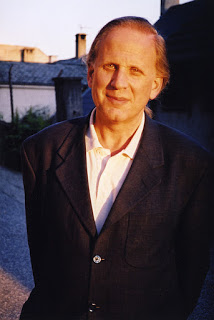
ROGER GREENWALD, POET AND TRANSLATOR Photo by Alf Magne Heskja
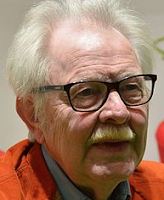
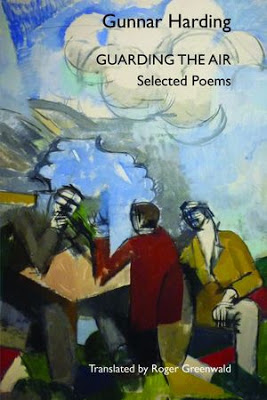
Gunnar Harding, a jazz musician, painter, essayist and a translator himself, is one of Sweden’s leading poets. Surely Harding is one of Sweden’s most prolific as well; Greenwald has selected numerous poems from more than a dozen of his books. Strange, witty and jazzy, Harding’s poems wing from the moon’s Sea of Tranquility to nickels in a jukebox (“Rebel without a Cause”).
GUNNAR HARDING, Swedish literary legend
> Visit Greenwald’s webpage for the book, which includes some of the poems and a video of the launch, here.
> Read the review by Christine Roe for Words Without Borders. “Spanning a lifetime of poetry, Guarding the Air pays homage to tragically under-translated Swedish literary legend”
> Gunnar Harding on Swedish Wikipedia (Note: I’m not a fan of Wikipedia, but alas I could not find much else on Gunnar Harding. Caveat emptor.)
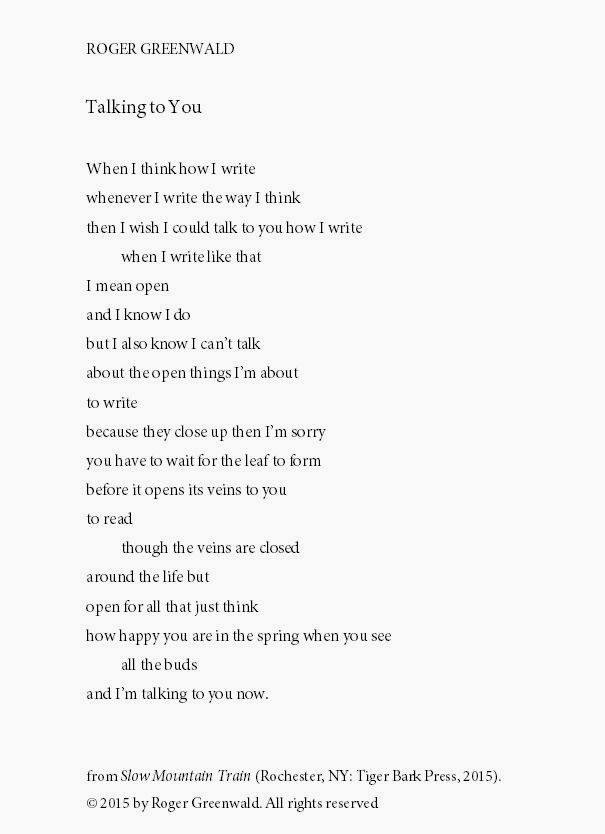
ROGER GREENWALD attended The City College of New York and the Poetry Project workshop at St. Mark’s Church In-the-Bowery, then completed graduate degrees at the University of Toronto. His poetry has appeared in such journals as The World, Pequod, Pleiades, Poetry East, Prism International, The Spirit That Moves Us, The Texas Observer, Great River Review, and Leviathan Quarterly. He has won two Canadian Broadcasting Corp. Literary Awards (poetry and travel literature) and has published two books of poems: Connecting Flightfrom Williams-Wallace in Toronto and in April 2015, Slow Mountain Train, from Tiger Bark Press in Rochester, New York.
C.M. MAYO: In a sentence, why should readers pick up this book?
ROGER GREENWALD: This selection spans the whole career of a major poet whose work is accessible and appealing– and also strong in both idea and feeling.
C.M. MAYO: What were the challenges for you as a translator?
ROGER GREENWALD: First I had to understand each poem in depth, of course, and in this case that meant understanding not only the language and the “argument,” but a broad range of allusions to other literary works, paintings, recorded music, places, people, and so on. (I’ve put pointers to these in endnotes.)
The biggest challenge, as always, was to write in English poems that had something like the voice and the music of the source. People assume that it is easier to translate poems written in a colloquial voice than to translate work full of neologisms, broken syntax, word play, and other notoriously “tough” features. But the fact is that those features give a translator license to be creative and sometimes to sound “strange”; whereas to translate a whole book in a colloquial voice, getting the literal sense and the line units and the music right while never once sounding odd or “translated” is just as hard or harder.
C.M. MAYO: What advice would you offer others who might consider undertaking a poetry translation?
ROGER GREENWALD: Translate into your native language. If you’re not doing that, you need to collaborate with a poet whose native language is the target language. Try to live for at least a year in the country that your poet and his or her language come from. Read not just the major works from that country’s literature, but some of what children read in school years, like fairy tales. Get to know some of the art and music. Watch TV and listen to radio. And ask a lot of questions, especially about the language, its idioms, its peculiarities. When you start understanding friends’ jokes, stand-up comics, and locally made comedy films, you will know your cultural immersion has worked.
ROGER GREENWALD: The greatest benefits have come from sharing knowledge and experiences with other translators. Seeing and hearing their work and discussing how they approached certain texts gave me useful insights into practice. But it was also important to learn about how to navigate relationships with authors and their publishers, how to find suitable potential English-language publishers, how to present work to those, and how to avoid getting burned by unfair contracts. Simply hearing, in the Bilingual Reading series at ALTA conferences, a great range of usually unpublished work, some of it still in progress, has been an ongoing source of delight and inspiration.
And beyond that, it’s worth saying that literary translators have to be some of the most interesting people in the world, with extremely diverse backgrounds, experiences of foreign cultures, and knowledge of wonderful writers who are little known in English, even if their work has been translated and published. So it has been great to get to know my fascinating colleagues!
C.M. MAYO: Are there are other associations you would recommend?
ROGER GREENWALD: None that I belong to. But I have had it in mind for some time to look into the Authors Guild, because it is focused on advocating for fair treatment of authors and translators. And this seems to be an issue of growing concern as digital media undermine publishing revenue, and as companies like Amazon demand deep discounts and exert downward pressure on the sale price of both paper and electronic books.
C.M. MAYO: Where can readers find a copy of this book?
ROGER GREENWALD: I’m happy to say that the publisher of Guarding the Air has excellent worldwide distribution. So readers can buy it directly from the press at www.blackwidowpress.com (choose “Modern Poets” or use Search); they can order it through any independent bookseller they care to support; or they can buy it on line from Amazon or Barnes & Noble.
It’s also worth remembering that readers can ask their public library or their college library to acquire the book.
“Oscar Wilde arrived here yesterday evening or rather, at our house at the Falls. I took a short walk with him before tea. He talks well but a little loud and with a little too much assertiveness…” — John Bigelow, Jr.
Early last month I made a supersonic visit to New York for two ultra-intensive days in the archives at the U.S. Military Academy at West Point.* My object: to consult the diaries of Col. John Bigelow Jr., an officer in the Indian Wars and one of the personalities I am writing about in my book on Far West Texas. I’ve posted on this unjustly little-known officer and military intellectual elsewhere on this blog (here and here) and published a paper about him for the Journal of Big Bend Studies. One of the several things I was searching for in his archive were any mentions of his encounters with the Irish writer Oscar Wilde–for I knew that in between postings to remotest of Texas forts with the 10th Cavalry, Bigelow had returned to West Point to teach, and there, a short walk away, where his family had a country house at Highland Falls, his parents hosted Oscar Wilde. Yes, theOscar Wilde, international literary celebrity, who told U.S. customs on his arrival that he had “nothing to declare but his genius.” I found some choice quotes, not from Bigelow’s diaries, as I had expected, but in his letters to his fiancée, later wife, Mary Dallam. To wit:
West Point, November 21, 1881 …I hear that Oscar Wilde, having played himself out in England, is coming here to infatuate the American demoiselles. He will probably experience the disappointment of finding us on this side of the water in advance of England, rather than behind her, in recovery from the aesthete craze. There are not many symptoms of it now in New York. Yet one may once in a while see a girl on the street in a dress covered with gold colored patterns that make her look as if she were clothed in wall paper. February 10, 1882 ..I am especially sorry I could not be home Sunday as I missed seeing Oscar Wilde, who dined at our house that evening. I had seen him before at one of our receptions but had never had a good chance to hear him talk or to talk with him myself. From everything I learn about him I judge him to be a very companionable man. From the nature of your allusions to him I infer that he was not a social success in Baltimore. I think as little of his poetry as you do; nor do I much like his face. His mouth is not expressive of a delicate and refined instinct, and his hands are of the consistency of fresh bread. Nevertheless I am disgusted with the way in which he has been treated by a large part of our press and of our respectable population. There are young ladies in New York who talk about him as if he had come over here for the express purpose of captivating them and would have to regard his time and money wasted if he should not succeed in doing so! I believe Oscar Wilde is a man of rare talent and rare good taste. He believes in men dressing according to their individual taste and characteristics, not in knickerbockers unless that style of unmentionables especially becomes them. August 29, 1882 …Oscar Wilde arrived here yesterday evening or rather, at our house at the Falls. I took a short walk with him before tea. He talks well but a little loud and with a little too much assertiveness. The loudness is due partly to nature and partly to his speaking in public, the assertiveness is due to his public speaking and to his being lionized. There is more grace in his body than in his voice or features. He went to the ball with Anny and Jenny + my mother… His coat was a black velvet swallow-tail of the style of the last century, with ruffles in the place of cuffs and a white puffy frill-trimmed kerchief… He wore black knee-breeches, black silk stockings, buckled shoes and white kid gloves. When he went out to get into the carriage I saw him in his long easy cloak, his old-time high-crowned soft-felt hat, with its broad brim turned up one side, showing to advantage his long hair underneath; he looked like a typical cavalier. I know that if you had seen him you would have wished as I did that there were such costumes to be seen… August 31, 1882 Oscar Wilde left us today. He says he is to have a theater decorated to suit himself next winter in New York. He told us a good deal yesterday about Greece…
Sorry, no photos of that very photogenic snow-dusted campus at West Point. It was all I could do to work in the archives, then catch the shuttle to my hotel both days.
*It can be expensive indeed to travel to consult an archive, hence one must carefully guard one’s energies for long hours of laser-focus. My strategies include minimal socializing (I beg forgiveness of friends and family); no hither-and-thithering; eating only very lightly (preferably room service in the evening); sleeping as much as possible; showing up as close to when the archives open as possible, and staying glued to my seat, pencil in claw, until closing. I owe the warmest of thanks to the staff at the archives, most especially Susan Lintelman.
HONEY & WAX, ET AL
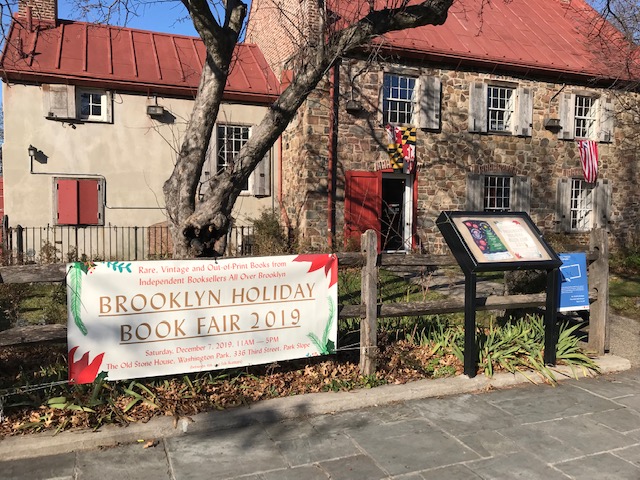
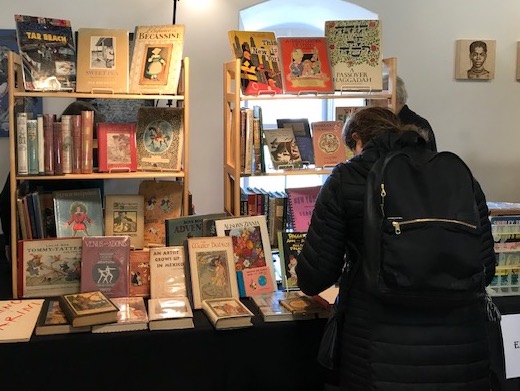
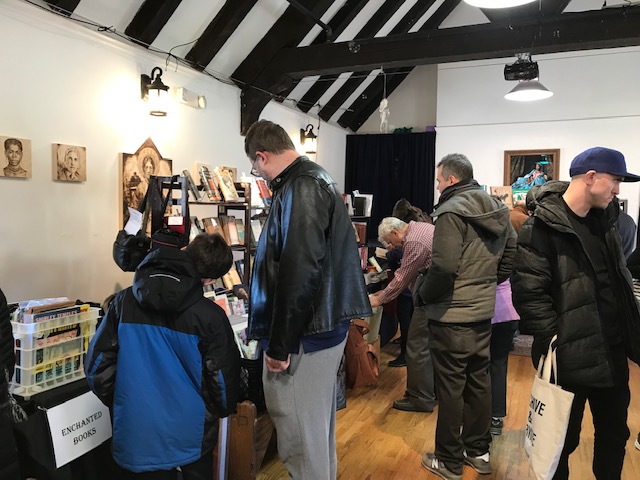
On this supersonic visit to New York I had but a mini-micro portion of a morning for shopping, and this being December, I had some to do. Since my dad’s family is from New York, the Rockefeller Center and the rest of tourist-clogged Fifth Avenue wasn’t anything novel for me, so I hopped over the river to peek into the Brooklyn Holiday Book Fair.
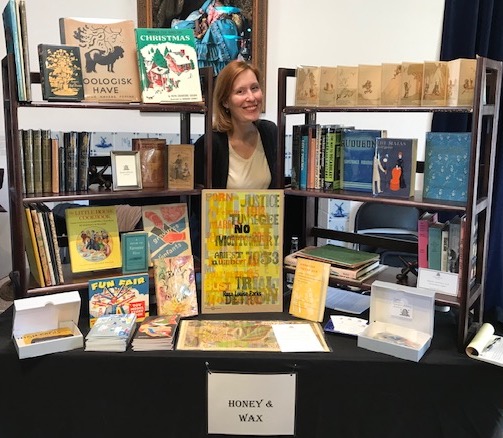
As those of you who follow this blog well know, I’m a rare book aficionada– as both a collector (in the peewee leagues thereof) and a writer with a few things to say about it all (see my Dispatch from Sister Republic or, Papelito Habla, a longform essay on the Mexican literary landscape and the power of the book). I also have a background as a (now armchair) economist, so I’ve had an eye on the rare book business from that angle, as well. Like the antiques business, and publishing, the rare book business has changed beyond recognition with the advent of Internet. Many of the changes frankly strike me as tragic losses. But there are some upsides. See for example these oral histories with members of the ABAA (Antiquarian Booksellers Association of America): Garrett Scott; Henry Wessells; and Heather O’Donnell of Honey & Wax Booksellers. The latter has been on my radar as one of the very few women in the trade and one of most dynamic of the new generation of rare book dealers. And here she is at the 2019 Brooklyn Holiday Book Fair!
Heather O’Donnell, proprietor of Honey & Wax Booksellers, member, Antiquarian Booksellers Association of America
The latest Honey & Wax Booksellers catalogue
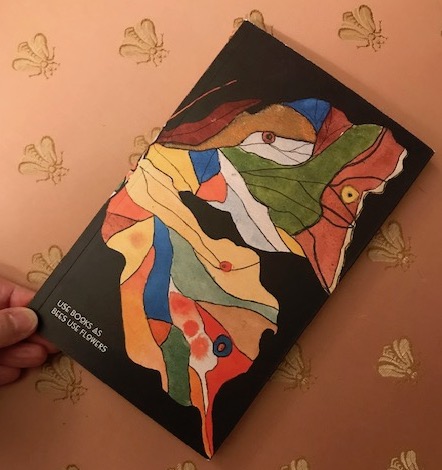
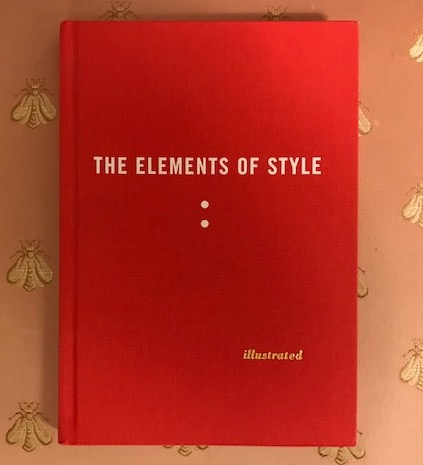
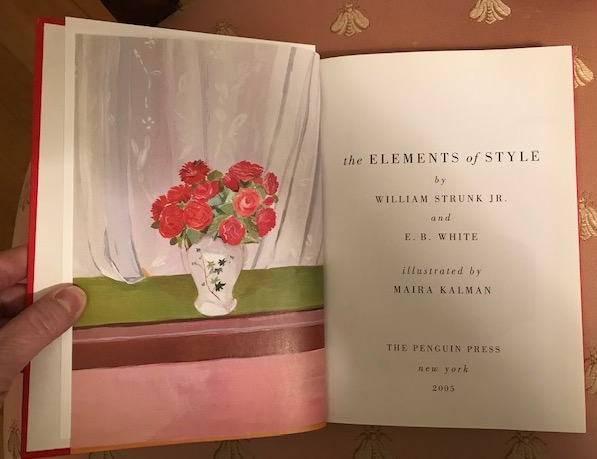
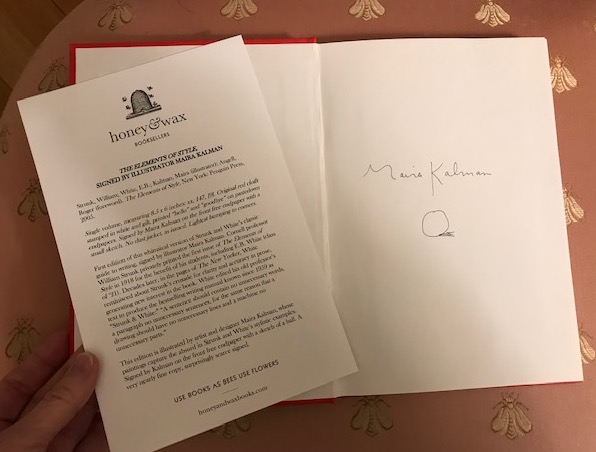
Her Honey & Waxcatalogs are exemplars of elegance. And her inventory, whew! In the latest catalog: “Autumn Rain, Autumn Wind: Memorial for the Executed Revolutionary Qiu Jin,” 1907, USD 20,0000; a 1930s edition of the novels and some letters of Jane Austin, inscribed to E.M. Forster by Lytton Strachey, USD 9,500; and so on. Most of the Honey & Wax catalog items are a galaxy beyond my budget, but the offerings here in the Brooklyn Holiday Book Fair, if just as fancifully varied, and all in exquisite condition, were vastly more economical. For the price of pair of Keds, she sold me this sweet treasure, which I ended up keeping for myself:
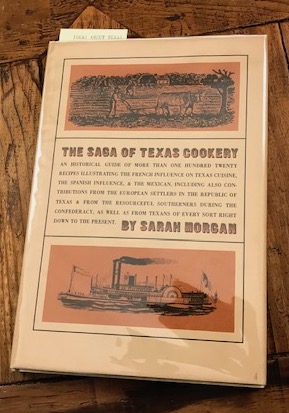
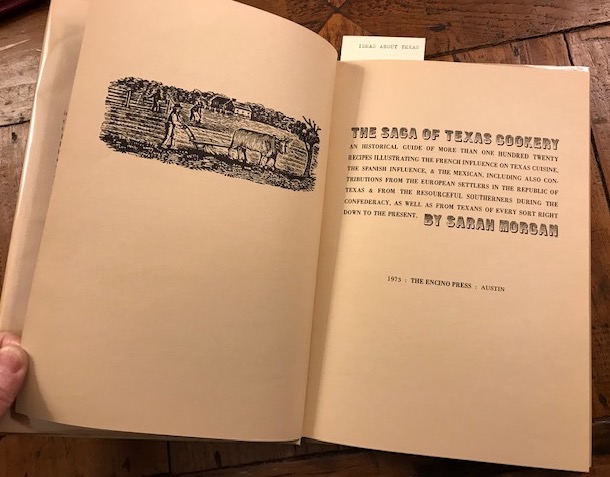
Also from my Brooklyn Holiday Book Fair haul, this handsome first edition of The Saga of Texas Cookery from Lizzy Young Bookseller:
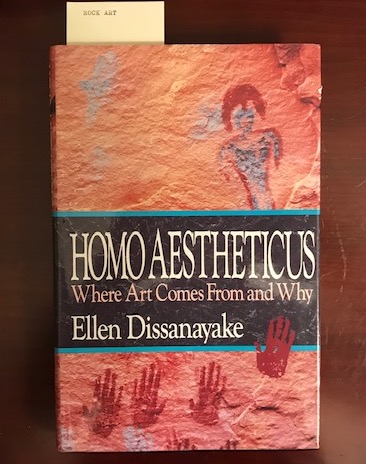
And for the price of a burger and fries (!!) I found this fine first edition from Enchanted Books:
Note my Texas Bibliothek bookmark. Yep, that’s where this handsome puppy goes. Dissanayake is also the author of the recently published Early Rock Art of the American West: The Geometric Enigma, which I look forward to reading.
Enchanted Books, antiquarian bookseller at the Brooklyn Holiday Book Fair
#
This blog posts on Mondays. Next post will be the fourth Monday Q & A with another writer.
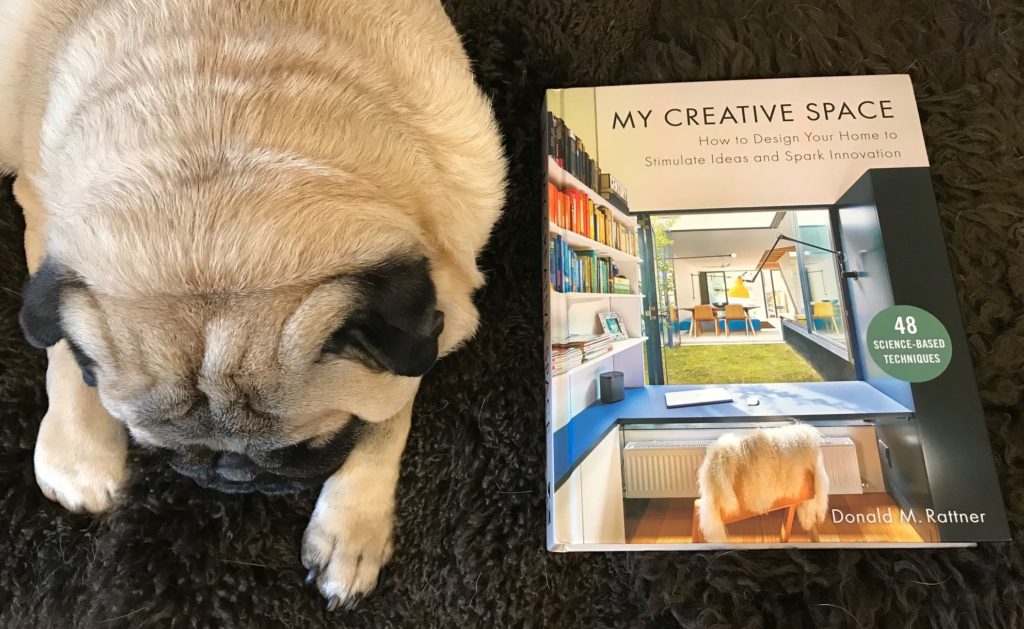
Pictured below, three birds with one stone, as it were, my writing assistant Uliberto Quetzalpugtl demonstrates Rattner’s science-based technique #25 “Sleep” and #26 “Nap” and #28 “Lie down or recline.”
#1 “Designate a creative space.” This winter 2020 my designated create space–I call it my office–is a room separated by a sliding door from the dining room. Plan B is my local coffee shop. In the past I have used a spare bedroom; a foyer (…that was challenging…); and a converted breakfast room. It is certainly possible to use a corner of the dining table; a breakfast table; a lap desk (taken to a sofa, chair, or bed); a table in a coffee shop; a carrel in a library… and so on. The point is, don’t be vague about where you’re going to do your writing. Designate it.
However, lovely as it may be for writer to have a large, totally private, and well-appointed office, it is by no means necessary. My advice would be, do your best to designate a creative space, whatever that best option may be for you at the moment, and then, get to the writing.
Yes, I find that does help, as Rattner says science confirms, to go to the same place each time you intend to write. But that isn’t necessary, either.
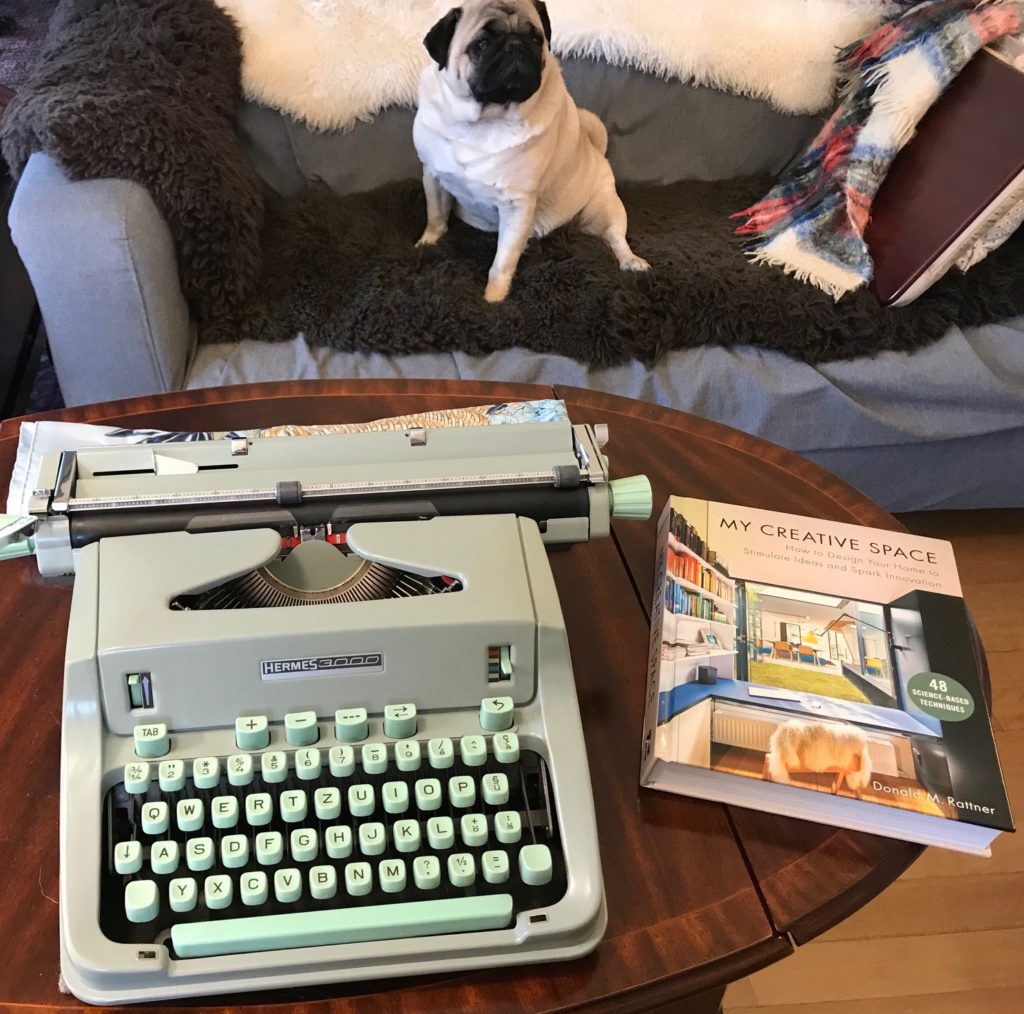
Here (below) my writing assistant models the big, sloppy Ikea sofa we use for lying down and, Rattner’s science-based technique #12 Choose curved over straight— the curved typing table; and #9 Be flexible–“Get the most creative bang for the buck by choosing furnishings and objects that move, change shape, or perform multiple functions”– note that the typing table has a drop-leaf, and note also, on the sofa under the plaid blanket, my lap desk. (Read more about the lap desk here.)
Yep, that’s a typewriter, a 1967 Hermes 3000. Read more about my typewriters here and here.
And my assistant also models #15 Get with your pet. “Studies indicate that having an animal friend nearby improves mood and mental dexterity.” (Uliberto Quetzalpugtl says, BARK BARK!)
“Studies indicate that having an animal friend nearby improves mood and mental dexterity.”
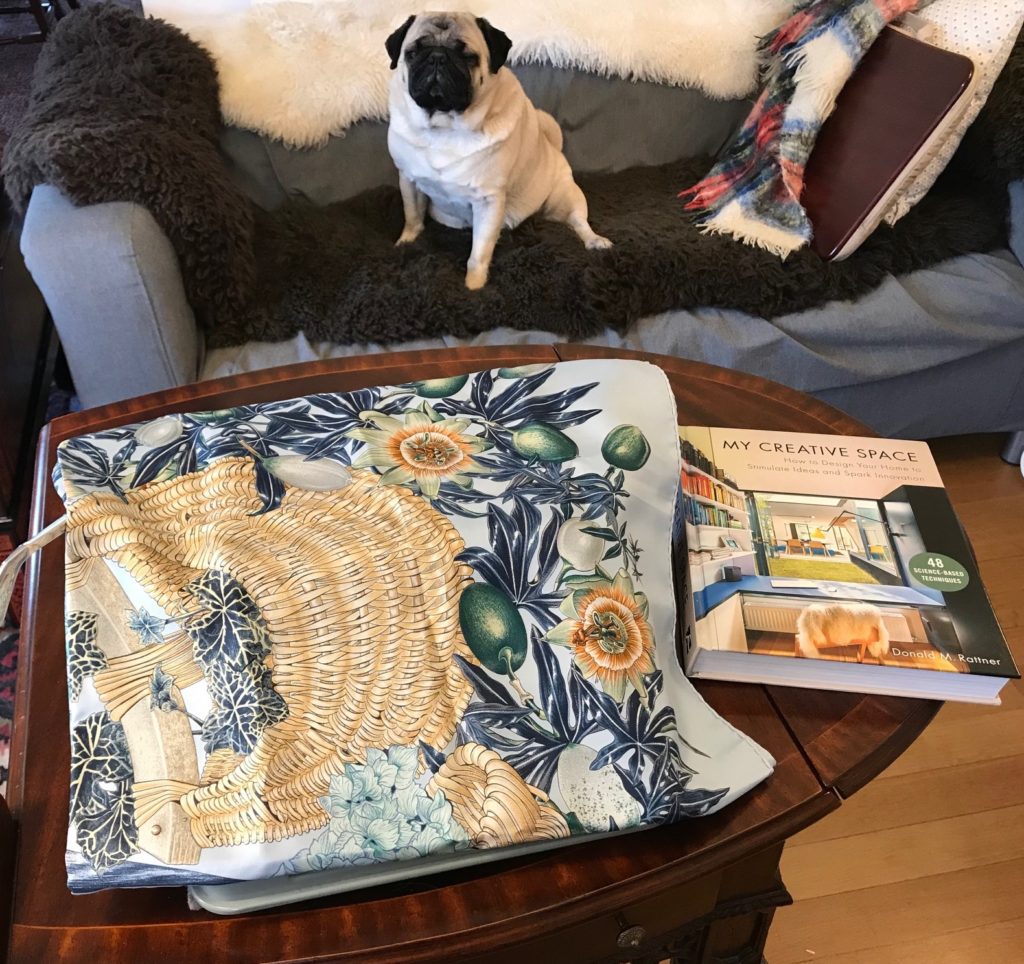
Here, below, Uliberto Quetzalpugtl models scientific technique #16 Make it beautiful. (Is my folded scarf used as the typewriter’s dust cover not beautiful?) And, simultaneously, #2 Look at something blue. Rattner writes: “Who would have thought that merely being exposed to certain colors could subliminally improve creative performance? Yet that’s precisely what researchers concluded after conducting several laboratory experiments measuring the impact of color on cognitive processing.”
The color blue improves creative performance! Whodathunk?
More of Rattner’s techniques for sparking creativity that were new for me included:
#24 Pick up the scent— I’ll try rosemary or anise tea. (What might work for you?)
#29 Make a fire. Or look at a picture of one. I googled “YouTube virtual fireplace” and this came up:
Très eco-eco (economical & ecological)– if you don’t take into account the server farm!
In sum, I found this a fun and thought-provoking book, and I expect I’ll be going through it many a time again.
BUT A CAVEAT
While there is a wealth of practical and easily affordable advice to glean from Rattner’s book, don’t let the slick photos of high-end design intimidate you into accepting another reason to procrastinate. (My creative space doesn’t look like that, so…) No creative space is ever perfectly perfect, and indeed, some of the most wonderful literature we have was produced in godawful conditions.
If you want to have written something, you just have to sit down (or stand) and do the work. Last I checked, the Muse may whisper an idea or three, but magic elves don’t get it done for you in the wee hours of the morning. I would suggest that improving your creative space best goes into the category not of writing time but quality leisure time, the importance of which I and some others have more to say here.
Madam Mayo blog’s “madmimi” email sign-up is finally working, over there on the sidebar. Subscribe and each Monday you will receive the latest post (and nothing else– no spam). Mexico, poetry, rare books, Texas, translation, the typosphere, occasional pug-sightings– if these tickle your fancy this is the blog for you! Second Mondays are for my workshop students and anyone else interested in creating writing; fourth Mondays are for a Q & A with another writer.
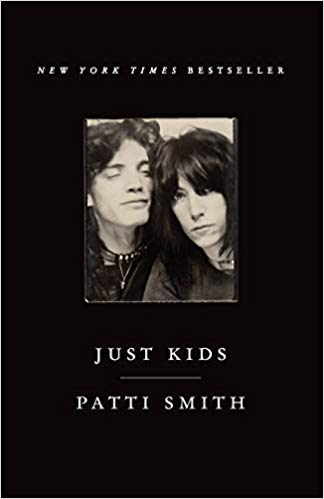
My holiday reading was Patti Smith’s memoir Just Kids, which I found at once disturbing and a revelation. A revelation because Smith’s writing is so poetic, and so engagingly and vividly evokes some of the raunchy subcultures of 1970s New York City; yet disturbing because I have always rejected, and upon reflection after having read Just Kids, the more so, this notion so many young and not-so-young artists have that being a True Artist excuses, or even calls for, wantonly destructive behavior towards oneself and others. (Count me as more Flaubert than Rimbaud.) Reading Patti Smith is definitely outside my comfort zone— which means I’ll be doing more of it in 2020.
As those of you who follow this blog well know, for an age I’ve been working on a book about Far West Texas. It’s impossible to consider Texas without taking into account so many Texans’ rock-solid belief in their state’s exceptionalism, which is not one and the same, but closely tied to the idea of American Exceptionalism. As one who was born in Texas, raised in California, and then spent some 30 years living outside the United States (and so immersed in a radically different cultural perspective), I can attest that this sense of exceptionalism is at once powerfully ingrained in American and Texan culture and well, kinda weird. I’ve been trying to get my mind around it for a while now.
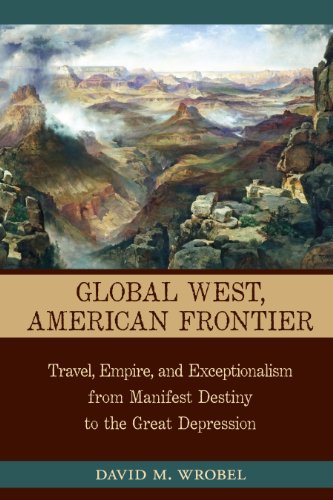
In Global West, American Frontier : Travel, Empire, and Exceptionalism from Manifest Destiny to the Great Depressionhistorian David M. Wrobel brings this question of exceptionalism into focus by way of travel writing. He delves back to the 19th century when American and European artists and writers first began traveling through the West and writing about it as it was then, not yet “the frontier West as the heart and soul of America” (p.26) but “a global West.”
Wrobel’s focus here is on idea of the West in the works of such travel writers of originality and literary merit as Isabella Bird, Richard Francis Burton, Alexander von Humboldt, Friedrich Gerstäcker, Ida Pfeiffer, Alexis de Tocqueville, Mark Twain, and Robert Louis Stevenson. Unlike so many post-WWII literary portraits of the West, in these, “travelers often placed the West in a broader, comparative global context, viewing it as one developing frontier among many and considering the United States as a colonizing power.” (p.22) The French were then in Africa and Indochina, the British in India, Germans in Namibia, and so on. The American West was not yet, in our post- WWII sense, “a unique place, a place apart from the world, rather than a part of it.” (p.27).
“travelers often placed the West in a broader, comparative global context, viewing it as one developing frontier among many”
(As a travel writer myself the higher qualities and role of travel writing is something that especially interests me. My own travel memoir is Miraculous Air, about Mexico’s Baja California peninsula, and the heart of it recounts my travels following the Jesuit conquest from the late 17th century until the expulsion in 1767. “Spanish padres,” these Jesuit missionaries are often called, but in fact, many were Italian, or German, or French. One was Honduran; another Scottish. And one key factor behind their authorized conquest of California– what we today call Baja California– was that the Spanish King, and therefore his viceroy in Mexico City, were concerned about British and French expansion in the Americas, and they most especially wanted to check Russian expansion– fueled by the fur trade with China– down the Pacific coast. How’s that for global context!)
When came the turn away from “a broader and largely deexceptionalized global context” towards “searching for a distinctively American frontier, a place like nowhere else on earth”? (p.85) Wrobel argues that it came at the turn to twentieth century with writers such as Jack London and Theodore Roosevelt, both celebrity world travelers keen on seeking fresh frontiers of adventure. Then came the slew of automotive adventure memoirists battling flat tires and breakdowns while in search of “presumed regional authenticity” (p.135) — “a search for a distinctive American West, for last American frontiers” (p.135), for example, Mary Austin’s The Land of Journey’s Ending (1924); Hoffman Birney’s Roads to Roam (1928); Emily Post’s Motor to the Golden Gate (1916); Winifred Hawkridge’s Westward Hoboes: Ups and Downs of Frontier Motoring (1921); Aldous Huxley’s Along the Road (1925); C.K. Shepherd’s Across America by Motorcycle (1922); Hugo Taussig’s Retracing the Pioneers: From East to West in an Automobile (1910), and Frank Trego’s Boulevarded Old Trails in the Great Southwest (1929).
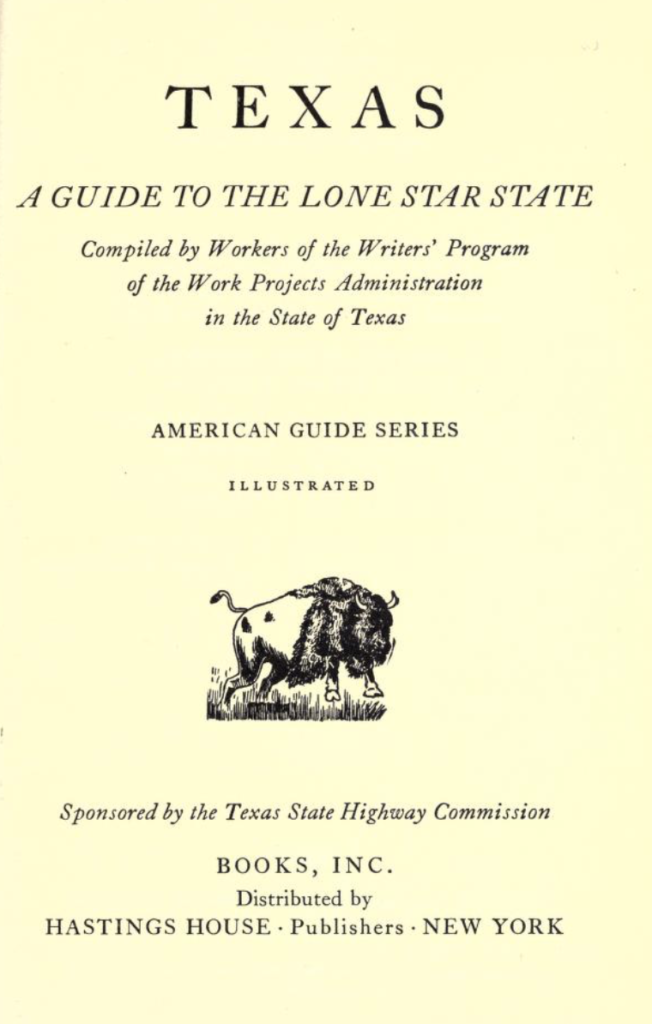
Also crucial in forging this conception of a unique American frontier– the West–were the New Deal state guidebooks, part of the Federal Writers Project (FWP). These state guidebooks included general background information (folkways, culture, history, economics, etc.); descriptions of cities and towns; and suggested tours by car. Writes Wrobel: across the West, “the guides generally emphasized the western frontier heritage and pioneering tradition. In that regard, they collectively amounted to a clear statement about where the West began and ended in the public consciousness and in the estimation of the guides’ writers in the 1930s.” (p.144). As for the Texas state guide, Texas: A Guide to the Lone Star State (1940), that was “a veritable catalogue of Anglocentrism and Anglo-Saxonism, and of frontier-rooted state-level exceptionalism.” (p.151.) See for yourself in the copy now on archive.org.
In all, these memoirs and guides exemplified “how travel writing in the first four decades of the twentieth century constituted a movement inward, toward the national, and regional, and away from the global.” (p.180) So much may have been gained, yet so much lost. We became myopic.
For me, as both a reader and as a travel writer, Wrobel’s concluding chapter, “Enduring Roads,” was especially heartening. Yes, we live in this day of Tripadvisor.com and the heavily-marketed so-called “bucket lists,” nevertheless, I believe that good travel writing has and always will constitute a valuable contribution, both for individual readers (however dwindling their numbers) and the culture as a whole. Numbers of readers in the immediate aftermath of a book’s publication are not and have never necessarily been the best and only measure of its success. (More about the power of the book here.)
And I agree with Wrobel that the good and the true is not necessarily from some facile search for “authenticity.” Not that it’s often done, but it is possible to write brilliantly about a Disneyland ride or, for that matter, lazing in a hammock in one’s own backyard, surfing around Tripadvisor.
Writes Wrobel: “The real authenticity or value of the genre surely lies in the expansiveness of the vision of its practitioners… today it seems as vital as ever, even though getting to almost anywhere in the world in next to no time at all is now more a chore than a challenge… It is the ability of the traveler to experience and reflect on what is encountered along the way that is most important.” (p. 187)
“It is the ability of the traveler to experience and reflect on what is encountered along the way that is most important.”
And a final note from Wrobel’s Global West, mainly for myself: What’s been done to death is the search for “authenticity.” Yes, Virginia, there is a Walmart there on the highway by the ranch, and the ranch has wifi– and drone roundups, too. The hand-tooled wallet in the gift shop is made in China and the boots, probably, in India. What more interesting things can be said? Can we not compare parts of the Transpecos to the Tarim Basin (a fascinating exercise, by the way)? Or, say find the interweavings with the Middle Eastern trade traditions (there is a Lebanese trader’s grave down by the Rio Grande at Presidio– he was killed by Comanches, as I recall.) Why is there so little compare-and-contrast of the rock art of Lower California with that of the Lower Pecos? And what of visionary artists, immigrants from the east, such as Donald Judd? Or for that matter visionary oral historians? Or the pre-Texas Revolution history of the Alamo?
P.S. Speaking of Germans in Namibia, it quite strikes me how much the Erongo Mountains look like the Big Bend of Far West Texas:
This blog posts on Mondays. As of 2019, the fifth Monday of the month, when there is one, rounds up my news plus some cyberflanerie.
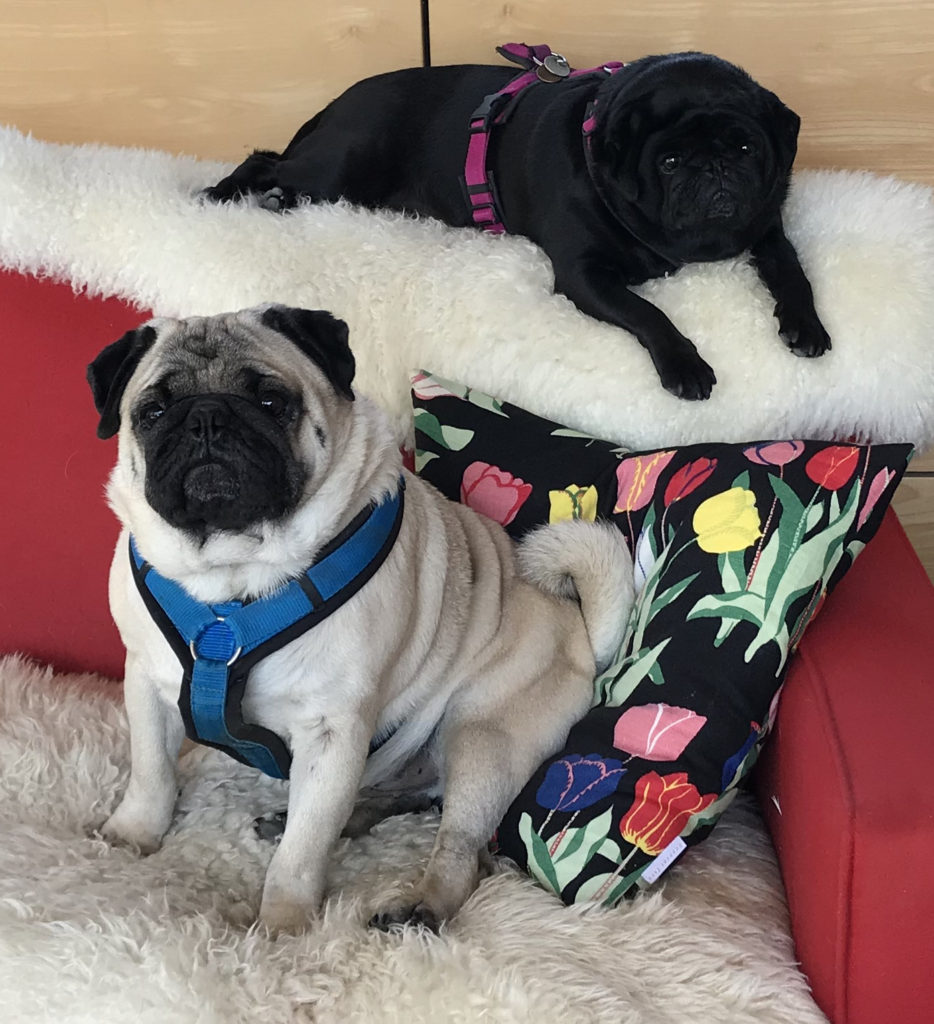
Dear writerly readers, my writing assistants Uliberto Quetzalpugtl and Washingtoniana Quetzalpugalotl and I wish you a very happy, healthy, prosperous, and inspiring 2020!
RECENT PUBLICATIONS, PODCASTS & BLOG POSTS
(I finally got an email sign-up working– it’s there on the sidebar.)
New longform essay (soon to be a podcast):
Great Power in One: Miss Charles Emily Wilson If I do say so myself, this is my best essay of creative nonfiction to date. Dear writerly readers, over the past two decades I have published essays of creative nonfiction in some mighty fine places: Creative Nonfiction, Letras Libres, Massachusetts Review, North American Review, Southwest Review... But such was not to be the fate for “Great Power in One: Miss Charles Emily Wilson.” It ended up being what it wanted to be– too short to stand as a book, yet too long for a literary journal or magazine (to cut it down would have ruined it), so forthwith, I posted it on my blog, and also read it aloud as the Marfa Mondays Podcast #21. The podcast is currently in production; I will update this post just as soon as the podcast is live.
New book:
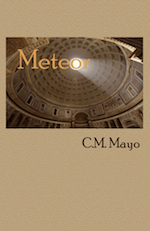
Meteor. My book of poetry won the Gival Press Award. Read all about it on my webpage for the book here.
Scholarly article:
John Bigelow, Jr. (1854-1936), who served as an officer in the Indian Wars and went on to become a military intellectual of distinction, will be accompanying me in my memoir of Far West Texas, in a manner of speaking. I do not usually write scholarly articles all a-bristle with footnotes, but for him I did: John Bigelow, Jr.: Officer in the Tenth U.S. Cavalry, Military Intellectual, and Nexus Between the West and the Eastern Establishment, Journal of Big Bend Studies, 2018 (actually came out in 2019). This month, December 2019, I finally made it to the US Military Academy’s archive in West Point, NY to delve into his diaries. I’ll have something to say about some of those curiously fun pages in a later post.
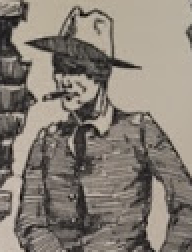
From a Frederic Remington illustration in John Bigelow Jr.’s collected articles, On the Bloody Trail of Geronimo.
New short story:
“What Happened to the Dog?” was wicked fun to write, and to type! The idea was to write a story about a typewriter set in the far future, and then actually type it on a typewriter for Escapements: Typewritten Tales from Post-Digital Worlds, edited by Richard Polt, Frederic S. Durbin, and Andrew V. McFeeters.
Zip! This winter 2020 I’ll be working on my book about Far West Texas. (Stay tuned for more of the related “Marfa Mondays” podcasts, which you can listen into anytime for free here.) Nonetheless, I will continue offering a post for my writing workshop students and anyone else interested in creative writing on the second Monday of every month throughout 2020.
P.S. Check out the substantial archive of workshop posts here.
Writers looking to get published, take special note: Allison Joseph’s long-time Creative Writers Opps listerserv is now a blog.
Madam Mayoin 2020
Madam Mayo blog posts on Mondays. As in 2019, in 2020 the second Monday of the month will be dedicated to my creative writing students and anyone else interested in creative writing, and the fourth Monday to a Q & A with a fellow writer. A fifth Monday, when there is one, will offer my newsletter and cyberflanerie. Bookmark this page or, better yet, sign up for new posts by email– right there on the sidebar.
“If I’ve made the audience laugh in some places and cry in others, then I feel I’ve done a good job.” -Barbara Crooker
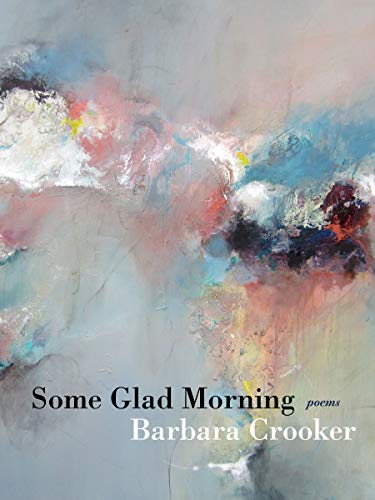
I do believe that a piece of heaven on earth is the Virginia Center for the Creative Arts. That is where, one breezy evening by the grand piano, many years ago, I met Barbara Crooker and heard her read some of her beautiful poems. She goes to the VCCA more often than often, and whether there or elsewhere, she is prolific. Her latest book, Some Glad Morning, is just out from the University of Pittsburgh Press.
Some Glad Morning, Barbara Crooker’s ninth book of poetry, teeters between joy and despair, faith and doubt, the disconnect between lived experience and the written word. Primarily a lyric poet, Crooker is in love with the beauty and mystery of the natural world, even as she recognizes its fragility. But she is also a poet unafraid to write about the consequences of our politics, the great divide. She writes as well about art, with ekphrastic poems on paintings by Hopper, O’Keeffe, Renoir, Matisse, Cézanne, and others. Many of the poems are elegaic in tone, an older writer tallying up her losses. Her work embodies Bruce Springsteen’s dictum, “it ain’t no sin to be glad we’re alive,” as she celebrates the explosion of spring peonies, chocolate mousse, a good martini, hummingbirds’ flashy metallics, the pewter light of September, late NBA star Darryl Dawkins, and saltine crackers. While she recognizes it might all be about to slip away, “Remember that nothing is ever lost,” she writes, and somehow, we do.
Here’s her bio:
Barbara Crooker is the author of eight books of poetry, including Les Fauves and The Book of Kells. Her first book, Radiance, won the 2005 Word Press First Book Award and was finalist for the 2006 Paterson Poetry Prize; Line Dance, her second book, won the 2009 Paterson Award for Excellence in Literature. Crooker is a poetry editor for Italian Americana and has received a number of awards, including the WB Yeats Society of New York Award, the Thomas Merton Poetry of the Sacred Award, and three Pennsylvania Council on the Arts Creative Writing Fellowships. Her work has appeared in numerous journals and anthologies.
C.M. MAYO:Of all the poems in this collection, which is your personal favorite? And why?
BARBARA CROOKER: Well, the book just came out (November 5th), so I don’t have any favorites yet. Plus, that question always feels like someone’s asking which is your favorite child (I have three, so all of them!). Here’s what Garrison Keillor has chosen to read on The Writer’s Almanac: “Tomorrow,” “BLT” (in which I quote Warren Zevon!), “Poem with an Embedded Line by Susan Cohen,” “The New Year,” and “Home Cooking.” I’m doing the first reading from the book this week; I’ll add to that “Regret,” “Big Love,” “Butter” (yes, I have an ode to butter), “Principles of Accounting,” “Drug Store” (based on a painting by Hopper), “Practicing Mindfulness,” and “Mid-November,” which got a lot of good comments when I posted it on my Facebook page. Oh, and I can’t leave out “Big Man,” an elegy to my Zumba buddy and NBA star, Darryl Dawkins. C.M. MAYO: Which is your favorite to read aloud?
BARBARA CROOKER: I’m hoping all of these read aloud well; sometimes, the lyric poems don’t, so when I perform, I tend to pick the narrative ones. I won’t come up with my favorites until I’ve done 5-10 readings—sometimes, the ones you think will read really well don’t, and vice-versa. If I’ve made the audience laugh in some places and cry in others, then I feel I’ve done a good job.
C.M. MAYO: If a reader were to read one poem on this collection, which would you recommend, and why?
PRINCIPLES OF ACCOUNTING by Barbara Crooker
Nearly summer, and the trees are banking on green, calculating their bonuses in numerators of leaves. Outside my window, the crows are ganging up on someone, thugs in their hoodies of night. I’m feeling the number of days begin to feel finite, no longer uncountable as blades of grass. So I’m rounding off clouds to the nearest decade; tabulating interest from the sweetness in the air. I’m going for broke, in the time remaining, like the mockingbird letting loose his vocals, a Fort Knox of sound. I’m going to spend it all. Not like our legislature, who can’t pass a budget, letting one year roll into the next, while schools and social services borrow to pay their providers, leaving even less in the diminishing pot for those who need it the most. Road repair, bridges, pre-K? Not sustainable, say the fat cats, lapping up their cream. For the rest of us, the dice are rigged, the loopholes big enough to drive a camel through. From this distance, the older I get, the closer I see the hand basket coming. So let me lean back in this red Adirondack chair as dusk makes us all equal, happy for the blend of herbs and gin, pure sapphire, the dividend of olive at the end. Here comes the night, nothing we can do to stop it, except tote up the stars on a ledger sheet, and put every last one of them in the plus column. . . .
BARBARA CROOKER: I’m going to pick this one because it hits a number of themes in this book: transience, impermanence, plus my own peculiar hybrid of lyric political poetry. I don’t think you can be a lyric poet in the era of the climate change crisis without letting politics seep into your poetry. C.M. MAYO:Can you talk about which poets have been the most important influences for you?
BARBARA CROOKER: Early on, I’d say Sylvia Plath, Anne Sexton, Maxine Kumin. But the one who made me fall in love with poetry, and set me on the writing path was Diane Wakoski. I came across a group of poems of hers plus an interview in a journal put out by Mansfield State Teachers’ College (as it was known then). I thought she was an undergraduate. (I knew nothing, like Jon Snow.) Had I known she was famous, I’d have been intimidated and never started, but I thought, “Hmm, if a college kid can write like that, maybe I can, too,” and dug in. That’s been my method; I was never in a position to get an MFA, so I went to what I call “the MFA of the 3000 books,” reading and studying on my own. Fast forward to recently, and Diane Wakoski put this note under a poem I’d posted on Facebook: “I wish I’d written that.” I couldn’t ask for anything more.
C.M. MAYO:Which poets and writers are you reading now?
BARBARA CROOKER: Christopher Buckley, David Kirby, Barbara Hamby, Linda Pastan, Sharon Olds, Betsy Sholl, Ted Kooser, Wendy Barker, Marjorie Stelmach, Anya Silver, George Bilgere, Ellen Bass, Jeanne Murray Walker, Dorianne Laux, Robert Cording, Gray Jacobik. Plus I read every poem in every journal that I’m in, reading each journal (and each book of poetry) twice and taking notes. Which is why my reading pile is so high, and why I never reach the bottom. . . .
C.M. MAYO:It seems a very important part of your process is VCCA. What brings you back there time and again?
BARBARA CROOKER: I first went to VCCA in 1990, and have been back every 18 months since then (so 19 times). Besides not having an MFA, I’m an outlier in the larger writing world because I’m not an academic (although I have been an adjunct at eight different colleges). Rather, I’ve been a caregiver, taking care of my mother for many years and also my son, who has autism. So the first time I went to VCCA and realized what it was like to reclaim my life, at least for a short period of time (I started out going for 9 day stays; I’m now up to two week ones) would, not to exaggerate, save my life, and so I’ve returned. I’ve also had two residencies at VCCA in France (in Auvillar, near Toulouse) and two at the Tyrone Guthrie Centre in Co. Monaghan, Ireland.
All of these places have been magical for me; I think it’s because when all you do for an entire day is write, read, talk about writing, take long walks and think about writing, you start drawing from a deeper well. Also, time becomes elastic—those nine days are worth nine months “in the real world.” It’s amazing how many hours there ARE in a day when you are not involved in food prep (planning, shopping, cooking, cleaning up, repeat three times a day). When my son was eight, I discovered that a gluten and dairy-free diet made a world of difference, so I started making parallel meals for him, which was, and is, very time-consuming. So colonies that provide meals are deeply appreciated. Also, when I’m away, I try to write outside as much as possible, let the world around me seep into my poems.
At VCCA, where there are also musicians, artists, other writers, I like to let myself be open to the influences of the other artists—it’s such a rich, fertile community, and everyone whose path has crossed mine has added to my work, perhaps not in obvious ways, but I see the connecting threads. And the grounds and physical location of VCCA is simply gorgeous.
Whenever I enter the gates of Mt. San Angelo, I feel like I’m coming home.
C.M. MAYO: You have been a prolific poet for many years. How has the Digital Revolution affected your writing? Specifically, has it become more challenging to stay focused with the siren calls of email, texting, blogs, online newspapers and magazines, social media, and such? If so, do you have some tips and tricks you might be able to share?
BARBARA CROOKER: I’m not sure I am prolific, just old. I have a poem called “Twenty-Five Years of Rejection Slips” in my first book, and that pretty much describes my early years of writing but not getting published. So I had quite a backlog. This has also meant that I’ve never strayed much from my initial writing habits, which are/were to read, write, read, repeat. Initially, email was pretty clunky—remember dial-up? Those of us in the country used it for much, much longer than the rest of the country. So because it was time-consuming (and tied up our one phone line, I tried to limit my time online. Then I resisted using social media for a long time once we got a high speed connection, fearing it would be a time suck (it is!). I do try to answer emails in a timely fashion, but I limit Facebook to half hour sessions, confess that I don’t see the use of Twitter, but do use it to post when poems are online or if I have an event, and haven’t figured out Instagram yet. . . . The good part about all of this (the Digital Revolution) is that I can easily share work, especially work that has appeared in print-only journals, with larger audiences. I maintain my own website (www.barbaracrooker.com), posting a new poem every month, plus links to poems published online. The downside of it is that I’d need to be cloned to really be able to be a big presence on social media. But I feel my real job is just to write poems, so I’m working as hard as I can to keep the rest of the “stuff” to a minimum.
C.M. MAYO:Another question apropos of the Digital Revolution. At what point, if any, were you working on paper? Was working on paper necessary for you, or problematic?
BARBARA CROOKER: Um, I’m still working on paper! I do multiple drafts on paper, don’t turn to the computer until I feel ready to see how the lines look in type. (I use both my ear and my eye in casting lines.) For me, the connection between head and heart through the hand is important, and I like the physicality of the pen (roller ball, extra fine, .05) moving over the blue lines on the yellow pad. Now, since I have grandchildren, I know that cursive is no longer being taught in school, so I wonder how this will change writing in the future. I’m not saying it will be negative, just that it will be different. Also, I went through both undergraduate and graduate schools using a manual typewriter (only rich people and secretaries had electric ones, and they were big and cumbersome). Here’s a poem from Some Glad Morning about this:
PROMPT by Barbara Crooker after a poem by Alison Joseph
Write me a poem about the manual typewriter, the clip clop of fingers on keys, the sleigh bell that rang when you reached the end of the line. Tell me about the carbon that smudged your fingers when you untangled jangled keys. Remember life before Word Count, when a pencil mark reminded you to end the intro, start paragraph one. The other marks that kept you on the road, true to your outline. The finals streaks of graphite that said, Wrap it up, tie it together, lead it into the barn. Those days when cut and paste involved scissors and Elmer’s glue. When making a copy meant two sheets of paper with a leaf of inky black sandwiched between. No delete key, no white-out, no search and replace. So writing a paper or a novel involved manual labor, fingers dirty at the end of the day. Write me about how your back ached. Tell me about margins and tab sets. The silver levers, the roller bars. Remember how faithful it was, this coal black steed, the places it took you to, far, far into the thicket of words. And how it always brought you safely home again.
C.M. MAYO:What is the most important piece of advice you would offer to another poet who is just starting out? And, if you could travel back in time, to your own thirty year-old self?
BARBARA CROOKER: Read. Read constantly. Read poets you like, and poets you don’t have a kinship with. When you read a poem that knocks your socks off, see if you can figure out why, and then try and do it in your own work. Buy books from that author. Go to readings. Go to museums. Read. And write. To my thirty year-old self, I’d say “Patience.” As I mentioned above, it took me a long time to get a first book, and although I was a finalist many times over (it’s like Chutes & Ladders, if you don’t win, you go back to the beginning), for a while, I was thinking it might be posthumous. Having nine full-length books (I also have twelve chapbooks) was never on my radar. Nor was being solicited for The Pitt Poetry Series (my new book, Some Glad Morning—I’m still pinching myself over that!). Or appearing fifty times on Garrison Keillor’s The Writer’s Almanac. Or having people pay to fly me all over the country to read. (Am going to FL, OK, TX, WI, and CT this coming year). This writing life is full of a steady stream of rejection (I always say that while it might seem that I’m successful, that’s just the little tip on the surface, and the Giant Iceberg of Rejection is looming far beneath). One of my poems ends with “Something wonderful is just about to happen,” and I still need to remind myself of this on the days when the rejections are flying thicker than snowflakes. And really, my goal is not to earn prestige or win awards; it’s to write a poem that somebody else will want to read, to make that human connection. All the rest is background noise.
C.M. MAYO:What’s next for you?
BARBARA CROOKER: Oh, boy, THAT’S a good question! Up until this point, I’ve had completed manuscripts waiting for a publisher, or part of a project halfway done. But when Pitt came calling, they cleaned out my poetry cupboard, leaving it pretty bare. I’ve been looking at what’s left (and what I’ve done since), and have loosely gathered them in a binder, calling it (for now) Slow Wreckage (the body’s decline, what climate change is doing to the planet, the political situation—cheerful, right?) But I think (or hope) that the political poems will be dated by the time I’m ready to send it to a publisher, so I’m trying to be open to letting air in, changing it completely as new poems come. I’ve been working (slowly) on a series called “Late Painters” (Monet, Renoir, Matisse, so far), on how aging altered their work, and I’d like that to become a series or a section in a book. I’m hoping to apply to the American Academy in Rome, thinking that may bring some new poems, new directions. And I’m equally all right, if I don’t have seventy-five strong poems that hang together, to say that Some Glad Morning will be my last book. But I’m not ready to say never, so really, the answer is, I’m back to square one, where I was when I started, just writing poems.
Well, yeah, it is sort of ridiculously ridiculous to rate from 1 – 12 a batch of books published over a wide range of years and in genres as varied as stories in translation, poetry, history, historical fiction, travel writing, biography, and autobiography. But it works for me! I have been posting these always-eclectic annual top books read lists for Madam Mayo blog since 2006. Aside from serving as a reading diary for myself, it is my gift to you, dear writerly reader: If you are not familiar with any given book on this list, should it appeal to you to try it, may you find it as wondrously enriching a read as I did.
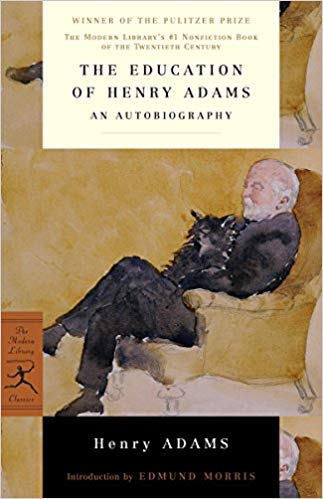
(1) The Education of Henry Adams by Henry Adams By Jove and by Jupiter, whyever did I not read this sooner?! Every chapter a chocolate truffle, The Education of Henry Adams is a fundamental text for comprehending the culture and overall development of the United States.
P.S. Michael Lindgrin has more to say about ye tome, “this strange and beautiful journey of a book,” over at The Millions.
Reading Cather is a joy. Both of these Cather novels are well-deserved American literary classics. Over the past couple of years I have been turtling my way through Cather’s oeuvre. So far: The Professor’s House (top books read list for 2017) and Death Comes for the Archbishop (top books read list for 2018).
“You don’t need to take a book off the shelf to know there is a voice inside that is waiting to speak to you, and behind that was someone who truly believed that if he or she spoke, someone would listen.”
(4) Mrs. Bridge by Evan S. Connell I read this novel only because my book club picked it– lucky me. It’s wickedly funny, and, curiously, and most elegantly, written in crots. (I was unaware of Connell’s work when I wrote one of my own early short stories, also in crots, also published in the Paris Review. Well, howdy there, Mr. C! If you were still alive it sure would be fun to talk to you about crots!)
P.S. See Gerald Shapiro’s profile of Evan S. Connell in Ploughshares.
(5)Eros, Magic, and the Murder of Professor Culianu by Ted Anton Yet another work I wish I had read years earlier. Culiano was the author of Eros and Magic in the Renaissance. His life ended early, and not well, alas. I never met Culiano but I was at University of Chicago for several years just before he arrived, so I knew the super-charged intellectual ambiance well– and I think Anton captures it quite accurately. Recently occultist John Michael Greer has been making noises about Culiano’s understanding of cacomagic, and this the unnamed subject of Eros and Magic in the Renaissance, which is what prompted me to finally pick up this biography, which had been long languishing in my “to read” pile. (If you’re a metaphysics nerd and cacomagic is what you’re interested in specifically, however, Anton’s biography, otherwise excellent, will disappoint.)
(6) Tie:
Beyond the Hundredth Meridian: John Wesley Powell and the Second Opening of the West by Wallace Stegner Stegner is always a rare pleasure to read. I came away with immense admiration for John Wesley Powell’s many and visionary achievements. And the whole problem of water in the West thing!! Obvious as that may be, but I grew up in the West and it was not so obvious to me, nor to most people I knew at the time, and this book goes a long way towards explaining why. (Illuminating indeed to pair this work with a Cather novel… see above…)
A Desert Harvest by Bruce Berger This splendid anthology collects selected essays from Bruce Berger’s masterwork of a desert trilogy, The Telling Distance, Almost an Island, and There Was a River. P.S. Read my Q & A with Bruce Berger here.
The Western Paradox by Benard DeVoto Edited by David Brinkley and Patricia Nelson Limerick with a foreword by Arthur Schlesinger, Jr. Crunchy! (I still have all my teeth, though!)
(7) Tie:
Lone Star Mind by Ty Cashion Professor Cashion articulates the kooky contradictions and tectonic shifts in both popular and academic versions of Texas history. A landmark work in Texas historiography.
Giant: Elizabeth Taylor, Rock Hudson, James Dean, Edna Ferber, and the Making of a Legendary American Film by Don Graham I will be writing about this work at some length in my book on Far West Texas. At first glance, for the splashy photos of the stars on its cover, it might appear to be the usual intellectually nutritious-as-a-Ding Dong film history book. But no! Graham knew Texas like almost no one else, and for Texas, Giant, based on the novel by Edna Ferber, was a film of profound cultural importance.
(13) The Chrysalids by John Wyndham I’m not a fan of sci-fi novels; I read this one about post-nuclear apocalypse Canada only because my book club chose it. I found it to be a page-turner with splendid prose throughout (although I did some eyerolling at the end when it did get a little “inner most cave-y” and “Deus-ex-Machine-y”). I can appreciate why it remains in print, and beloved by many, more than six decades after it was first published in 1955.
P.S. I can also warmly recommend the books by authors featured in my monthly Q & As.
We writers don’t just live in our heads, of course: we all have bodies. If we are uncomfortable physically in any way it is not impossible to write, but it doesn’t help! Count me a big fan of Annie Thoe’s YouTube channel “Sensing Vitalty,” which is chock full of her free, easy to follow, and highly effective Feldenkrais exercises. A recent one she offers is this simple exercise to relieve shoulder and neck pain––which we all get from sitting scrunched in front of a computer screen, no?
Like all Feldenkrais exercises I find this one a little strange, even counterintuitive, but nonetheless wonderfully effective. This one takes about 12 minutes and you can do it while sitting in your writing chair.
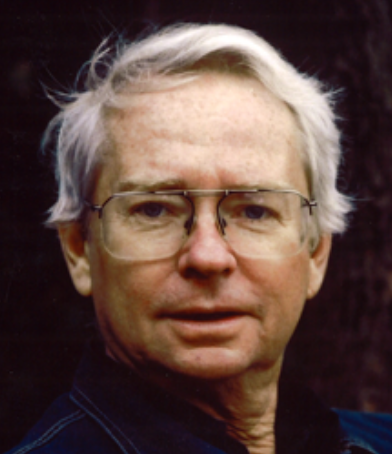
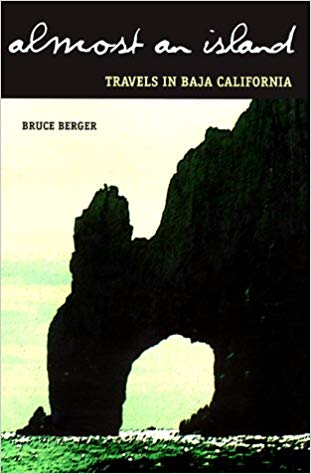
Very late in the game, albeit well more than a decade ago, I learned of Bruce Berger’s work when I happened upon Almost an Island: Travels in Baja California in a California bookshop. I would have liked to, but I purposely did not read it then because I was writing my own memoir of Baja California and– I still think this wise– I did not want to be influenced as I was writing. Of course, the moment my book, Miraculous Air, was finished, I devoured Almost an Island, and I loved it. I went on to read Berger’s shimmering essays on the American desert in The Telling Distance and There was a River, and his poetry, and his quirkiest of memoirs of Spain, The End of the Sherry.
But to go back to Baja California. Imagine my delight soon after publishing Miraculous Air, to receive, out of the bluest of Baja California blues, an inscribed copy of his Sierra, Sea, and Desert: El Vizcaíno, welcoming me to this pequeño mundo of those who write about this most glorious and remote of Mexican peninsulas. And we have been amigos ever since. We even read together in 2006 in the Ida Victoria Gallery in San José del Cabo. (Carambas,that was a while ago!)
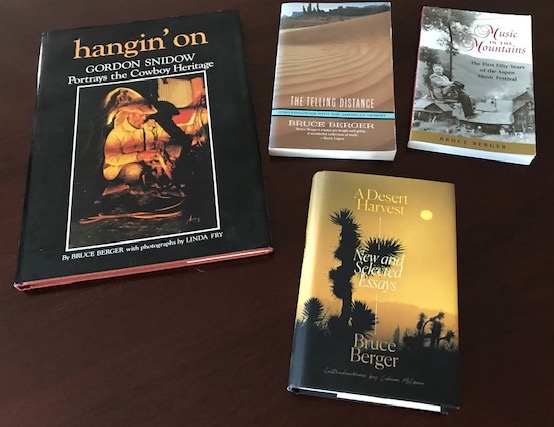
Just a few of the many books by Bruce Berger in my library.
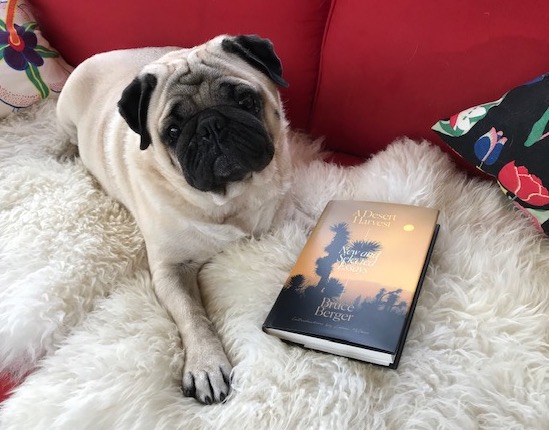
Bruce Berger’s latest work, Desert Harvest, is a long overdue celebration, a compilation of essays selected from his sublime desert trilogy, Almost an Island, The Telling Distance, and There Was a River. Published by Farrar, Strauss & Giroux, Desert Harvest comes with blurbs galore from such as Terry Tempest Williams (“A Desert Harvest is a published patience, one I have been anticipating, having known and loved Bruce Berger’s voice. It is water in the desert”); Ted Conover (“a book that will stick to the reader like cholla… precious few are those who can write this well”); and Peter Mathiessen (“Fine, lucid essays”). Did I mention, Berger can be weirdly hilarious?
C.M. MAYO:What inspires you to write essays, as opposed to poetry?
BRUCE BERGER: I write poetry as well as prose, so there is no opposition, merely the choice of the moment.
C.M. MAYO:Of all the essays in this collection, which is your personal favorite? And why?
BRUCE BERGER: The essay I was most keen to see published is “Arrows of Time,” the last piece in the collection, about accompanying quark physicist Murray Gell-Mann to a physics conference in Spain in 1991. At the time I was writing for the airline magazine American Way, they paid for my flight with Murray, I wrote a long piece for them, they repied in all humility that they didn’t understand much of it and were much smarter than their readers, and they ran only an extract about dining while sitting between Murray and Stephen Hawking. Because they published a piece of the essay, no other periodical could run the piece in its entirety, and for nearly three decades it remained in limbo. Even though it has nothing to do with deserts, the editors at FSG chose it as the book’s finale and I cheered. C.M. MAYO:For a reader who knows nothing of the desert, if he or she were to read only one essay on this collection, which would you recommend, and why?
BRUCE BERGER: Because it has apeared on three posters and a letterpress broadside, I suppose that one would be “How to Look at a Desert Sunset.”
C.M. MAYO:Can you talk about which writers have been the most important influences for you?
BRUCE BERGER: As I was just starting to write about place, I was reading Lawrence Durrell’s Alexandria Quartet and, especially, his three books on Mediterranean islands. His way of capturing the essence of a location enthralled me. When I was on the last known river trip through Glen Canyon before the closing of the gates at the dam that created Lake Powell, I committed myself to writing about the experience as if I were Lawrence Durrell. No one has ever compared my writing to his, but I consider that an element in finding my literary voice.
C.M. MAYO:Which writers are you reading now?
BRUCE BERGER: I have just bought two books on Latin America: Silver, Sword and Stone, by Marie Arana, and On the Plain of Snakes by Paul Theroux. C.M. MAYO:You divide your time between two such beautiful places, Aspen, Colorado and La Paz, Baja California Sur, Mexico. How does that annual migration affect what and how you write?
BRUCE BERGER: When I write, I screen out where I am and focus on material and its expression. In Aspen I enjoy nearly complete silence, wheras in La Paz I sometimes spar with construction, loud music and dogs. C.M. MAYO:How has the Digital Revolution affected your writing? Specifically, has it become more challenging to stay focused with the siren calls of email, texting, blogs, online newspapers and magazines, social media, and such? If so, do you have some tips and tricks you might be able to share?
BRUCE BERGER: I write the same way I did when I began, which is on a yellow legal pad in longhand with a Ticonderoga hardness of 3 pencil, which I transcribe to my laptop, then print for corrections. While I keep up with email and google for info, I don’t participate in social media or text. For the record, I identify as a retro analoggerhead Luddite retard from the Silent Generation.
C.M. MAYO:What is the most important piece of advice you would offer to another writer who is just starting out? And, if you could travel back in time, to your own thirty year-old self?
BRUCE BERGER: My advice to a beginning writer would be to read the best of the authors, contemporary and historical, of the genre you plan to write in, and internalize as much as possible. It worked for centuries before workshops, MFAs and the digital revolution, and still works today. In that regard, a half century later I am still my thirty year-old self.
“My advice to a beginning writer would be to read the best of the authors, contemporary and historical, of the genre you plan to write in, and internalize as much as possible. It worked for centuries before workshops, MFAs and the digital revolution, and still works today.”
C.M. MAYO:What’s next for you?
BRUCE BERGER: My literary representative is working on an archive project for a university still to be selected.