For this crazy-busy third Monday in November, herewith a post from the archives, originally posted on April 3, 2017:
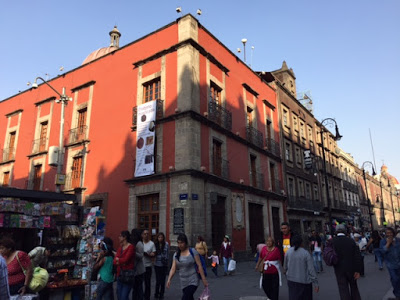
In the shadow of the National Palace: La Casa de la Primera Imprenta de América, the House of the First Printing Press in the Americas, Mexico City. Photo by C.M. Mayo, 2017.
…There is one more a pearl of a place that cannot go unmentioned in any discussion of our sister republic’s literary landscape…
From the Claustro de Sor Juana, in less than twenty minutes’ walk north and slightly east—weaving your way through the shoppers, touts, tourists, beggars, businessmen—honking cars and buses and motorbikes—and a skate-boarder or two—blaring music, freighters with their trolleys piled to toppling with boxes—don’t get run over by the pedicabs—and once at the Zócalo, wending around the Aztec dancers in feathers and ankle-rattles, the toothless shouter pumping his orange sign about SODOM Y GOMORRA MARIGUANA BODAS GAY, and an organ grinder, and to-ers and fro-ers of every age and size, you arrive, out of breath, at a squat, terracotta-colored three-story high building.
This is where the first book was printed in—no, not just in Mexico—then New Spain—but in the Americas. La Casa de la Primera Imprenta de América.
To step into the foyer of its museum and bookstore is to relax into an oasis of peace.
The uniformed guard hands me a pen to sign the guest book. It’s late afternoon; I am the third visitor for the day.
I take a gander at the exhibition of contemporary textile art—a few pieces reference one of Frida Kahlo’s drawings in the Casa Azul of a tentacled monster of paranoia, each limb tipped with a staring eye.
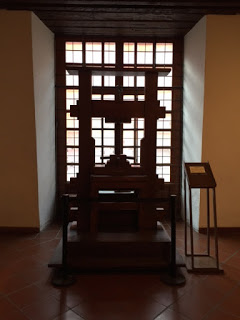
In the second gallery I find the replica of our continent’s first printing press soaking in sun from the window. The wooden contraption is taller than I am, but so spare, it occurs to me that it might serve to juice apples.
How my Mexican amigos scoffed at the auction of the Bay Psalm Book in 2013. Not about the record sum—14.2 million US dollars—for which that little book, printed in Cambridge, Massachusetts, in 1640, went to a private collector, but about the report in the international media that the Bay Psalm Book was “the first book printed in America.”
To Mexicans, America is the continent, not their sister republic. Mexico is part of the same continent, of course, and so the first book printed in America—or, as we estadounidenses prefer to say, the Americas—was
Breve y más compendiosa doctrina Cristiana en lengua Mexicana y Castellana (Brief and Most Comprehensive Christian Doctrine in Nahuátl and Spanish), printed right here, in Mexico City, in this building, in 1539.
Mexico beats out Massachusetts by 101 years! But this sinks to silliness. That printer in Cambridge, Massachussetts, was English, and the one in colonial Mexico City, a native of Lombardy named Giovanni Paoli, Hispanicized to “Juan Pablos.” The technology that found its way to the Americas with these printing pioneers—to the north, Protestants, to the south, Catholics, separated by religious schism and the whirlwinds of European politics, and that century, and moreover, by the staggering distance of desert, swamplands, oceanic buffalo-filled prairies, and sunless and unmapped forests—had one and the same root: the fifteenth-century workshop of a German goldsmith by the name of Johannes Gutenberg.
Gutenberg was inking his little pieces of movable type more than half a century before Christopher Columbus “sailed the ocean blue,” and the indigenous on this continent chanced to hear the first stirrings of vaguest rumors and weird omens.
Still, 1539 is an early date indeed for that first book printed in the Americas: only eighteen years after the fall of Tenochitlán. Three years after Cabeza de Vaca’s miraculous arrival in Mexico City. Fray Sahagún was still a year away from launching the research that would result in the Historia general de las cosas de la Nueva España, or the Florentine Codex. The lodes that would turn Mexico into an industrial-scale silver exporter had not yet been discovered. The Manila Galleons, treasure ships bringing porcelain, spices, and silks from China to Acapulco, would not begin their annual crossings for another twenty-six years.
In England, Henry the VIII was between wives three and four. It would be sixty-eight more years until the first, disastrous English settlement at Jamestown. The Pilgrims who would land at Plymouth Rock? As a religious community they did not yet exist.
Tucked in the shade of the National Palace and a block east from Mexico’s cathedral, the Casa de la Primera Imprenta was built, it turns out, over the ruin of the Aztec Temple of Tezcatlipoca, Smoking Mirror, trickster god of the night sky, of time, and of ancestral memory.
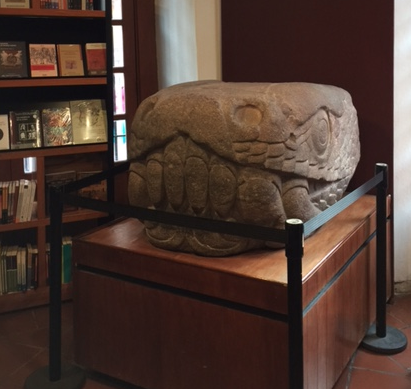
Aztec snake head on display, 2017.
Who knows what still lies beneath in the rubble? Dug up in the eighteenth century during a renovation, a gigantic Aztec stone snake head was, no doubt with a shudder of horror, reburied. But we live in a different time with a very different sensibility. In 1989 when renovations unearthed that same Aztec stone snake head—elegant with fangs, nostrils, scales, eyes the size of melons—it was carefully excavated and cleaned by archaeologists. This monumental sculpture, heritage of the nation, is now displayed atop a roped platform in the Casa de la Primera Imprenta’s Juan Pablos bookstore, surrounded by a shelf of fiction, a table of poetry, and a sign informing us that the Aztec snake head is carved from grey basalt and weighs approximately one and a half tons.
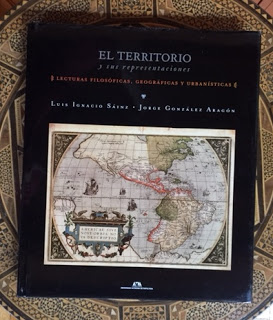
The Juan Pablos bookstore, named for that original printer Giovanni Paoli, retails books from the press of Mexico City’s Universidad Autónomo Metropolitana (UAM). Such are my interests du jour: I came away with a copy of the first Spanish translation of an eighteenth-century Italian’s journey to Mexico and the 2015 El territorio y sus representaciones.
A splendid and very important book: El territorio y sus representaciones by Luis Ignacio Sainz Chávez and Jorge Gonzlález Aragón Castellanos, winner of the 2016 Premio de Investigación. Published by the Universidad Autónoma Metropolitana, Mexico.
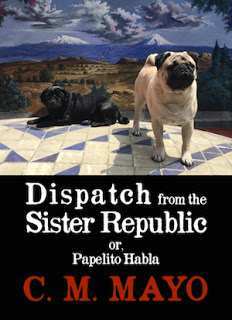
UPDATE: “Dispatch from the Sister Republic or, Papelito Habla,” my long essay pon the Mexican literary landscape and the power of the book, is now available in Kindle at amazon.com.
Special Note: I ever and always invite comments at the end of each blog post but for this post in particular I would especially like to hear comments and any tips from those of you who have been wrestling with your own working libraries. (It strikes me that in all the many writers’ workshops and writers’ conferences I have attended over the years I have never seen this vital practical necessity addressed. And what I have seen in terms of advice from librarians and personal organizers is not quite apt for a working writer’s needs. Have I missed something?)
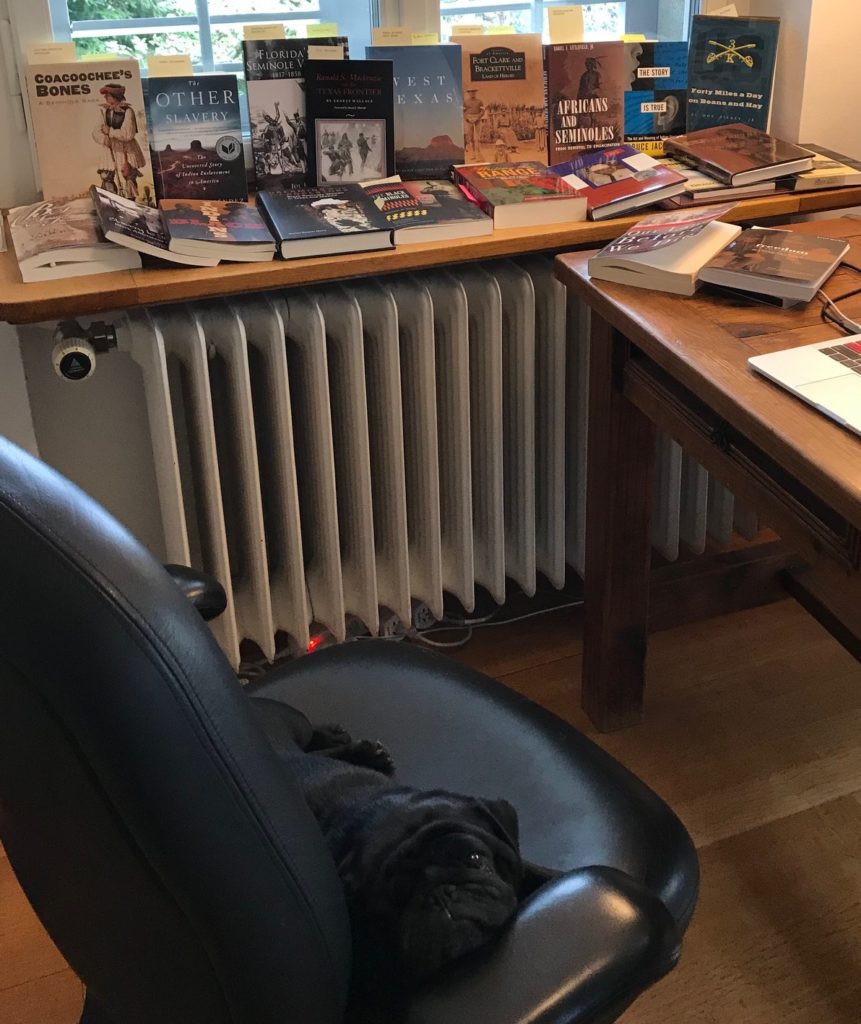
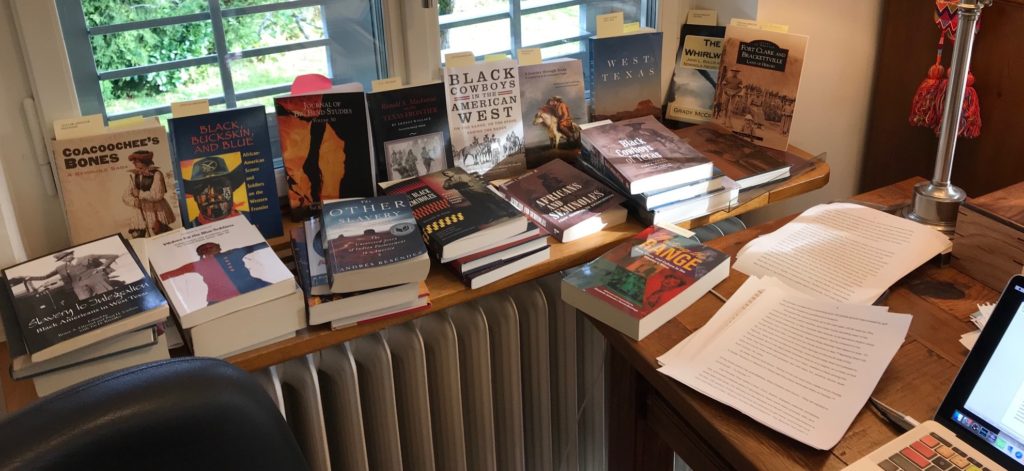
Selected titles at-hand as I was writing an essay about Black Seminole oral historian Miss Charles Emily Wilson. This essay is destined for an anthology and will also be the Marfa Mondays podcast # 21, apropos of my book-in-progress about Far West Texas– for which I have a scary-big working library. I call it the Texas Bibliothek. My writing assistant Washingtoniana Quetzalpugalotl says it’s been exhausting, all the thinking going on, and books of so many smells going hither, thither & zither. She would like to take a siesta.
The scene as I was revising my essay. No worries, I certainly would not shelve my books over a radiator! They were here only temporarily. Shortly thereafter, I used my supersonic reshelving method, described anon.
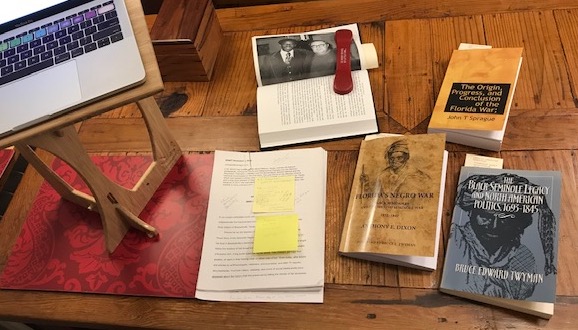
Still working on the same essay… on this day, my other writing assistant having appropriated the chair, I was using my StandStand.
Why a Working Library?
Why should you have a working library? Well, dear writerly reader, maybe you shouldn’t. It depends on what you are writing.
Poetry or, say, a novel of the imagination might require nothing more than a dictionary and thesaurus–– and of course, you could access those online. Perhaps, should you feel so moved, for inspiration you might keep a shelf or two of books by your favorite writers, and perhaps another shelf devoted to books on craft, on process, etc. Or not.
The need for a working library arises when you attempt to write historical fiction or in some genre of nonfiction, for example, a biography, history, or travel memoir. And the problem is–– if I can extrapolate from my own experience––which perhaps I cannot–– but I’ll betcha 1,000 books and three cheesecakes with a pound of cherries on top that I can––you are going to ginormously underestimate how fast and how very necessarily your working library expands, how much space it gobbles up, and how quickly any disorganization unravels into further disorganization, and to muddle the metaphor, makes a clogged up mega-mess of your writing process.
you are going to ginormously underestimate how fast and how very necessarily that working library expands, and how much space it gobbles up, and how quickly any disorganization unravels into further disorganization, and to muddle the metaphor, makes a clogged up mega-mess of your writing process.
In short, by underestimating the importance of first, acquiring, and second, adequately shelving, and third, maintaining the organization of this collection, writing your book will turn into a more frustrating and lengthy process than it otherwise would have been. (Trust me, it will be frustrating and take forever and ten centuries anyway.)
Yes, I know about www.archive.org–– I oftentimes consult books there–– and I have accumulated a collection of Kindles. I also make use of public and university libraries when possible. (There is also the question of keeping paper and digital files, which would merit a separate post.) Nonetheless, my experience has been that a working library of physical books at-hand remains by far, as in, from-here-to-Pluto-and-back, my most vital resource.
About My Working Libraries, In Brief
First understand: I am not a book hoarder! When I do not have a compelling reason and/or space to keep a book, off it goes– to another reader or to donation. (See my previous post “How to Declutter a Library.”) I don’t live in a house the size of an abandoned aircraft hanger; it would be impossible for me to keep every book I’ve read in my life and still find my way in and out of the front door. Aside from a handful (literally maybe 10) that I hold onto for sentimental reasons, the books I keep for the long term I have a precise reason to keep: to assist me as I write my books. And I maintain them scrupulously organized as working libraries.
No, I do not have OCD. Scrupulous organization is terrifically important! My motto: A book I cannot find is a book I do not have. Disorganization is a form of poverty.
A book I cannot find is a book I do not have. Disorganization is a form of poverty.
Over many years of writing several books, each with its own working library, and also teaching, and so gathering an ever-growing working library on craft and process, I have accumulated a daunting number of books, and to keep them all accessible I have had to tackle some eye-crossing challenges. (Add to that moving house a few times in mid-book and, boy howdy, did I get an education in organizing!)
My books for which I assembled and continue to maintain working libraries include:
The Last Prince of the Mexican Empire This working library is more substantial, as it should be for a novel based on the true story set during Mexico’s most complex, tumultuous, and thoroughly transnational episode. (So why did France invade Mexico and install the Austrian Archduke as emperor and then why did the latter make a contract with the family of Mexico’s previous emperor giving them the status of the Murat princes?!!! It took me several years to get my mind around it all…) Some very rare Maximiliana.
World Waiting for a Dream: A Turn in Far West Texas (in-progress) I call this one my “Texas Bibliothek.” This one is just… sorry for the cliché… GIANT. Texans are far more literarily industrious than most people imagine, and there is endless celebration of and controversy about their culture and history. Some of the works published just in the last decade are paradigm-smashers. I’ve had a heap of very necessary reading to keep up with… Plus understanding Far West Texas requires fathoming what surrounds it– New Mexico to the west, Coahuila and Chihuahua to the south, the heartland of Texas and Gulf to the east, the Llano Estacado to the north…and the larger geological, geopolitical, and cultural context. Oh, and all about oil!! This has been my most challenging book yet. Wish me luck.
Plus, as mentioned, I maintain a working library on the craft of writing and creative process which I consult for both my writing workshops and my own writing. Accumulated over some twenty years, this is a substantial working library, but it is the smallest. I haven’t counted but I’d say this has some 250 books.
(Did I mention, I’m not 25 years old? If I live to 100… uh oh…)
Why, pray tell, keep all of these books, and even add to the collections, year after year?
(1) I often reference works in one collection for another another book (for example, in writing my book on Far West Texas I have consulted works in all four collections), and I expect this will continue with the projects I am contemplating for the future.
(2) I plan to see more of my books published in translation and so will require consulting some of the original texts (many in Spanish, some in German, a few in French) from which I quoted. This may or may not be an issue for you. But if it is, take heed. It can be crazy difficult and expensive to track some of these things down later.
(3) I often receive email from researchers, both amateur and academic, and I am delighted to assist, when I can, in answering their questions and for this oftentimes I need to reference a book or three in my collections. And what goes around comes around.
(4) I do not live near a relevant library and even if I did, many of the works in my collections are nonetheless exceedingly difficult to find. Plus, even if a nearby library were to have each and every book I would want to consult when I want to consult it, it’s a bother and a time-mega-suck to have to go to a library and call up so many books.
Yes, my working libraries take up a lot of space. This cranks my noodle. But a painter needs an atelier, no? Um, you aren’t going to bake bread in your lipstick compact.
Tips for Your Working Library (Future Reminder to Take My Own Advice)
With all due respect for the operations of institutional libraries, earning a degree in Library Science is not on my schedule for this incarnation. But as a writer with my own absolutely necessary working libraries, none of them large enough in scale to require professional cataloging, yet each nonetheless larger than I was prepared to manage efficiently, alas….. painnnnnNNNfully…. I have learned a few things. What I offer here for you, dear writerly reader, is not the advice of a knowledgeable librarian but what I, a working writer having muddled through writing several books, would have told myself, had I been able to travel back in time… to the late 1990s.
(1) If you have good reason to think you’ll need it, don’t be pennywise and pound foolish, buy the book! To the degree possible, it is better to buy a first edition in fine condition; however, cheap used / ex-library copies are fine for a working library. Many ex-library books in good condition cost just pennies. (Or did you plan to write an sloppily researched, amateurish book?)
(2) Go head and mark up those ex-library books and mass-market paperbacks, but if you happen to have in your hands a hardcover first edition in fine condition, take care! Keep the dust jacket, protect it from any bumps and the sun, and if you must mark the pages, use only very light erasable pencil. Drink your coffee and eat your snacks at another time, in another room. (I shall spare you the super sad episodes…)
P.S. More tips on care and preservation of books here.
A first edition of a Very Important book! Grrrr, I marked it up and I mistreated the dust jacket!! And I already knew better!! I used a highlighter!!!!! WAHHHH
(3) You will need bodacious amounts of bookshelf space. And more after that, and even more after that…. If you do not have it, make it. If you cannot make space, then probably you should reconsider embarking on this type of writing project. I am not kidding.
(4) For keeping the books organized you will need a system that is at once flexible, easy-peasy, and supremely useful to you. It may not make sense to anyone else, but Anyone Else is not the name of the person writing your book.
It may not make sense to anyone else, but Anyone Else is not the name of the person writing your book.
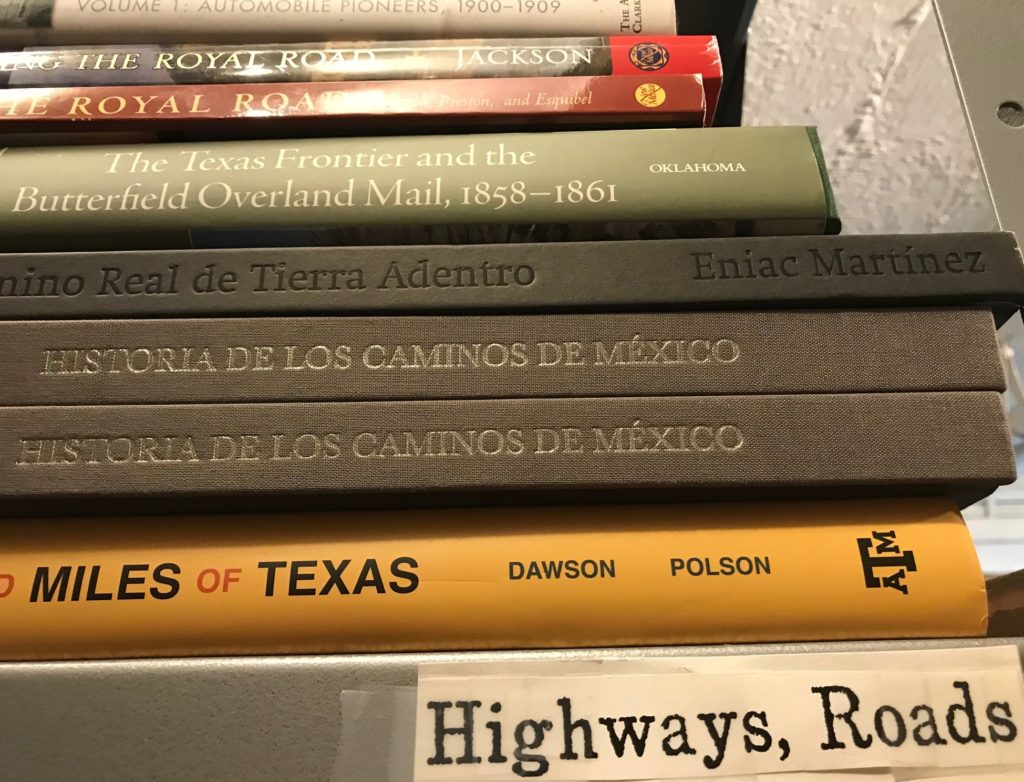
For example, for my Texas Bibliothek, right now I have about 30 categories, each with from 10 to approximately 50 books in each. Each category I have defined to my liking, broad enough that it doesn’t occupy more than a brain cell or two to figure out, yet narrow enough that I don’t need to bother organizing the books alphabetically.
For my writing workshop working library however, I do have the craft and process books organized by author alphabetically. I have never been able to find a reasonable way–– reasonable for me––to break down the collection beyond books on “Craft” and on “Process.”
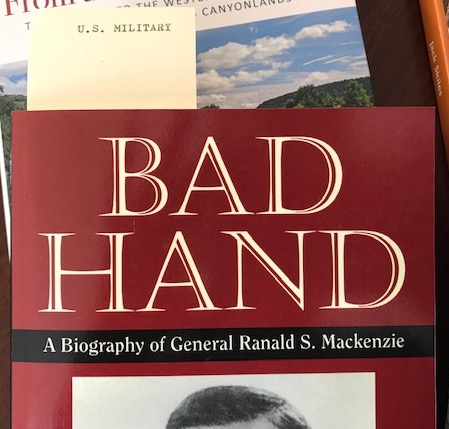
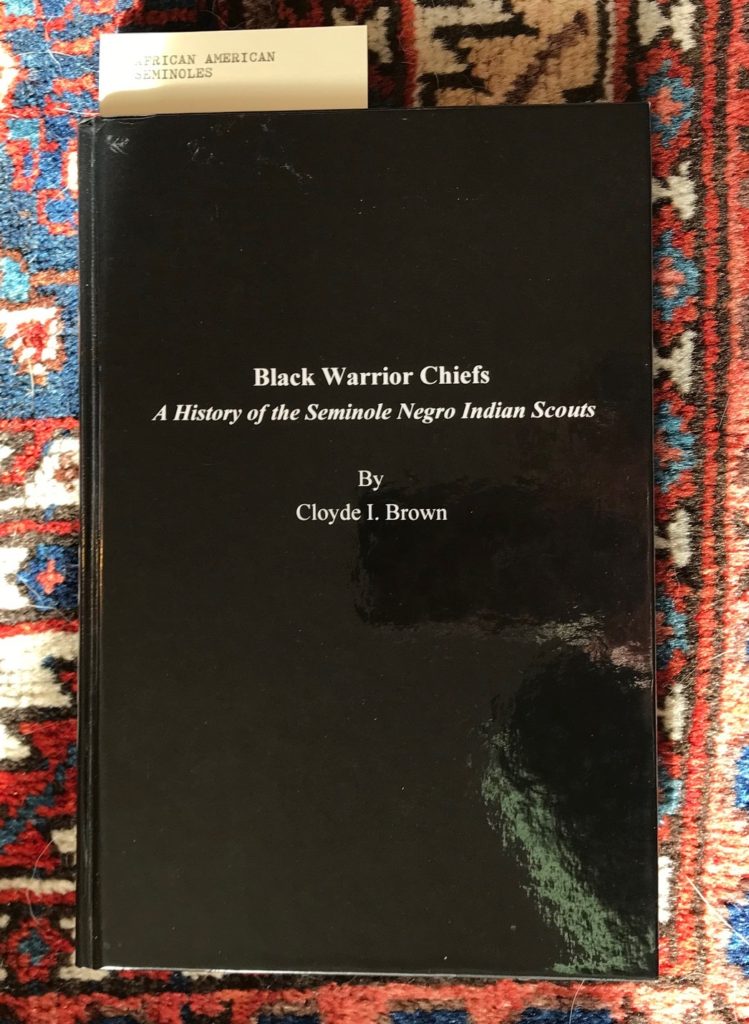
(5) Of course, some books could fall into more than one category, e.g., Jeff Guinn’s Our Land Before We Die: The Proud Story of the Seminole Negro could be in U.S. Military; African American/ Seminoles; Texas History; Regional History / Fort Clark; US-Mexico Borderlands. (I chose African American / Seminoles. But I might change my mind.) For such endless little categorization conundrums, well, say I, just apply deodorant and do what seems most sensible to you. You can always change your mind, and you probably will.
To make sure you do not overlook important works in your collection, as you work with your library, and as you dust it, make an effort to let your eyes rove over the whole of it.
(6) Dust regularly using an ostrich feather duster. Seriously, go for the ostrich.
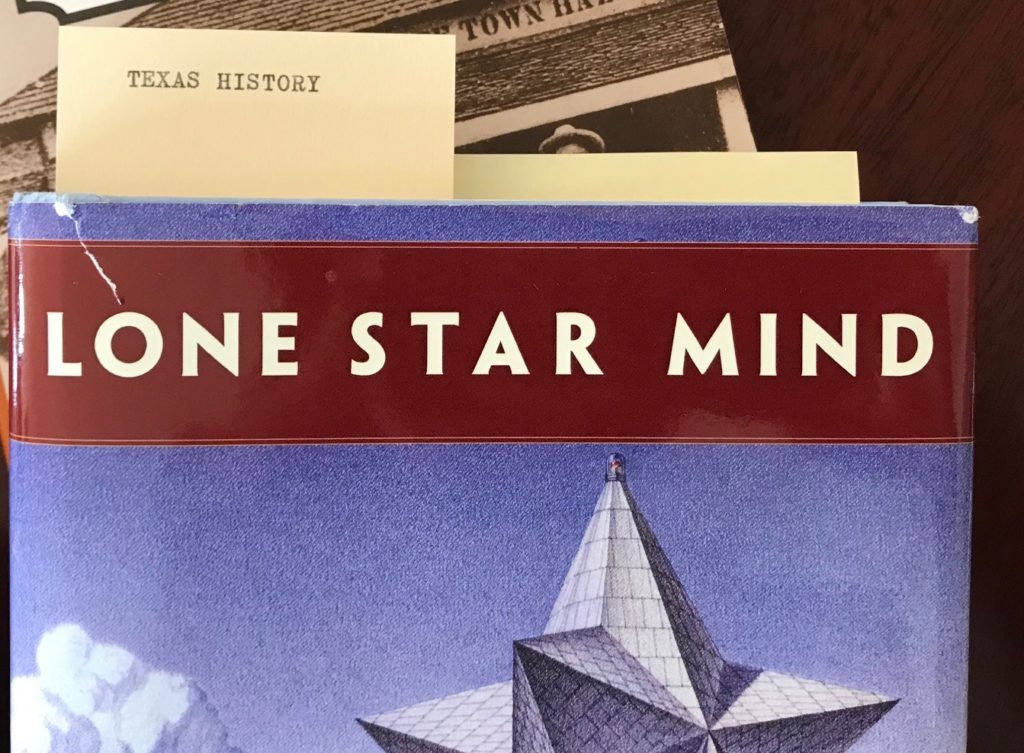
(7) For the shelves use BIG, READ-ICU-LOUS-LY EASY-TO-READ LABELS. I print these out on my computer, cut and tape them to index cards, and tape them on the shelves.
This is what I mean by a READ-icu-lous-ly big label. Huh, I can read it.
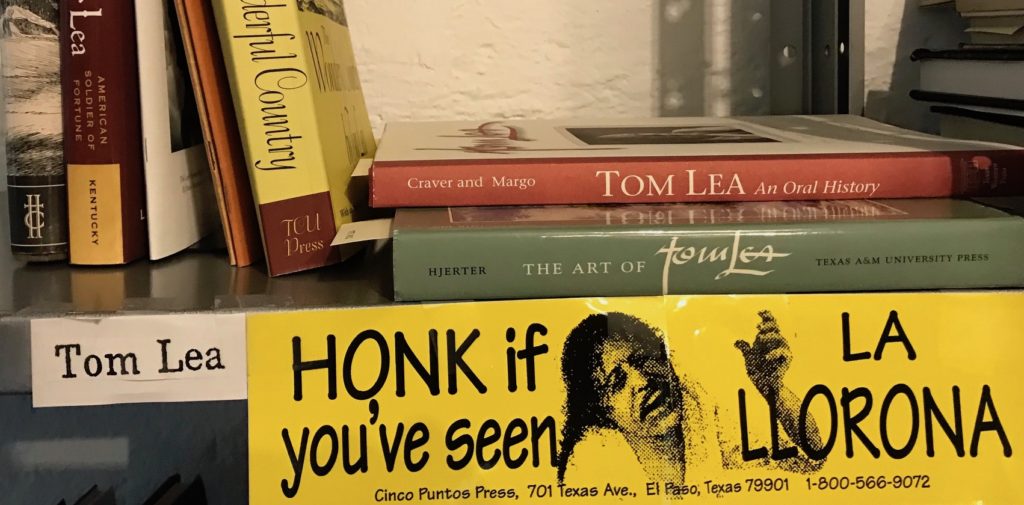
Tom Lea was a most elegant artist and novelist, El Paso’s best. And, yay, I found a place for my super chido “Honk If You’ve Seen La Llorona” bumpersticker! Maybe one of these days I will put it on my car!
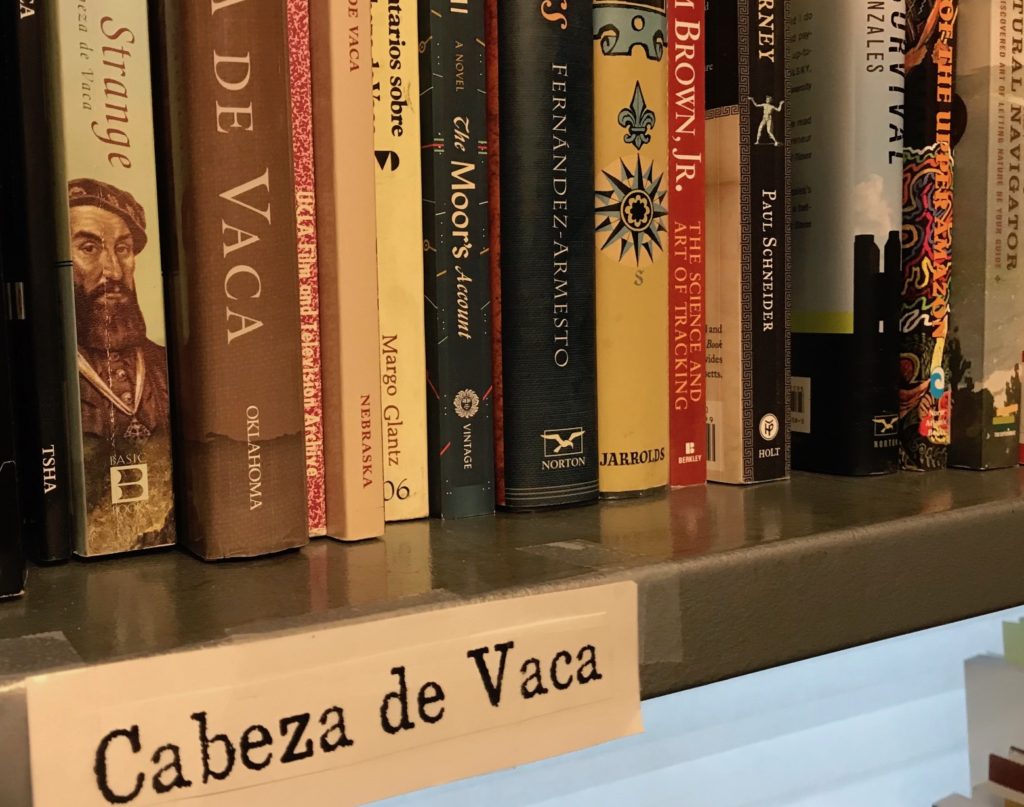
That portrait on the spine of that book to the left is not actually Cabeza de Vaca. Everyone seems to think it is. Which kind of annoys me.
(8) Key is to be able to not only find, but lickety-split, without a thought––look, Ma, no brain cells!–– reshelve any and all books in your working library. Institutional libraries have catalogs you can consult and usually affix a sticker with the catalog number on each book’s spine, but for you, with your writer’s working library, this is probably going to be too fussy a process. And anyway you don’t want to be sticking anything on a rare or first edition book unless it has a mylar cover, in which case, you could put the sticker on the mylar cover. Mylar covers are nice… buying more is on my “to do ” list… but….
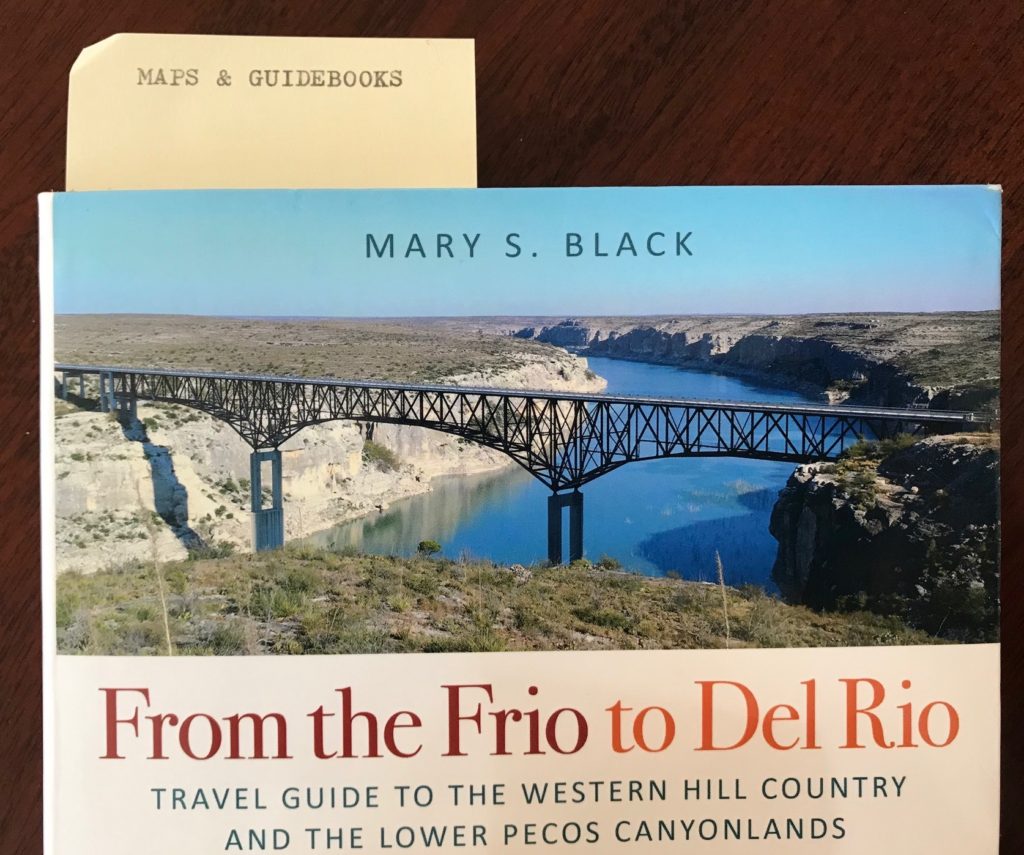
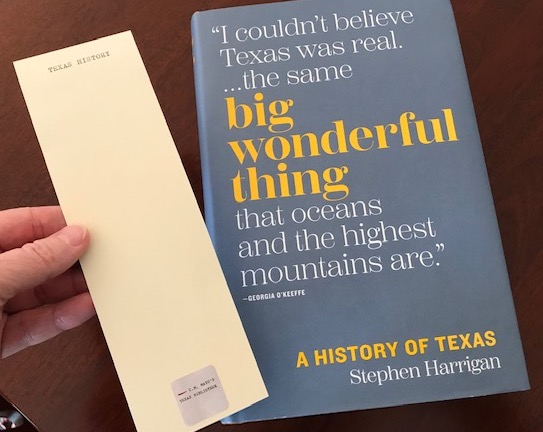
What works splendidly well for supersonic reshelving is a labeled bookmark. Yep. It’s this simple.
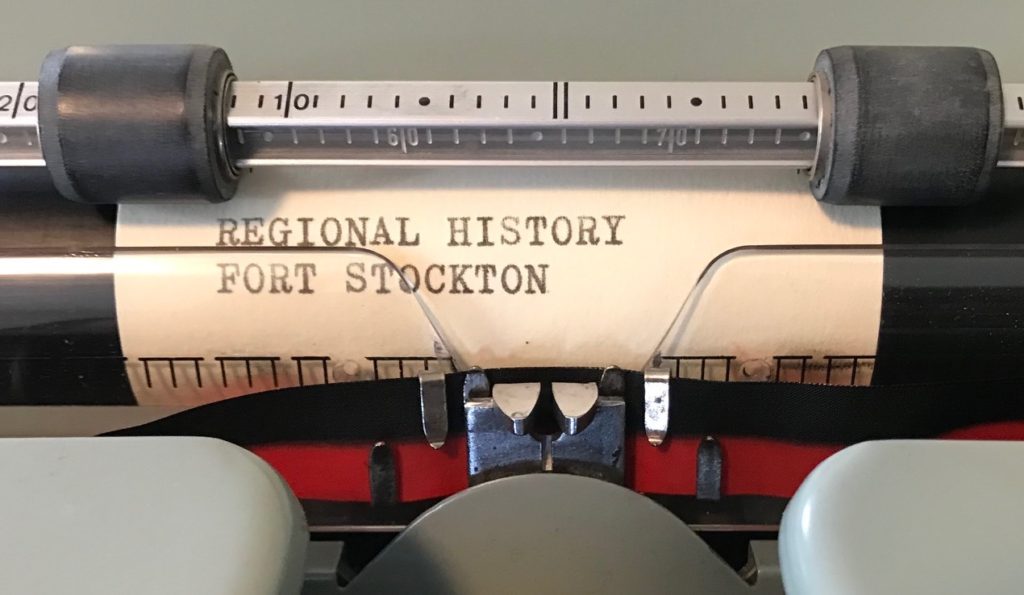
(9) To label each bookmark, get a typewriter because, for all the many other good reasons to use a typewriter, you can quickly type up legible labels on your bookmarks.
(=You can stop laughing now=)
Trying to make labels for bookmarks using a wordprocessing program and printer will give you a dumptruck of a headache. I used to be a fan of labelers such as the Brother Labeler. No more. Batteries, replacement cartridges… fooey. Yes, using your own handwriting may be the easiest of the peasiest, but it will slow you down when you are trying to reshelve books because the eye groks machine-written words so much faster.
Get the typewriter! A workhorse if you can, such as a refurbished Swiss-made Hermes 3000 from the 1960s-1970s.
No battery, no click-bait, no wifi! No need for any Freedom app, either. (And ecological. Um, my little tree huggers, have you ever actually seen a server farm? Or where and how they mine the stuff to make batteries?)
(1o) To make the bookmarks, use paper strong enough for the bookmark to always stand straight. I cut up left over or ready-to recycle file-folders for this purpose.
(11) To identify each working library (should you have more than one) place a sticker or stamp on each bookmark.
The sticker reads “C.M. Mayo’s Texas Bibliotek.” Make your own at www.moo.com.
(12) Another advantage of these plain paper bookmarks is that you can easily change them. Just cut off the top and type in the new label! As you delve deeper into researching and writing your book, you will undoubtedly find it convenient to both add to and reconfigure the categories in your working library, and perhaps several times.
(13) Further consideration: While many book collectors write their name in the book or paste in a book plate, I stopped doing this several years ago because I found this made it more difficult for me to let go of books that, after all, I wanted to declutter. I might change my mind about this. A custom-made ex-libris has always seemed to me a lovely idea. It’s in my Filofax for my old age when, maybe, I live in a house the size of an aircraft hangar.
(14) Cataloging? Nah. Even with a wall or six or seven or ten filled from floor to ceiling with books you are still far from operating at the scale of an institutional library. A catalog, whether low-tech or high-tech, will take too much time to figure out and maintain (ugh, more glitch-ridden software updates). Ignore anyone who tries to sell you library cataloguing software. Seriously, trying to do it digitally in some-fangled DIY way may also end up proving more trouble for you than it’s worth. (… cough, cough… ) With adequate bookshelf space (see tip #3, above) and meaningful categories with BIG, RIDICULOUSLY EASY-TO-READ labels (see tip #7, above) you can grok your whole enchilada at a glance, or two.
However, it may make sense to catalog the books when you get to your long-term plan (see point 16 below).
(15) Ignore ignorant people who tut-tut that you should declutter your books. Have they ever tried to write a book? No, they have not. Smile sweetly as you shoot them eye-daggers.
(16) Make a long-term plan for your books because obviously, at some point, perhaps when you move into smaller digs for one reason or another, or you die, they have to go. If you are incapacitated or dead, these working libraries may prove a heavy burden for your family, literally, figuratively, and financially. Chances are your family members won’t have a clue what to do with them, nor the time, and possibly, alas, they may not even care. I aim to write more on this sticky wicket of a subject later; for now, I point you to a fantastic resource, the Brattlecast podcast #57 on “Shelf Preservation” from the Brattle Book Shop.
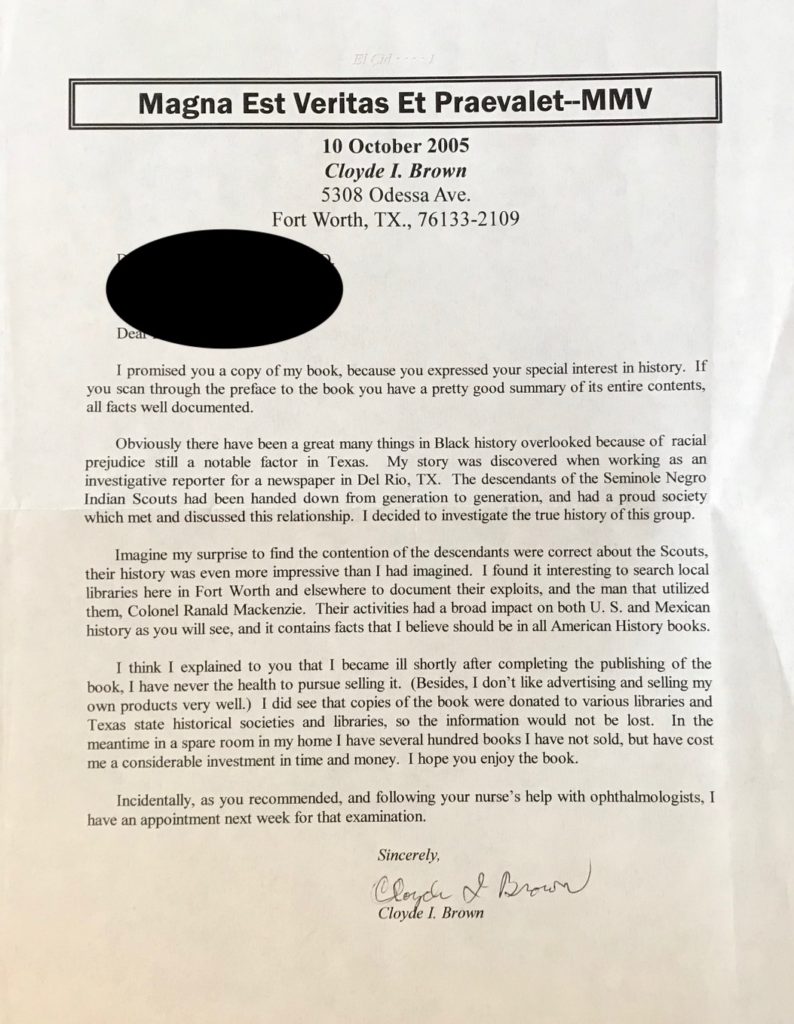
One of the special treasures in my Texas Bibliothek is Cloyd I. Brown’s Black Warrior Chiefs.
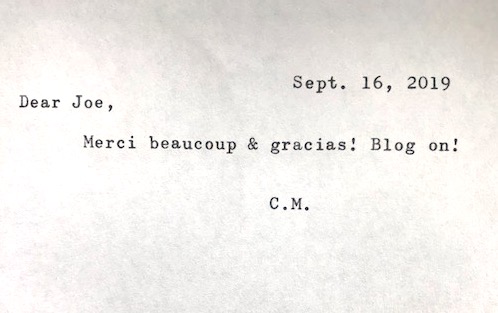
Tipped inside my copy of “Black Warrior Chiefs” I found this letter from the late author (I blocked the name of the recipient to protect his privacy). Hmm, he says he has several hundred unsold copies… Only a very few show up for sale online as of 2019.
What has been your experience with your working libraries? Do you have any tips to share?
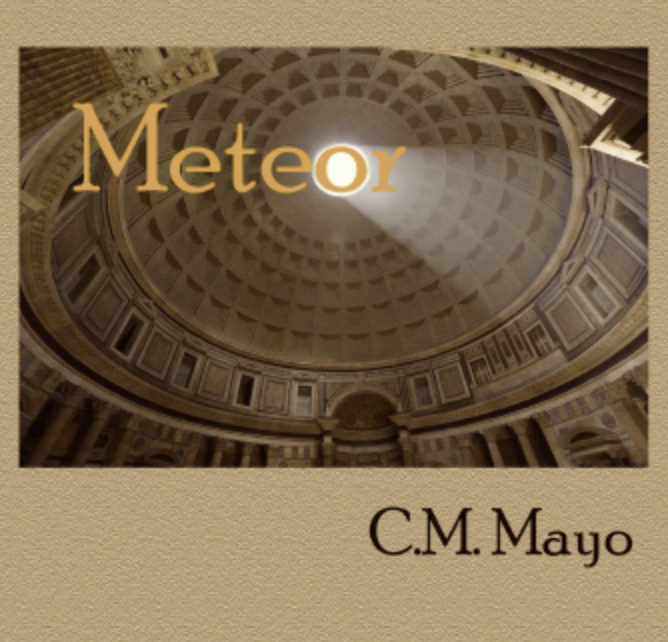
Book reviews: I write them, for I consider reviewing certain books a vital exercise for finding clarity in my own thinking. However, I try not to read reviews of my own books because my book is already written, after all, and I wrote it the way I did because that’s what I wanted to do, that’s what I thought I should do, and I did it the best way I knew how (and who the hell is that schmo anyway?) If some random reviewer doesn’t like it, TFB (tough frisbees). But of course… it’s too tempting… Yeah, I read them. The pay-off for this foolishness is that once in while there is a review that makes my whole month, and not so much because it tickles my ego (although it does) but because the reviewer so profoundly understood and appreciated what I was trying to do. And this one review somehow, truly, makes writing a book, and bringing it into the world, feel… sigh. Maybe a little less quixotic. Dear poetically-inclined reader, I point you to Greg Walkin’s review of Meteor.
> A recent Writers’ League of Texas Q & A with me about Meteor & etc. is here.
#
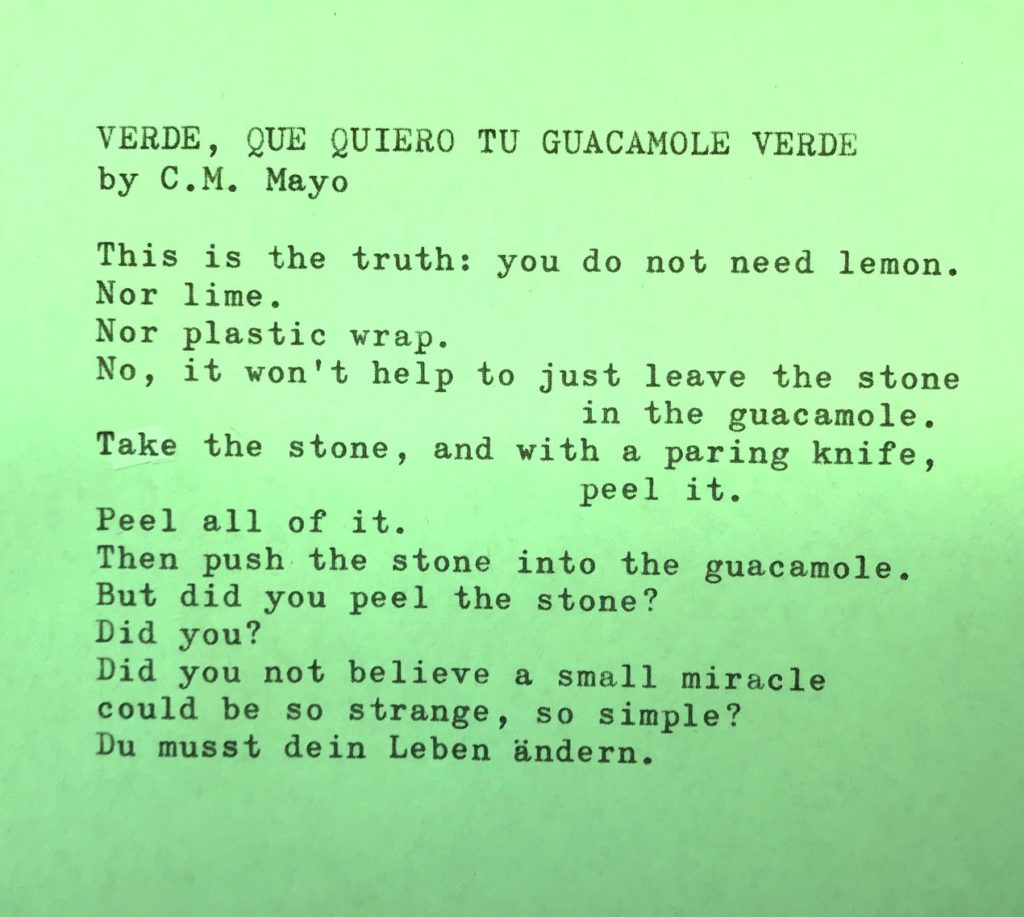
These days I am not writing much poetry because I am working on my memoir / portrait of Far West Texas and related podcasts and essays. But the Muse has her whims and wiggly ways. This is what happened last week when, weirdly, I was thinking of Federico García Lorca’s “Romance sonámbulo” as I read Rainer Maria Rilke’s “Archäischer Torso Apollos.” Typed on a 1967 Hermes 3000. It’s a macaronic.
UPDATE: Joseph Hutchison has posted his elegant translation of Rilke’s poem plus some fascinating links to read more about it here.
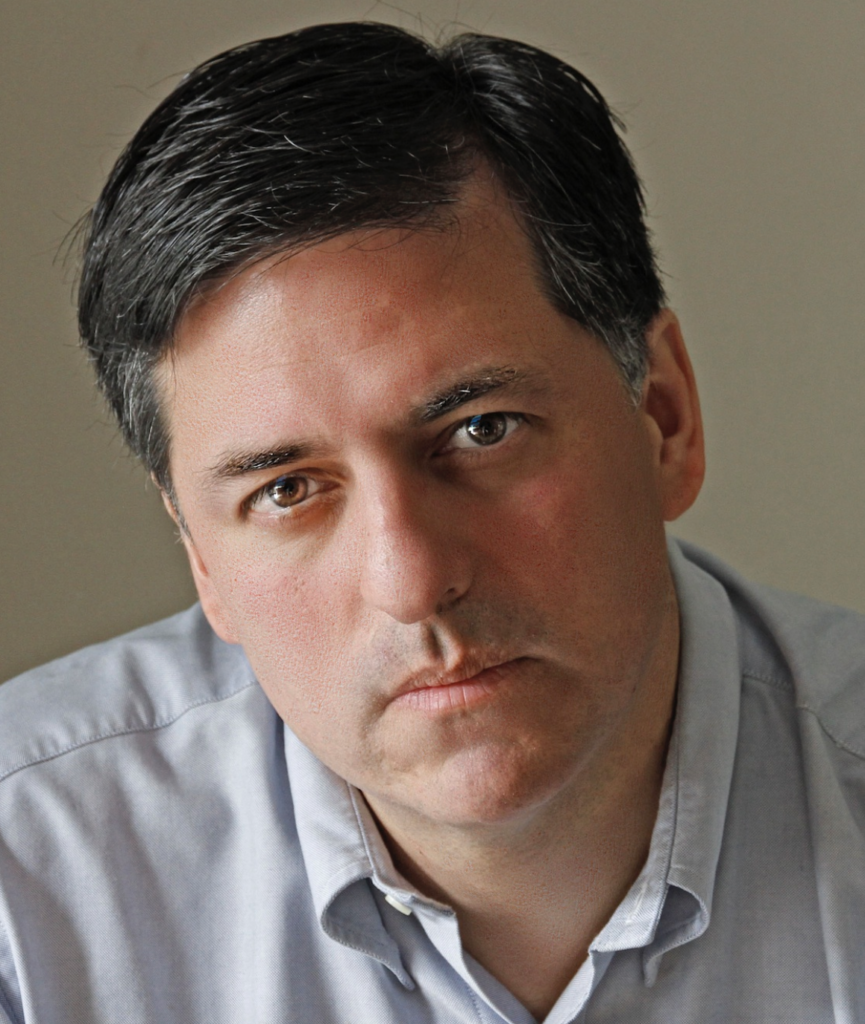
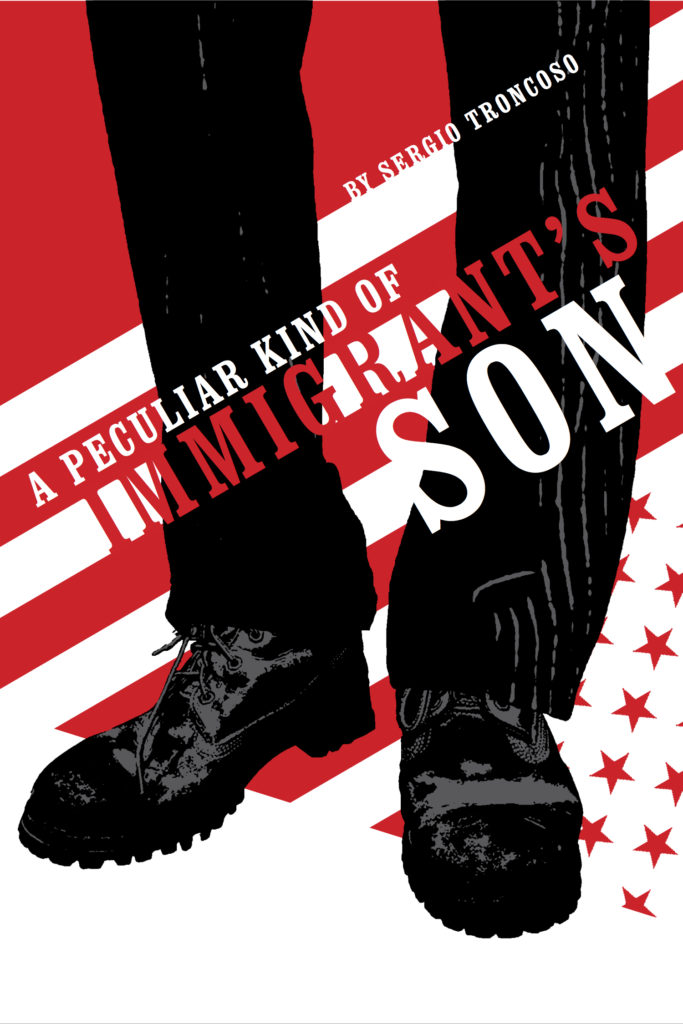
Sergio Troncoso is a writer and literary activist whom I greatly admire. It so happens that we were born the same year in the same city: El Paso, Texas. And both of us lived our adult lives in cultural environments vastly different from El Paso: I went to Mexico City; Sergio to Harvard, Yale, and many years in New York City. Sergio’s works offer a wise, deeply considered, and highly original perspective on American culture. I’ve reviewed some of his work here and here; back in 2012 I interviewed him at length about his life and work for my occasional podcast series, Conversations With Other Writers, which you can listen in to anytime here. In the years since he has since published an impressive number of highly accomplished works, both fiction and nonfiction, his latest a collection of short stories, A Peculiar Kind of Immigrant’s Son.
C.M. MAYO: What inspires you to write short fiction, as opposed to a novel or nonfiction?
SERGIO TRONCOSO: In this particular collection, A Peculiar Kind of Immigrant’s Son, I wanted to focus on short fiction because it allowed me to play with perspectivism and the fragmentation of characters in a way that a longer work (like a novel) would not. These thirteen stories on immigration and Mexican-American diaspora are linked together: a character appears in a group of stories, only to reappear in the next story from a different angle or perspective. The individual stories also build on each other to ask the reader to question herself as to how she brings certain biases and prejudices to certain characters, how the reader herself contributes to this perspectival and temporal truth, which philosophers like Friedrich Nietzsche focused on and writers like Virgina Woolf also explored. So the book is this fragmented whole, in a way, in which the fragments are visible in the form of stories (and the whole is understood only by the reader).
C.M. MAYO: Of all the stories in this collection which is the one you feel most proud of? And why?
SERGIO TRONCOSO: I conceived this book as a whole of stories, as a puzzle in thirteen pieces. So it’s difficult to single out one story. But I am fond of “Eternal Return,” the final story, because it stands alone to bring together many of the themes in the other stories, this playing with perspectivism and time, the presence of ancestors and geographies long gone, the shifting self trying to come together in many selves, all with the existential tick-tock of the clock that reminds us every day that our time on earth is limited. Even if time is always short, we must come together as a self, even if so many forces pull us apart.
C.M. MAYO: If a reader were to only read one story, which would you recommend?
SERGIO TRONCOSO: I would recommend the first story, “Rosary on the Border.” This story begins with a death (as does “Eternal Return,” but death in another form, so to speak), and it takes you into the realism of David Calderon’s life. He tries to makes sense of his father’s death, of his life in relation to the finality that David sees before him. So David sees and appreciates, in bittersweet moments, what his father and mother taught him, even as he has separated himself from them. So it’s an easily accessible (realistic) story that begins a journey for the reader that ends with the more magical-realist “Eternal Return” and another concept of ‘death’ and ‘ancestor.’
C.M. MAYO: If a reader were to take away one sentence (or two or three) from this story, which would you suggest, and why?“
SERGIO TRONCOSO: “I believed in very little, but I kept going until I would get tired or defeated, and then I would take time to discover another wall to throw myself at. I was, and I am, and I will be, a peculiar kind of immigrant’s son. I got old, and that made everything better, including me.”These sentences from “Rosary on the Border” encapsulate David’s effort to search through his past to find out what belongs with him still, and to rid himself of ideas and superstitions that through experience lost their meaning, and yet to go back to who he was, an immigrant’s son, what’s left of this sense of self, to move forward in his life.
C.M. MAYO: Can you talk about which writers have been the most important influences for you?
SERGIO TRONCOSO: Different writers have been influential at different times in my life. When I was a teenager, I loved S.E. Hinton, because her young-adult novels reflected much of my life in Ysleta, with gangs and poverty and being ‘outsiders.’ In college, I started reading the great Latin American writers like Gabriel Garcia Marquez, Isabel Allende, Ruben Dario, Gabriela Mistral, and later I kept going with Pablo Neruda and Jorge Luis Borges. The list of Latin American writers I read is too long! It’s a treasure trove of great writing in Latin America. In the subway, for many years, I would read and reread Emily Dickinson’s collected works, because I loved her lines and the rhythms of her sentences, and because I was taken in by her unique, deeply curious perspective that had little to do with commercial publishing or becoming a celebrity. I love that kind of fiercely independent, insular writing into the soul.
C.M. MAYO: Which writers are you reading now?
SERGIO TRONCOSO: I’ve read many of the works of Valeria Luiselli, a Mexican writer who is such an innovator with narrative form. I’m enjoying works by Francisco Cantu and Octavio Solis, as well as poetry by Sasha Pimentel and Megan Peak. I’m not a poet, but I love reading poetry. Also, I’m a fan of George Saunders: he is just a master of the short story, and his novel Lincoln in the Bardo introduced me to a new (or unusual) narrative form in a longer work.
C.M. MAYO: You have been a productive writer for many years. How has the Digital Revolution affected your writing? Specifically, has it become more challenging to stay focused with the siren calls of email, texting, blogs, online newspapers and magazines, social media, and such? If so, do you have some tips and tricks you might be able to share?
SERGIO TRONCOSO: I think you have to be relentless about getting the word out about your books and appearances on social media, you have to accept this ‘fast world’ as our world now, even though sometimes I hate it, and you have to do your best not to lose yourself in the posting and re-posting and stupid arguments that too often occur digitally. I do it, then I go back to my work. So I feel a bit schizophrenic sometimes, but I do relish the moment when I turn everything off and lose myself in my work or on a particularly thorny issue of craft. I think you almost have to have a ‘segmented mind,’ that is, learn to function in the realms of social media effectively. But then also learn to take all of this digital frenzy somewhat skeptically. The most basic way it’s affected my writing is that now I write about it, in dystopian stories about where I think our country might be headed, with people too quick to judge superficially, so enamored with images, so lost in our digital world that the real world becomes an aside.
C.M. MAYO: Another question apropos of the Digital Revolution. At what point, if any, were you working on paper? Was working on paper necessary for you, or problematic?
SERGIO TRONCOSO: I still work on paper, after I edit on my computer. I always print any story or novel several times and edit it line-by-line on sheets of paper. I write notes in the white space in the back, as I edit, to add or subtract or plan ahead, as I discard, change, add. I like the going back and forth, between words on paper and words on a computer: this back and forth always gives me a new perspective on what I have on the page, and I need that as an editor.
C.M. MAYO: What is the most important piece of advice you would offer to another writer who is just starting out? And, if you could travel back in time, to your own thirty year-old self?
SERGIO TRONCOSO: Read as if your life depended on it. Read critically in the area you are thinking of writing. Don’t be an idiot: seek out and appreciate the help of others who are trying to help you by pointing out your errors, your lapses in creating your literary aesthetic. Get a good night’s sleep: if you do, you’ll be ready to write new work the next day. And if you fail, you won’t destroy yourself because you did. You’ll be ready to sit in your chair the next day.
“Read as if your life depended on it. Read critically in the area you are thinking of writing.”
C.M. MAYO: In recent years you have been a very active member of the Texas Institute of Letters (TIL). Can you talk a little about your vision for and the value of this organization?
SERGIO TRONCOSO: I’m the current vice president of the TIL. I’m also the webmaster. I’ve actually had a lot of roles in the TIL, official and unofficial. I’m just trying to help. I believe we can nurture a great community of writers in Texas that honors the independence and excellence of past members, while reaching out to communities within our state who are producing great writers but have often been ignored. Mexican-American writers, for example. So not only have we modernized the TIL by taking much of our work and ability to pay dues online, but we have also inducted more women and people of color. We have also held our annual meeting in places we’ve never been, like El Paso and McAllen, so that we represent the entire state of Texas, and not just the orbit around Austin. With our lifetime achievement award, we have honored more women than ever before (Sarah Bird, Pat Mora, Sandra Cisneros, Naomi Shihab Nye). And just a few days ago, we announced that John Rechy has won our 2020 Lon Tinkle Lifetime Achievement Award. So we are recognizing the excellence that was always there, while also being inclusive. As my grandmother often said, “Quien adelante no ve atras se queda.” One who doesn’t look forward is left behind.
“As my grandmother often said, ‘Quien adelante no ve atras se queda.’ One who doesn’t look forward is left behind.“
C.M. MAYO: What’s next for you as a writer?
SERGIO TRONCOSO: I just signed a contract with Cinco Puntos Press for a new novel, tentatively entitled as Nobody’s Pilgrims, which I have already written. I’ll be working on editing it. Also, I’m the editor of a new anthology, Nepantla Familias: A Mexican-American Anthology of Literature on Families in between Worlds. What family values from Mexican-American heritage have helped the writer (or the protagonist or narrator) become who she is, and what family values did she discard or adapt or change to become who she wanted to be? This is the ‘in between moment’ that is the focus of this literary anthology. I am always busy, but that’s how I like it. The more I do, the more I can do.
BY C.M. MAYO — October 21, 2019 UPDATE: This blog was then entitled Madam Mayo (2006-2022).
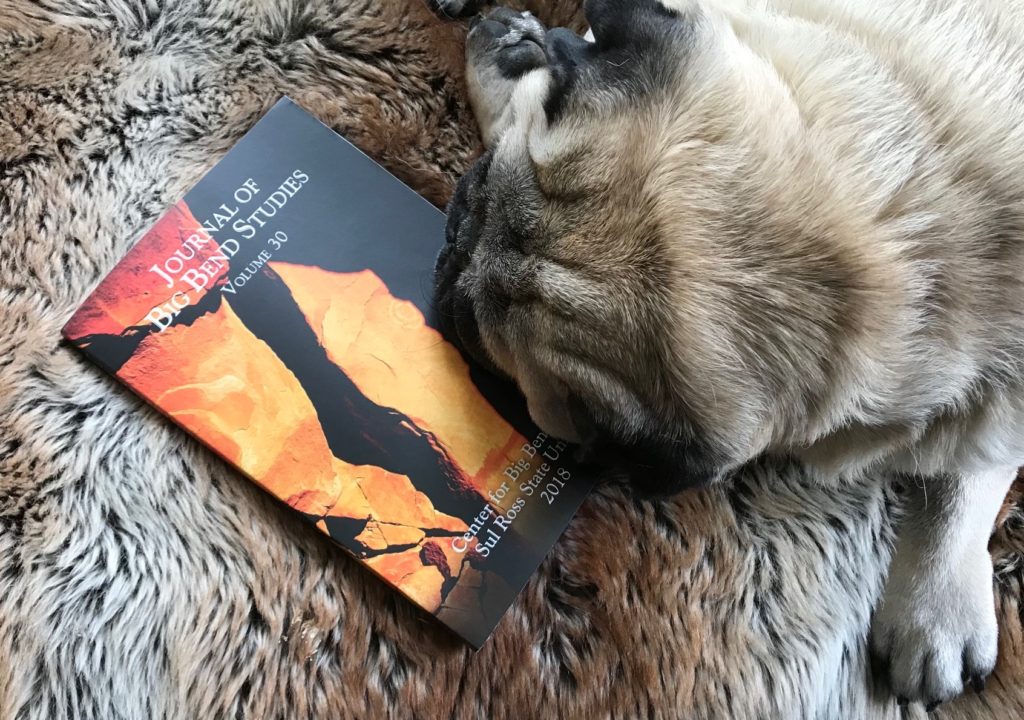
Just last week the 2018 issue (vol. 30) of the Journal of Big Bend Studies landed in my mailbox. I am proud to say that this is my second publication in this excellent US-Mexico borderlands scholarly journal published by Sul Ross State University in the Big Bend of Far West Texas. (My essay on Francisco I. Madero’s secret book was my first publication in the JBBS.) This is the paper I presented at the Center for Big Bend Studies Association conference in 2017: “John Bigelow, Jr.: Officer in the Tenth U.S. Cavalry, Military Intellectual, and Nexus Between the West and the Eastern Establishment.”
It’s in some fine company in this issue. Herewith the table of contents:
From a Frederic Remington illustration in John Bigelow Jr.’s collected articles, On the Bloody Trail of Geronimo.
Whew!! Pictured here is my writing assistant, Uliberto Quetzalpugtl. Remembering all that work we did made him…sigh… take a siesta.
Writing such a lengthy, seriously-serious article all abristle with endnotes and straight-jacketed diction is unusual for me; my focus is writing poetry, fiction, and creative nonfiction. Those of you who follow this blog well know that I have been at work on a memoir / portrait of Far West Texas– definitively creative nonfiction– for more than a little while now. It was because I had done a heap and a half of research on John Bigelow, Sr. in writing my novel, The Last Prince of the Mexican Empire, that I knew there was much more to say about his son, John Bigelow, Jr., than I had come across in the literature on Texas and the Indian Wars and, well, I just felt I had to do it.
I find writing can be funny that way; for all one’s careful goal-setting and planning, sometimes a work seems to have a will of its own, to demand it be written, and in a certain way. This essay on John Bigelow, Jr. is one of those works. It truly surprised me. I hope it may prove of interest and useful to anyone looking at borderlands and military history, as well the genesis of ideas about the American West. Certainly, writing it has helped me further arrange the furniture, smooth out the rugs, and dust off the trophy heads in my thinking about Far West Texas.
As I stress in my creative writing workshops, it has been my consistent experience that to stay limber and working fluidly I need to regularly read outside my comfort zone. And I mean, read outside my comfort zone as a writer, pencil in-hand.
(Is this practice right for you as a creative writer? Well, I don’t know your innermost inner artist, nonetheless, I’d bet my three typewriters that he or she would find it bongo-drums + a B12 shot for creative energy. And I’d bet my laptop, too.)
Reading as a writer, as I detailed in this previous blog post, and this entire blog about War & Peace, is a fundamentally different endeavor than reading to pass the time, or, say, reading something just because all your friends and the people you presume to impress have read it, or reading because your book club picked it, or for some scholarly purpose, or whatever combination thereof.
Reading as a writer is reading to identify what precisely works here? What precisely is ineffective? And precisely why this effective, or that ineffective?
In short, there are rafts of techniques and I consider it essential to be able to identify them when they are used to effect– or could have been.
On other words, if a piece of writing sings to you, it is in no way helpful to you as a writer to get all awesomed out, saying things like, golly wow, no wonder he won the Nobel Prize, little ol’ me, why, I could never do that!
Well, ick. Stoppit. You can do this.
You need to ask, precisely why do I find this bit good? How, precisely, did the writer achieve this effect? What specifically can I learn here?
Ditto, if you find a piece of writing bad. Why is it bad? What specifically can I learn from this?
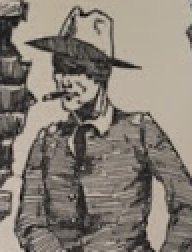
Reading as a writer, pencil in hand, I’ll read in my comfort zone– writers such as Willa Cather, Tolstoy, Edith Wharton, et al. But for creative inspiration I’ll also take a more than occasional jog outside my comfort zone: a spree on books about UFOs, gun mags, a guide to caring for your iguana (I do not have an iguana, I never had an iguana and I do not care to have an iguana, but anyway now I know a lot about iguanas), and (this comes with the territory of writing about Far West Texas) self-published cowboy memoirs.
Add to that ever-expanding list–this week only!–fashion blogs.
(What’s outside your comfort zone, dear writerly reader?)
OK, yes, a lot of the writing in these out-of-my-comfort-zone genres tends to be, shall we say, pedestrian. I cannot say anything in the how-to-care- for-iguanas genre, to take one example, would merit quoting for its lyrical qualities… but I may well have a character in my next novel who knows a heap about iguanas, and his green monster, Peps, who likes to hide his stash of flies under the sofa…
But sometimes I am surprised. I am always open to being surprised!
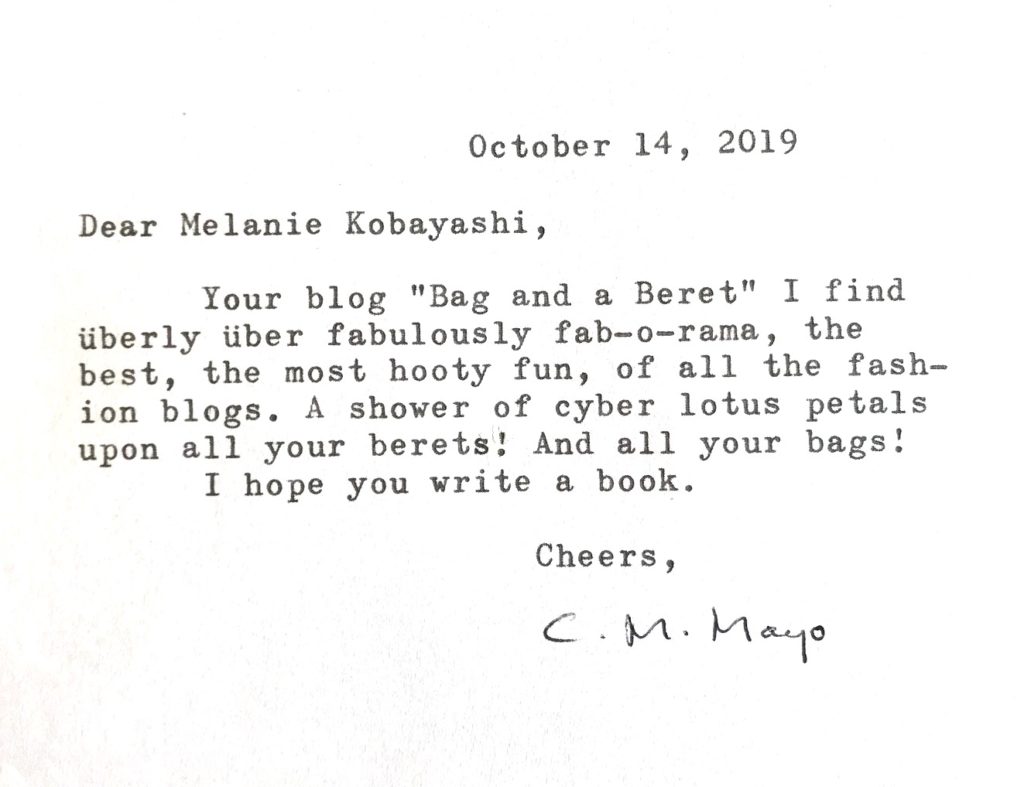
Fashion bloggers… There’s a heap to say about those fashion bloggers… but describing that colorful subculture and its effervescent personalities is not my purpose here. What I want to spotlight in this month’s workshop post is the vervy-good writing in Vancouver Canada-based artist Melanie Kobayashi’s fashion blog, Bag and a Beret.
To wit:
Sometimes I am giddy with the idea of throwing everything out, O-U-T, out! No more clutter, clenched sphincters, and squinty eyes. Instead, a confounding profound serenity. Like the scent of jeans fresh from the freezer. Clouds would be fluffier. Doritos would be healthier. I’d take up yoga, do downward dogs and sideways cows, and start saying all those namasty things. And drink green fluids with stringy bits. —Is That An Alien in My Closet? Melanie Kobayashi, Bag and a Beret, March 4, 2016
Because this is a workshop post, I’m going to get all workshoppy now and pick this apart. Which kills the fizz in it, I know, but the purpose here is to identify some of the poetic techniques Kobayashi uses that might well serve you for your writing.
Actually there is a whole bouquet of literary techniques in Kobayashi’s paragraph. To point out just four of the techniques:
(1) She varies her syntax– such delicious, jiggy energy! Note her short, punchy sentences: Clouds would be fluffier. Doritos would be healthier... And drink green fluids with stringy bits.
(2) Like the finest of poets Kobayashi gives us specific detail that appeals to the senses: Texture (fluffier clouds); temperatures (“jeans fresh from the freezer”); tastes (Doritos, “green fluids with stringy bits”)
Another example of vervy-good writing from Melanie Kobayashi’s blog:
Alert, another face pose! This aluminum-foilesque blazer is exactly my style. I adore the humongous acrylic buttons. Shelley grabbed it for a try-on on our way out. The way I farked this photo reminds me of a popular Canadian TV ad where a couple heats their home so hot that it melts cheese. In this case, I would be the potato. —Friends Galore and Imaginations Gone Wild, Melanie Kobayashi, Bag and a Beret, June 29, 2019
And:
Today I feature alluuuuring, not-quite-lurid, languid bedroom attire as corporate pyjama daywear, or, as I shall call it, Bed to Boardroom. “Oh James, bring me the latest numbers so I can calculate how bad I am at math. On second thought, skip the math and let’s go straight to drama, English literature. Bring me another martini and wheel in the divan.” —Corporate Pyjama Daywear, Leopard-Style Melanie Kobayashi, Bag and a Beret, October 21, 2017
There’s a lot of music in this quote:
(1) stretching and playing with words, e.g., “alluuuuring”
Yet another example from Kobayashi’s Bag and a Beret:
So I wore this vintage barkcloth maxi the other day. You may have seen it before – but not with my lovely lava pendant paired with that other one, looking very, dare I say, fly? And bracelets. I don’t wear them often because my wrists are small and the bangles clamp my hands when they dangle down. So here we have a Hawaiian-made dress with lava jewels and hiking boots (with fringe and platforms, an improvement on the standard fare). Do I sense a pattern here? Why, of course – I should be a vulcanologist! It’s so clear now. Open your mind. Let your clothes guide you!! —Let Your Clothes Choose Your Profession Melanie Kobayashi, Bag and a Beret, July 1, 2015
Just a few of many things I could note in this are her use of alliteration; questions; and splendid use of specific sensory detail (e.g., “And bracelets. I don’t wear them often because my wrists are small and the bangles clamp my hands when they dangle down.”)
#
More!!
This is a project-ish project– paring down my clothing and focusing more on earrings and suchlike, meaning tights, hair thingies, face paint, maybe shoes. I am looking forward to the challenge but this is mainly an attempt to free up more space in my space-challenger home. In fact, I bought some Ziploc Space Bags (in tropical colours), which are vacuum-resealable bags capable of squishing a huge pile of clothing into one fruity brick. Spacey, baby, spacey. —Why Do Laundry When You Have Scissors? Melanie Kobayashi, Bag and a Beret, February 17, 2014
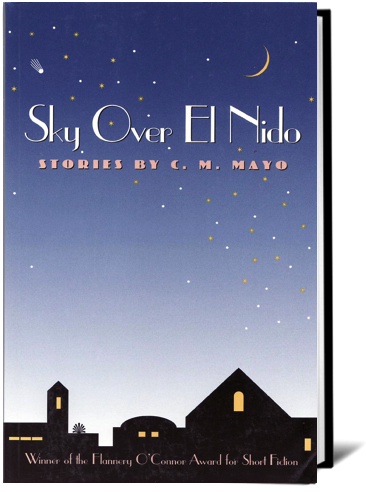
I wrote “Sky Over El Nido” about 500 years ago (um, that would be sometime in the early ’90s). What’s interesting to me about it now is that it has what I thought of then as a net-like narrative structure, but that I now think of as Sandboxing with Fractals. At the time I was reading a lot of Douglas Glover, Kate Braverman, Jorge Luis Borges, Marguerite Feitlowitz, and Flannery O’Connor. It was a wicked lark to write.
You can read more about Sky Over El Nido over on my webpage, www.cmmayo.com. (…In 2020 I aim to get that verily ancient website into WordPress…)
Notable: Whitney Fishburn, Washington DC-based journalist and critic, has just launched docu-mental. And she continues writing a monthly column for the Writer’s Center.
New book out: Eric D. Goodman writes, “This October, Loyola’s Apprentice House Press is publishing my novel, Setting the Family Tree... [I]t follows a private reserve of exotic animals as they are released into the community.”
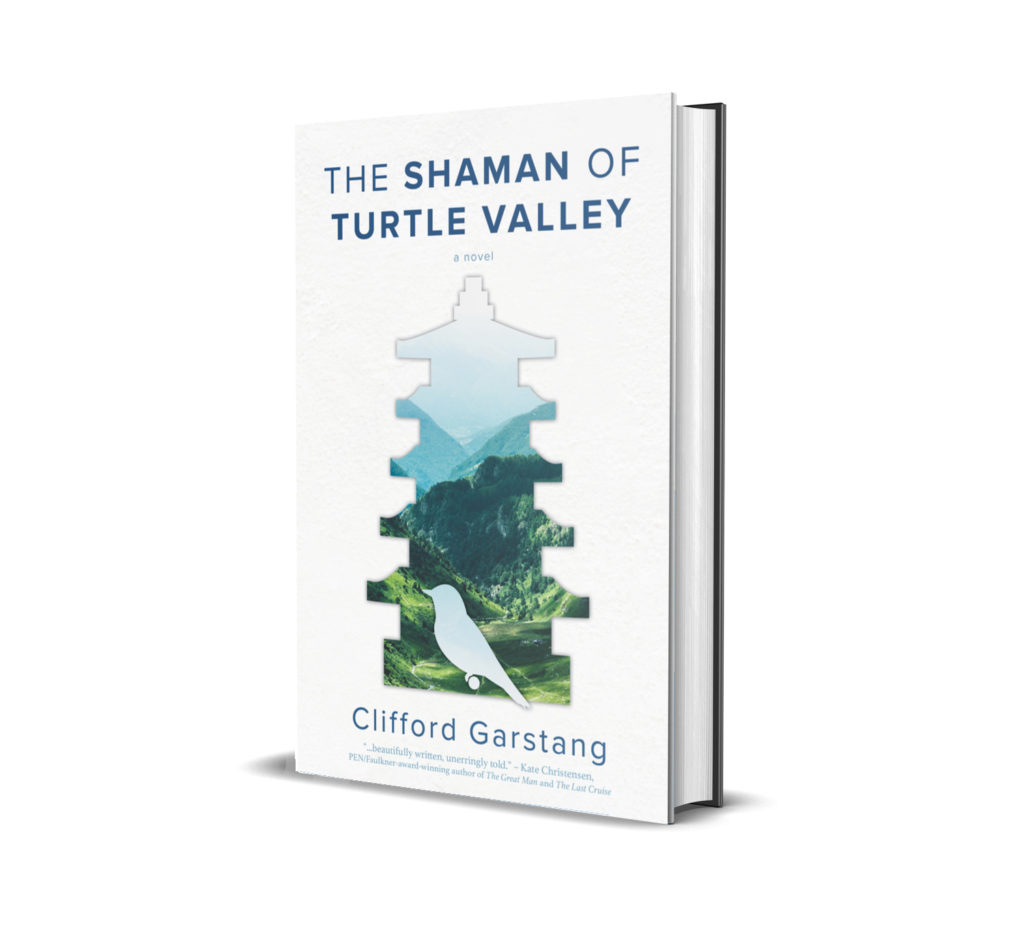
I found out about Clifford Garstang’s latest, The Shaman of Turtle Valley, when I received his emailed newsletter. (A good writer’s newsletter– that will be the subject, along with a recounting of some of my own infelicitous adventures with mailchimp, of another post, perhaps in 2020.) Suffice to say, I was delighted to hear about Garstang’s new novel, just out from Braddock Avenue Books. I met Garstang some years ago when I was living in Washington DC. While the literary scene there is assuredly not what comes to mind for most people at the mention of the nation’s capital, in fact that scene is substantial, reaching into Virgnia, Maryland and Delaware; highly heterogeneous; attuned to the international; and thriving. Garstang, both as an author and as an editor, is an important part of it.
And by the way, many legions of writers all over the US and elsewhere who write in English also know Garstang for his annual Literary Magazine Rankings, which he publishes in his blog, Perpetual Folly.
C.M. MAYO: What inspired you to write The Shaman of Turtle Valley?
CLIFFORD GARSTANG: The book has multiple sources of inspiration. First, it’s something of an extension of the stories that appeared in my first collection, In an Uncharted Country, about people who are trying to find a place for themselves in a rural community. Shaman’s main character is a young war veteran who isn’t sure where he belongs, and that story was the original seed for the novel. But because I lived in Korea for a couple of years a long time ago, I have various Korean artifacts in my home, and one of those, a traditional Korean folk painting of a figure known as Sansin, or the Mountain God, got me to thinking of the similarities and differences between rural Korea and rural Virginia. What would happen, I wondered, if a Korean shaman—invariably a woman—encountered a traditional Appalachian healer in the mountains of Virginia? The two ideas came together, embraced each other, and grew.
C.M. MAYO:Can you talk about which writers have been the most important influences for you?
CLIFFORD GARSTANG: I have had the great good fortune of studying with some amazing writers in graduate school and at writers’ conferences, and I would say they remain important influences because of what they had in common—a devotion to the sentence. Writers like Elizabeth Strout, Tim O’Brien, Christine Schutt, Peter Ho Davies, Russell Banks, and the late Grace Paley were all very generous with their attention and, I’d like to think, made me a better writer.
C.M. MAYO:Which writers are you reading now?
CLIFFORD GARSTANG: I’m a terribly eclectic reader. I just finished Téa Obreht’s new novel, Inland, and next up would be Karen Russell’s Orange World, Tommy Orange’s There, There, and Richard Russo’s Chances Are. Also, because I just came home from a trip to Prague, I’m going to read Jiri Weil’s Mendelssohn is on the Roof, about the Nazi occupation of that city.
C.M. MAYO:You have been a productive writer for many years. How has the Digital Revolution affected your writing? Specifically, has it become more challenging to stay focused with the siren calls of email, texting, blogs, online newspapers and magazines, social media, and such? If so, do you have some tips and tricks you might be able to share?
CLIFFORD GARSTANG: One of the reasons I often work in coffee shops, despite the inevitable distractions that come with being in a public place, is that it constrains me from goofing off. People see me, I’m supposed to be working, and so I mostly work. At home I’m far more easily distracted, but one thing that does seem to help is sticking to a work schedule every morning, turning off the Internet (or at least Social Media sites), and bringing my focus to bear on the task at hand. I don’t beat myself up if I slip—meditation training teaches us to “begin again”—and I also find it helps to listen to an album (instrumental). After the forty-five or sixty minutes of the music, I allow myself to take a peek at email, or whatever, and then get back to work.
C.M. MAYO:Another question apropos of the Digital Revolution. At what point, if any, were you working on paper? Was working on paper necessary for you, or problematic?
CLIFFORD GARSTANG: Last year, as we were nearing the production phase of the book’s publication, I printed the manuscript out. (I confess that there were times much earlier when I thought the book was nearly done and I did the same thing, only to have the agent or publisher search stall.) I went off to a hideaway and I did my final, final edits on paper. I find this very useful at a late stage. It helps to see the words on the page differently, to spot problems that are more easily ignored when you glide by them on a screen. Then, too, working on paper is another way to focus, to shut out the Internet.
C.M. MAYO:What is the most important piece of advice you would offer to another writer who is just starting out?
CLIFFORD GARSTANG: I would advise patience. Don’t be in such a hurry to finish something or to publish it. Let it sit. Think about it. Revisit the work to see if it still feels right. And don’t let an agent’s or editor’s No deter you or push you into self-publishing prematurely. Keep improving the work and persevere until you find the right publishing opportunity and method for you and the work.
C.M. MAYO:What’s next for you as a writer?
CLIFFORD GARSTANG: I actually have two books “in the can” and set for publication. A new collection of short stories, House of the Ancients and Other Stories, will be published by Press 53 in May of 2020, and a novel, Oliver’s Travels, will be published by Regal House Publishing in Spring 2021. But my current writing project is another novel, this one set in Singapore, where I lived for many years. I’m excited about this book, but I have no idea when it will be done.
Catalog copy for The Shaman of Turtle Valley:
The author of the award-winning What the Zhang Boys Know ( …utterly beautiful and unforgettable Kevin Wilson, author of The Family Fang) now gives us a heart-rending first novel about love, displacement, and the powerful ghosts that haunt so many families. The Alexanders have farmed the land in Turtle Valley for generations, and their family and its history is tied to this mountainous region of Virginia in ways few others can claim. When Gulf War veteran Aiken Alexander brings home a young and pregnant South Korean bride, he hopes at long last to claim his own place in that complicated history coming out from behind the shadow of his tragically killed older brother and taking up a new place in his father’s affections. However, things do not go according to plan. While he loves his young son, his wife, Soon-hee, can’t or won’t adjust to life in America. Her behavior growing stranger and stranger to Aiken’s eyes every day until the marriage reaches a breaking point. When Soon-hee disappears with their son, Aiken’s life and dreams truly fall apart. He loses his job, is compelled to return to the family home, and falls prey to all his worst impulses. It is at this low point that Aiken’s story becomes interwoven with a dubious Alexander family history, one that pitted brother against brother and now cousin against cousin, in a perfect storm of violence and dysfunction. Drawing on Korean beliefs in spirits and shamanism, how Aiken solves these problems both corporeal and spiritual is at the center of this dynamic and beautifully written debut novel.
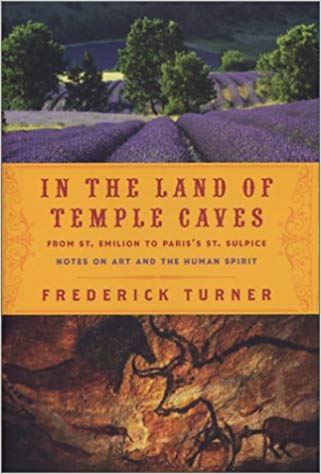
Ring-a-ling to Dr. Jung! I happened to get my hands on Turner’s memoir just before a trip to Paris in which, not having heard of his book, I had planned to visit St. Sulpice and so, by happenstance, on the very day I finished the book, which concludes in St. Sulpice, there I was, looking at the very same Eugène Delacroix murals. That was wiggy.
I regret that I do not have the time this week to give In the Land of the Temple Caves the thoughtful review it deserves. Suffice to say, it came out over a decade ago, and I am astonished that I had not heard of it earlier. It deserves to be considered a classic of American, and indeed English language, literary travel memoir.