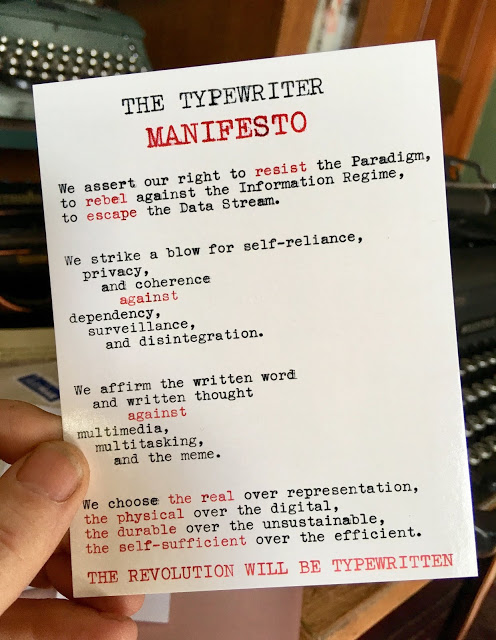
Viva, Richard Polt! He says that if you send him your address he will send you this postcard.
One of the themes in my work-in-progress
on Far West Texas is the nature and pervasive influence of
technology, especially digital technology– but also other kinds of industrial
and military technology.
So what’s with the typewriter poem? The poem
pictured above, “The Typewriter Manifesto,” is by philosophy
professor Richard Polt. I’m a big fan of his blog and his book, The Typewriter
Revolution.
My 56 year-old Hermes 3000 works fine, no need to update the OX! (Yes, ribbons are easy to score on eBay).
Nope, I am not a Luddite, but yep, I use a typewriter on occasion. When needed, I also use a Zassenhaus kitchen timer, a 30 year-old finance-nerd calculator (I used to be a finance nerd), and a battery-operated alarm clock. Yes, I know there are apps for all of those, and yes, I actually have downloaded and previously used all those apps on my smartphone but, e-NUFFF with the digital! Too many hours of my day are already in thrall to my laptop, writing on WORD or blogging, emailing, podcasting, maintaining my website, surfing (other blogs, mainly, and newspapers, plus occasional podcasts and videos), and once in a purple moon, making videos. Most days my iPhone stays in its drawer, battery dead, and I like it that way.
But kiddos, this not a writer-from-an-older-generation-resisting-innovation thing. Back when I was avid to adopt new technology. I had a cell phone when they were the size and shape and weight of a brick. I started my website in 1999! I bought the first Kindle model, and the first iPad model. I was one of the first writers to make my own Kindle editions (check out my latest). I started podcasting in 2010. I even spent oodles more time than I should have figuring out the bell-and-whistles of iTunes’ iBook Author app… and so on and so forth.
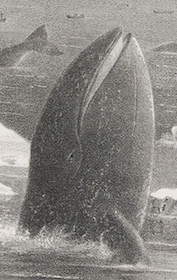
From Charles Melville Scammon’s “California Grays Among the Ice” Whales! Magnificent outside! Digestive juices inside!
In short, with technology, especially anything
having to do with writing and publishing, I dove right into the deep end… and
I have seen the whale. And it was not, is not, and will not be on my schedule
to get swallowed whole.
(The original pretzel-brain inducing essay by
Heidegger, “The Question Concerning Technology,” with its handful of
profound points coccooned within copious noodathipious deustcher
Philosophieprofessor flooflemoofle, is here.)
And here is the Lilly interview with Jeffrey Mishlove, for “Thinking Allowed” (the one where Dr. Lilly wears his earrings and Davy Crockett hat). Um, you will not eat your popcorn during this one.
#
Delighted to have surfed upon Tadeuz Patzek’s
blog, LifeItself. Patzek is a professor of petroleum engineering,
recently chair of the department at University Texas Austin. He
is co-author with Joseph A. Tainter of Drilling Down. I
read Drilling Down on Kindle this week, then bought the paperback to
read it again.
“Cryptocurrencies are a new
asset classthat enable decentralized
applications.“
In other words, “cryptocurrencies” are
not currencies as we know them. “Crypto” is too sexy a word for what
these actually are. So let’s call these puppies NACTEDAs. Rhymes with
“rutabagas.”
Ludwin’s most interesting quote? Buried deep in
the middle of his explanation of the nature of NACTEDAs is this colorful
explanation of how NACTEDAs are generated or “mined”:
“Now we need an actual contest… On your mark, get set: find a random number generated by the network! The number is really, really hard to find So hard that the only way to find it is to use tons of processing power and burn through electricity. It’s a computing version of what Veruca Salt made her dad and his poor factory workers do in Willy Wonka. A brute force search for a golden ticket (or in this case, a golden number).”
This is not a point Ludwin makes (he sails on,
with utter nonchalance): It is just a question of time– maybe a loooooooong
time, albeit perchance a seemingly out-of-nowhere-pile-on-Harvey-Weinstein
moment– until people recognize the environmental and social justice
implications of such extravagant electricity use for generating NACTEDAs.
Can you say, opportunity cost?
As it stands, most people don’t or don’t want to
grok where the magic invisible elixir that always seems to be there at the flip
of a switch actually comes from…. which is, uh, usually… and
overwhelmingly… coal. And neither do they grok that this flow of power is not
never-ending, but a utility that can be cut off. Ye olde winter storm can do it
for a day or so. More ominously, the grid itself can fail for lack of
maintenance, or any one of one a goodly number of events– it need not
necessarily be some cinematically apocalyptic cyberattack or epic solar flare.

Can you say Puerto Rico. Can you say Mexico City after the earthquake. Can you
say what happens when you don’t pay your bill. Or if the electrical company
makes a mistrake. Lalalalala.
In any event, I wouldn’t recommend a camping
vacation on some random mountaintop in West Virginia any time for… the rest
of your life.
#
And
herewith, hat tip to Root Simple,
Lloyd Kahn demonstrates his low-tech dishwashing method. The duck part at the
end is charmingly weird.
Andy Warhol must be twirling his wig there in some fuggy realm of the astral watching the Instagramming-Tweeting-Facebooking smombiedom of our day. So it seems, everyone and their neighbor’s cousin’s twinkle-eyed cat is a 24/7 celebrity in their own iPhone. A century ago, many a decade before Mr. Warhol’s meteoric flash through the bizarropheres of celebridom (which I daresay have reached their apogee with our Tweeter-in-Chief, DJT), celebrity meant something different, and if not always, at least usually a more curated and dignified elevation to social visibility, and perchance of a literary nature. Well! I’ll leave it for our social historians to parse out the granular detail from that particular conceptual bramble-clogged tarpit. I’m just bloggin’ here about POULTNEY BIGELOW, an obscure figure today, but a dazzler of a literary celebrity in his time.
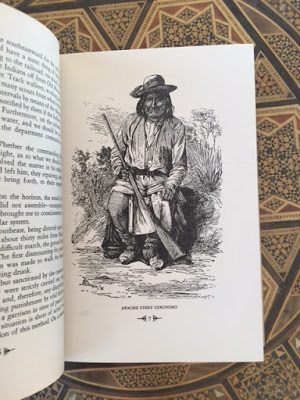
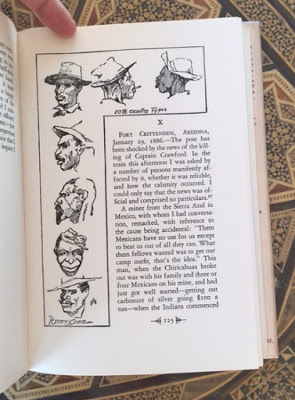
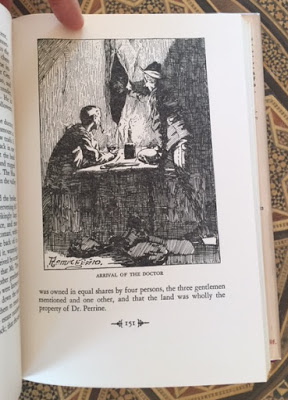
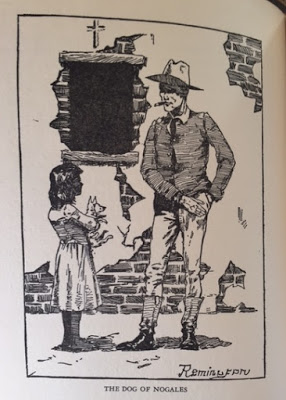
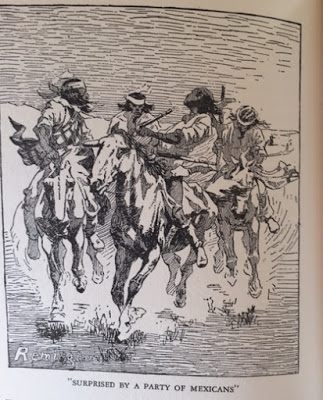
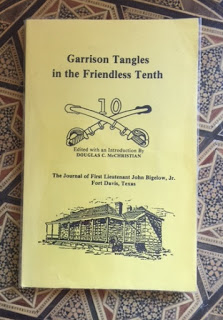
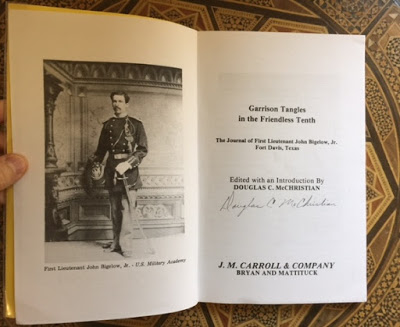
The author of a raft of books and pioneer publisher of the sports magazine Outing, Poultney Bigelow has popped up on my radar because I am at work on a book about Far West Texas that will include some discussion of his older brother, John Bigelow, Jr.’s articles about the Indian Wars, which Poultney published in Outing, along with illustrations by Poultney’s classmate at Yale, Frederic Remington.
> Next up on my reading list: G. Edward White’s The Eastern Establishment and the Western Experience (Yale University Press, 1968).
JOHN BIGELOW SR.
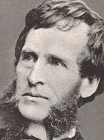
John Bigelow (Sr)
Poultney (b. 1855) and John Jr. (b. 1854) were the sons of John Bigelow, a skyscraper of a figure in US, New York State, New York City, and Panama Canal history. As President Lincoln’s Minister to France, John Bigelow Sr. also had quite a bit to do with twisting Napoleon III’s arm to remove his army from Mexico… and Abolition… publishing history… and Swedenborgianism….
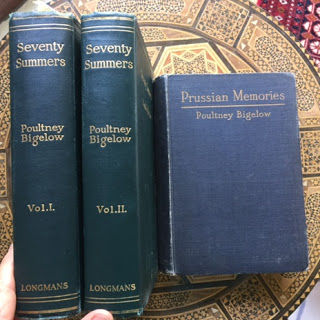
Poultney Bigelow’s best-known work is his memoir, Seventy Summers, in two volumes, 1925.
When he was a boy, as mentioned, his father was President Abraham Lincoln’s Minister to France. Those familiar with Mexican history will recall that the French Imperial Army had invaded Mexico to support a return to a Catholic monarchy: the regime of Maximilian von Habsburg. By 1866, thanks in part to Bigelow’s persistent pressure in support of the Mexican Republic, Napoleon III’s support for Maximilian was waning, and the Mexican monarchy began to collapse. Poultney Bigelow (vol I p. 33):
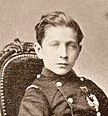
The Prince Imperial of France
“The Emperor sent his only child, the Prince Imperial, to mark his warm friendship for Uncle Sam. It was a bitter pill for Eugenie, and still more for her Court, who had invested much money in Mexico. How they must have cursed the heretics, Lincoln and Stewart and Grant, for thus destroying their dreams of easy money!…
“Prince Imperial was not so attractive to me… His hair was perfumed, oiled, and curled; he wore a velvet suit with a wide lace collar; he was pale, thin, and obviously on an official mission. An arm-chair became his baby throne, and behind it stood a forbidding Field-Marshal whose uniform was rich in decorations, and whose grandeur checked any impulse we boys might have cherished as regards a rough romp.
“My brother [John Bigelow, Jr] and myself were formally presented– and amongst the many elders many compliments were exchanged, and much emphasis laid upon the Emperor’s kindness so nobly manifested. But the formality was an empty one– we did not play any games with His Imperial Highness, and he soon retired with his war-like equerry to tell his fond mamma that he had been among the American savages, that he had escaped alive, and was uncommonly glad at not having had to share in our brutal pastimes.”
Playtime in Potsdam with Prince Wilhelm (1859-1941), whom he calls William, who would become Kaiser Wilhem II, was a marked contrast (vol I p. 76):
“At the Neues Palais I was cordially welcomed by Prince William and his brother Henry… From the hour of my first visit until our departure for New York in the fall of 1872, I was an almost constant playmate of the future Kaiser… We romped about the great palace if the weather was bad, played hide-and-seek in the vast attic spaces, and once had the rare treat of working the stage machinery in the theater. Of course, as in the case of most normal boys, we compared notes on likes and dislikes. Prince William knew his Fenimore Cooper by heart, and thirsted for games reminiscent of Uncas and Leatherstocking.”
The future Kaiser Wilhelm
Literary connections were multitudinous in the Bigelow household. Babe Poultney is held by Washington Irving (p.19), as a boy shakes hands with Charles Dickens (p. 54); and later visits with Samuel Clemens, aka Mark (“Dear old Mark!”) Twain in Johannesburg and in London (pp. 165-168). On the poet Joaquin Miller (p.197):
“Joaquin (pronounced Walk-een by the initiate) had rented a cottage on my father’s place near West Point, and acted the part of an interesting savage slowly accomodating himself to the ways of the white man… On his head was a picturesque Mexican sombrero, beneath whose broad brim flowed a massive main after the fashion of Buffalo Bill…”
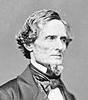
Jefferson Davis
Giants of politics and captains of industry make their cameo appearances, among the former, Jefferson Davis (breaks up a dog fight with his bare hands p. 225), Theodore Roosevelt (vol I 272, vol II 194, 212 212….) and among the latter, Andrew Carnegie. With Carnegie, as with certain others, Poultney can be cutting– and this apropos of Carnegie’s annual visits on John Bigelow, Sr.’s birthday (p. 198):
“Carnegie awakened my dislike from first meeting him in the early ‘eighties, and this instinctive feeling was further fortified by my father who was profoundly religious.”
The scene in which Bigelow Sr invites his birthday visitor to finance
the translation and publication of the works of Swedenborg would make a
prize-winning playlet.
Poultney’s first taste of Yale University did not suit him. He took a two year leave to travel the world. It would be difficult to overstate his adventures before starting Outing
magazine: China, Japan, Papua New Guiness, Borneo, China… returning
to Yale in 1876… and many more subsequent world travels…
At Yale University he meets Frederic Remington; together they take a drawing class (p. 301):
“The most difficult of all statues for a beginner was given us: the madly dancing Faun generally credited to Praxiteles. At long intervals the melancholy professor of drawing entered our cheerless room, gazed sadly at our clumsy crayoning, made a few strokes by way of emphasizing our clumsiness, and then disappeared.”
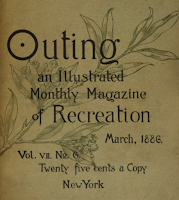
OUTING: AN ILLUSTRATED MONTHLY MAGAZINE OF RECREATION
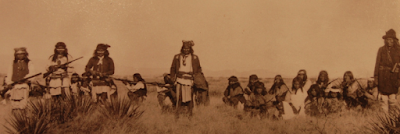
The range of sports covered included bear hunting, moose hunting, salmon fishing in Canada, blowing up an abandoned ship in the waters off Madeiria, camping in Yellowstone , cruising to the Bahamas in winter, chasing Geronimo, tennis… Uf, I am breathless just typing all that.
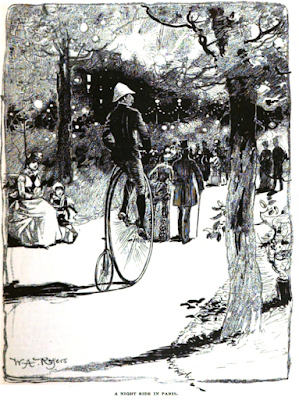
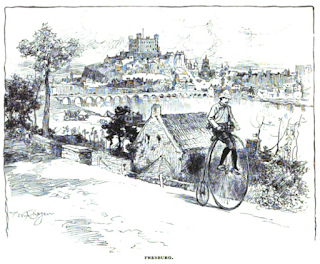
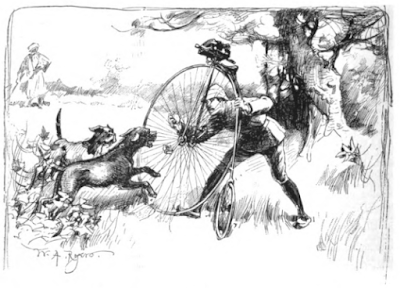
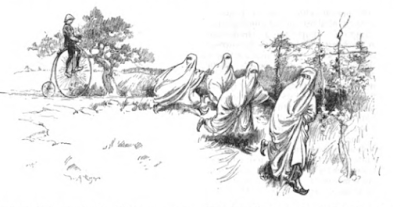
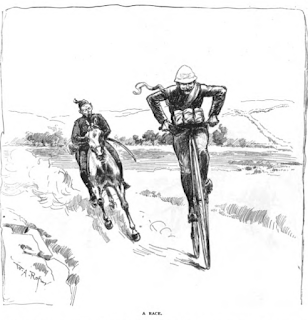
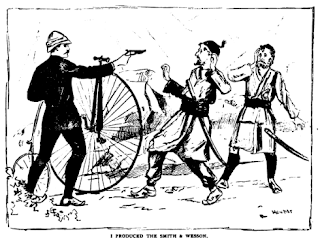
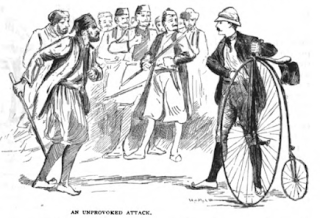
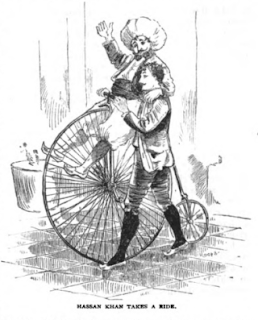
IN OUTING: “AROUND THE WORLD ON A BICYCLE” BY THOS. STEVENS, ILLUSTRATED BY W.A. ROGERS
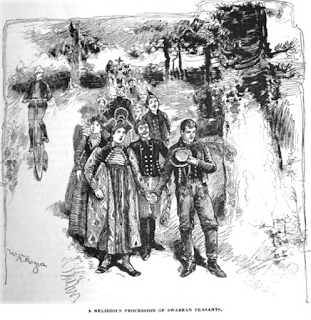
I just kind of went acorns & hazelnuts taking screenshots from the series of articles on biking, “Around the World on a Bicycle” by biking pioneer Thomas Stevens (1854 – 1935), illustrated by W. A. Rogers.
A FEW FURTHER NOTES ON “OUTING”
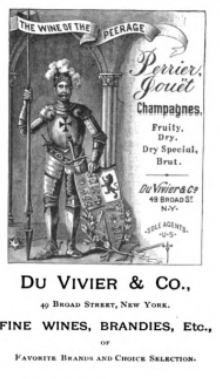
And here are a few of the ads in Outing— which give an idea of the magazine’s readers, or at least as the editor and his advertisers might have envisioned them:
In general the articles in Outing are long, dense (no pull quotes), and sparsely if interestingly illustrated. The contrast with most of our contemporary magazines– a froth of pull quotes, splashy photos and advertising featuring more splashy photos (for the most part of stick-thin people exuding ennui, disdain, or immanent coma) and the whole of it but sprinkled with driplets of prose– is striking. I quail to think of Mr Bigelow’s reaction were he to have seen the likes of Sports Illustrated.
The prose in Outing gives me a yen for crumpets, or something. From the opening of a November 1885 “To the Pole on Sledges” by W.H. Gilder:
“Do I think that any one will ever reach the North Pole? Most assuredly.”
The
poetry is, shall we say, evidence that literary tastes have since
evolved. Herewith a couple of samples (after which point my bemusement
wears thin):
YO, THEODORE ROOSEVELT!!!
Screenshot of an article by Theodore Roosevelt in Poultney Bigelow’s Outing.
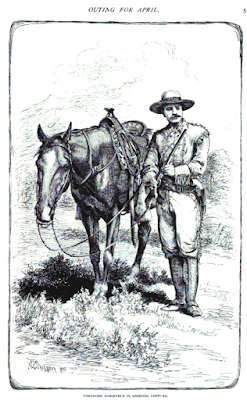
A buff-looking portrait of Theodore Roosevelt by J. R. Chapin
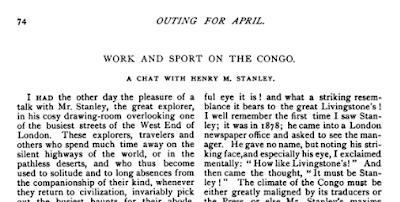
A CHAT WITH STANLEY IN THE CONGO
Later in this article there is a gruesome drawing of doing in a hippopotamus, not shown here.
Notes about Poultney’s older brother John Bigelow Jr, his career, and his reporting on the Indian Wars for Outing anon.
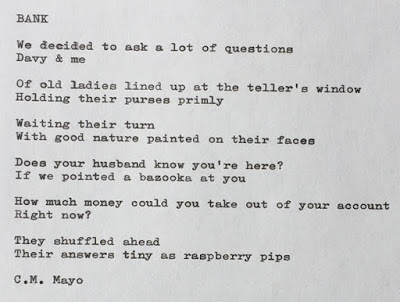
Isn’t just too too too tooooo much a-gurgling and churgling and over-arcing and under-the-rugging in this techno-kray-zee world? In the spirit of calming things down, this Monday I offer a wee but wicked poem, typed on ye olde 1961 Hermes 3000:
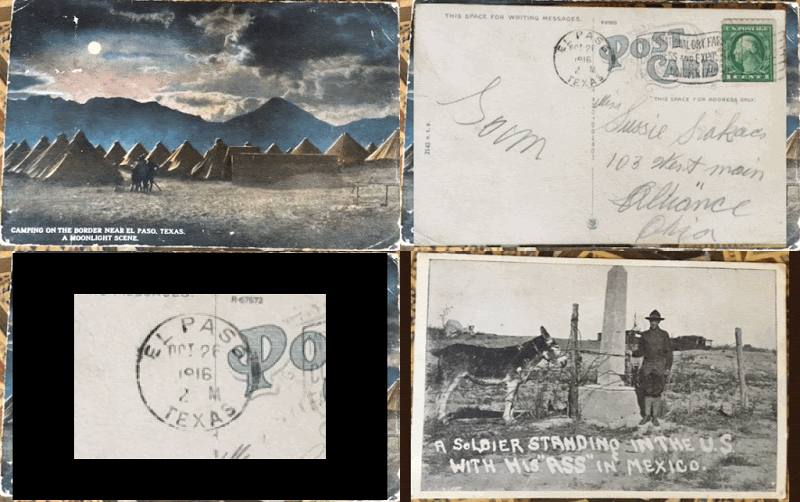
About a century ago, after the fall of Francisco I. Madero’s government in 1913, with the ensuing struggle between the Huertistas and Carrancistas, and the chaos along the US-Mexico border (in part fomented by German agents, hoping to keep the U.S. Army otherwise occupied during WWI), the U.S. Army set up a number of camps there. On ebay, my sister found these postcards, probably sent by a soldier stationed near El Paso, dated October 26, 1916.
One of the postcards shows an address in Alliance, Ohio, a town noted for its Feline Historical Museum. Thank you, Google.
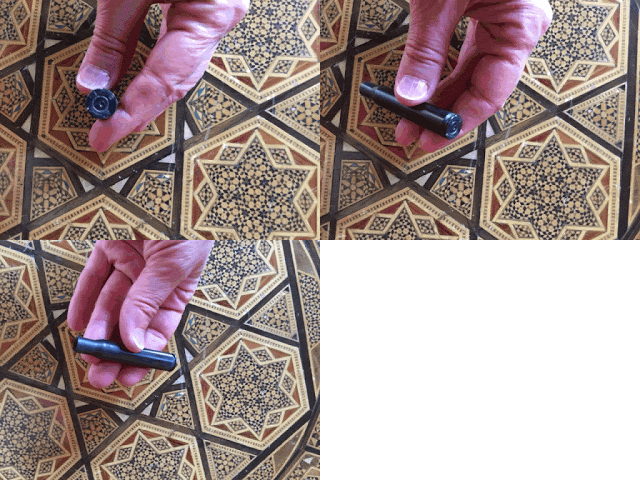
Here is another GIF, this one of some cartridges I picked up– by invitation, I hasten to emphasize– on private property right by the Rio Grande about 20 minutes’ drive down a dirt road from Presidio, Texas. Seriously, these are cartridges from the time of the Mexican Revolution (probably from target practice); they were just lying on the ground. That is how isolated a place it still is.
Cartridge circa 1916, from near Presidio, TX
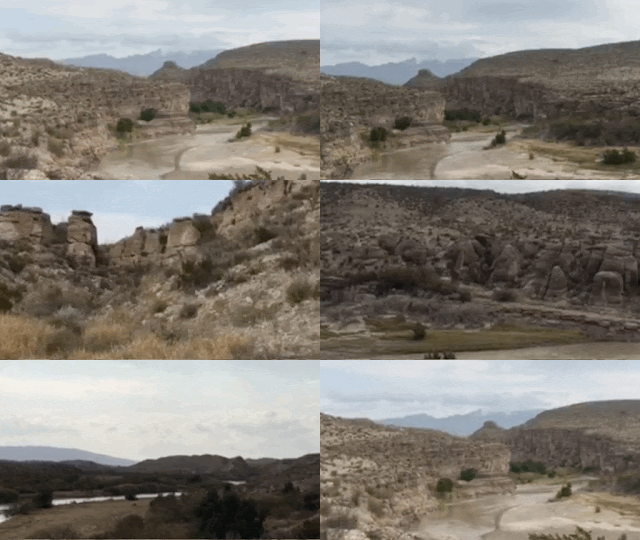
One last GIF: An overcast day on the otherwise spectacular Hot Springs Historic Trail in the Big Bend National Park. The river is the Rio Grande, the border with Mexico. At sunset the mountains turn the most otherwordly sherbet-pink. Imagine this scene with a wall through it– your tax dollars down the hole for a perfectly pointless aesthetic and ecological atrocity. (I shall now take a deep breath.)
Hot Springs Historic Trail, Big Bend National Park, Far West Texas. (Don’t watch this GIF unless you are part Viking, it will make you seasick).
Not shown in my video: the guy hiking a few minutes ahead of me on this trail wore a T-shirt that said TEXAS GUN SAFETY TIP #1: GET ONE. Well, it ain’t California. Excuse me, I need to go crunch my granola.
On his always thought-provoking blog, the author of Deep Work, Cal Newport, recently posted “Toward a Deeper Vocabulary” on how we need more words for “writing.” As a productivity expert (among other things) Newport has often been invited to “dissertation boot camps.” He writes:
“Something that strikes me about these events is the extensive use of the term ‘writing’ to capture the variety of different mental efforts that go into producing a doctoral dissertation; e.g., ‘make sure you write every day’ or ‘don’t get too distracted from your writing by other obligations.’ The actual act of writing words on paper, of course, is necessary to finish a thesis, but it’s far from the only part of this process. The term ‘writing,’ in this context, is being used as a stand in for the many different cognitive efforts required to create something worthy of inclusion in the intellectual firmament of your discipline.”
I agree. In writing all of my books it has been my consistent experience that “writing” is not a linear process akin to clocking in, and, say, ironing shirts. It’s a complex, zizaggily circular-ish process– to quote Newport, “involving different cognitive efforts”– that oftentimes doesn’t look like “writing.”
(That said, sometimes– sometimes— you’ve just gotta velcro your posterior to the chair and bang the words into the Word doc.)
As those of you who have been following my blog have heard ad infinitum, I am at work on a book about Far West Texas. Um, that means I need to write it. But there are other tasks directly relevant to ending up with a published book, for example, reading about Far West Texas, traveling in and observing Far West Texas, taking notes, transcribing notes as dictation, reviewing photographs and videos, interviewing people, transcribing those interviews, and so on and so forth.
If I were to simply sit down and commence typing, it would be akin to trying to cook without having assembled the proper equipment and ingredients. In other words, I need to have read Torget and Reséndiz (among many other works), to have transcribed my notes, and so on and so forth.
Not that I have not done quite a bit of the writing already, I mean, there are words on paper, there are bits and pieces, an introduction, some sections… Like I said, the process is zigzaggily circular.
I oftentimes compare “writing,” in its broadest mushiest sense, to cooking. And chefs will understand me when I say, you have got to master mis-en-place.
YE OLDE “MIS”
What is mis-en-plâce? In plain English, you don’t want to start the whipped cream for what might be a chocolate cake when your countertops, stovetop, and sink are cluttered with pots and spoons and dishes and splotches from the mushroom croquettes. Or whatever it is you were making. You need to start clean; then assemble your utensils and equipment; then assemble your ingredients; then wash, cut, chop; then cook.
So to follow the analogy of writing as cooking: reading and researching could be compared to assembling utensils and equipment; taking notes, transcribing, and filing could be compared to washing, cutting and chopping… and typing, say, to putting the skillet onto the burner… that is to say, actually, finally, cooking.
(1) Finish the editing on the transcript of my 2016 talk at the Center for Big Bend Studies Conference about the book (this is for an academic readership, extensively footnoted, and includes new material about another edition of Madero’s book)
(2) Finish a short video to share some images and information about four exceedingly rare books in my personal library, which for scholars of the Mexican Revolution, and especially anyone studying Francisco I. Madero, would be vital to see.
So that is what I did the past few days–I read Torget, I finished editing the transcript of my talk and posted the PDF (which you are welcome to download here), and, whew, I just uploaded that video I have been meaning to make since 2014(!)
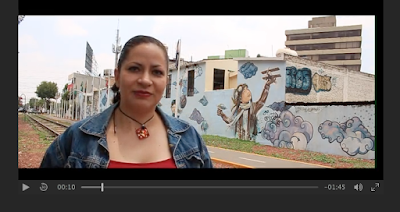
C.M. MAYO TALKS ABOUT HER BOOK AND FOUR EXCEEDINGLY RARE BOOKS
Was this procrastination? No, gentle reader, it was good old-fashioned mis-en-plâce. Stay tuned for the podcast on the Seminole Scouts in Far West Texas. (Listen in anytime to the other 20 podcasts posted to date here.)
Back to the question of the writing process. How do you know when what you’re doing is a legitimate task towards finishing a book (or thesis or story or essay), and when it’s procrastination?
To my writing workshop students, I say, you need to decide that for yourself.
As for me, I rely on intuition and common sense (which sometimes contradict each other), and then, no drama, I just decide. Yes, once in a while (usually when I did not heed my intuition), I look back and think, hmm, maybe thus-and-such could be done differently next time. And whatever, it’s fine. I don’t ruminate about woulda coulda shoudas (that would be procrastination!), I just get to the day’s work, as best as I can.
> For more about the writing (and publishing) process, check out my talk of yore for the Writer’s Center, The Arc of Writerly Action.
Delighted to announce that my translation of the short story by Agustín Cadena, “The Apaches of Kiev,” appears in the very fine U.S. literary journal, Tupelo Quarterly. It’s a story at once dark and deliciously wry. It caught my attention because, well, everything Cadena writes catches my attention– he is one of my favorite writers in Mexico, or anywhere– and he happens to be living in Hungary, so the Eastern Europe angle is no surprise. In all, Cadena’s is a unique and powerful voice in contemporary fiction, and I hope you’ll have a read.
THE APACHES OF KIEV BY AGUSTIN CADENA (Originally published in Spanish on Agustín Cadena’s blog, El vino y la hiel) Translated by C.M. Mayo
The story about the body they found in the Botanic Garden came out in the newspapers and on television. The Kiev police identified it immediately: Dmitri Belov, reporter and political analyst known for his scathing criticism of President Poroshenko’s administration. Presumably it was a suicide, but until they could confirm this verdict, the police had been ordered to put all resources to work.
Among the underemployed— peddlers and prostitutes— who roamed the Botanical Garden, very few were aware of this. So how was anyone else to find out? They didn’t have televisions and they didn’t spend their money on newspapers. Understandably, those who knew about the body avoided that area. They knew there would have been a commotion, and especially if the body belonged to someone important. The police would go around searching for possible witnesses to interrogate, and by the way, shake them down on other charges. It wouldn’t do any good to explain to the police what they already knew: that every week all of these underemployed people paid a bribe to be left in peace.
Ignorant of everything, three men of approximately 40 years of age, exotic-looking, dressed like Apaches in a Western movie, appeared after 11 in the morning. They were Ernesto Ortega, Gonzalo Acevedo and Milton Guzmán: Mexican, Salvadorean and Venezuelan, respectively. The three of them dressed identically: a headdress of white feathers that went from their heads down to their waists, jacket and trousers of coffee-colored leather with fringe on the sleeves and the back, moccasins, and ritual battle makeup. They carried assorted musical instruments and they took turns playing Andean music: “El cóndor pasa,” “Pájaro Chogüi,” “Moliendo café,” etc. They knew the music did not go with the costumes nor the costumes with their ethnicities, but this strange combination was what worked for them commercially. Americaphilia was at its height in Kiev, and passersby were happy to give money to these “North American Indians” who played the music “of their people.” Perhaps the happy notes of “La flor de la canela” led the Ukrainians to imagine the beauty of life in teepees, among the buffalo, wild horses, mountain lions, and bald-headed eagles. The fact is, in addition to playing and signing, the “Apaches” also sold their CDs of this same music, displayed on a cloth spread on the ground. [… CONTINUE READING]
P.S. My amiga the poet and writer Patricia Dubrava also translates Cadena. Check out some of her excellent translations at Mexico City Lit. [Alas, as of 9/2019, that link went dark.]
#
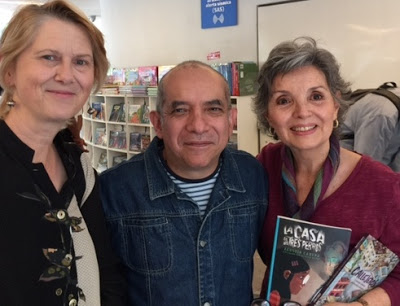
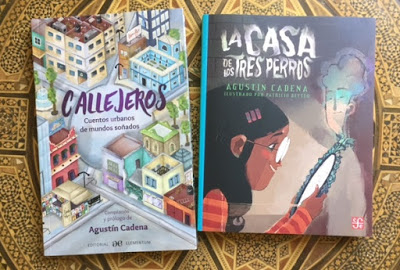
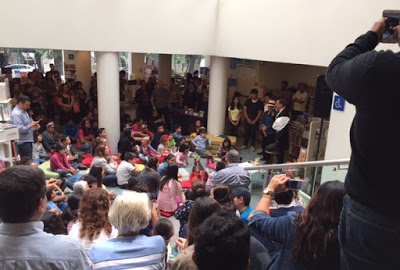
This past Saturday I had the good fortune to be able to attend Cadena’s book presentation in one of my favorite Mexico City bookstores, the FCE Rosario Castellanos in Condesa. (Here is where I interviewed Michael Schuessler about his biography of Pita Amor, among other works.) Cadena was presenting a novel for young readers, La casa de los tres perros (The House of the Three Dogs) and along for the ride came a group of Mexican writers who have stories in his latest anthology, Callejeros, cuentos urbanos de mundos soñados (my rough translation of that might be, Street People: Stories of Urban Dreamworlds). Happily for me, this also meant a chance to visit with my friend the Mexican novelist and historian Silvia Cuesy. Here we are with Agustín Cadena:
C.M. Mayo, Agustín Cadena, Silvia Cuesy at the Rosario Castellanos FCE Bookstore, Mexico City
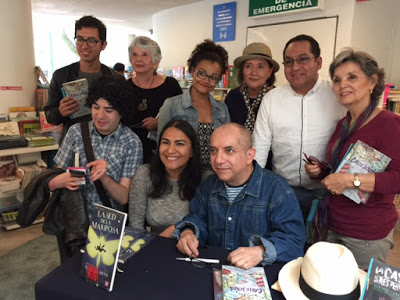
Mexican writers in Agustín Cadena’s anthology, Callejeros. Front row: León Cuevas, Sandra Luna, Agustín Cadena. Back row: Eduardo islas, Cristina Manterola, ?, ?, José Antonio Bautista, Silvia Cuesy.
Cadena, right in white hat, presenting his novel for young readers. La casa de los tres perros, in the FCE Rosario Castellanos bookstore in Mexico City, August 5, 2017.
Putting on my armchair-sociologist sombrero now: Aside from its high quality (both its literary content and as an object), what is especially interesting about Callejerosis that the editor lives abroad and the publisher is based in a provincial town– Pachuca, in the state of Hidalgo. Mexican literary culture and publishing has long been overwhelmingly concentrated in Mexico City, but with the digital revolution it seems this is opening up quickly. I talked a bit about this in my talk for a 2015 American Literary Translators Association panel I chaired:
P.S. I mention both this wondrous Mexico City FCE bookstore and Cadena in my longform essay now available on Kindle, “Dispatch from the Sister Republic or, Papelito Habla,” an overview of the Mexican literary landscape and the power of the book.
I moved. And of course, this involved oodles of Kondo-ing.
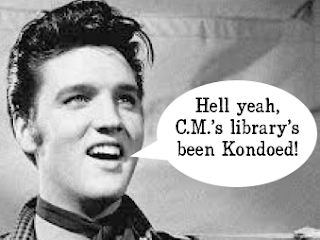
For those who missed the phenomenon of Japanese tidying expert Marie Kondo: She says the way to do it is to pick up each object and ask yourself, does this spark joy? If so, keep it (even if it’s a raggedy T-shirt), and if not (even if it’s a brand new suede sofa that cost a heap), thank it, then chuck it— or donate it or sell it, or whatever, but get it out of your space. Many organizers and sundry pundits have dismissed Kondo-ing as “woo woo.” Too bad for them because, by Jove, by whatever Shinto spirit you want to name, or the god Pan, or Elvis Presley, it works.
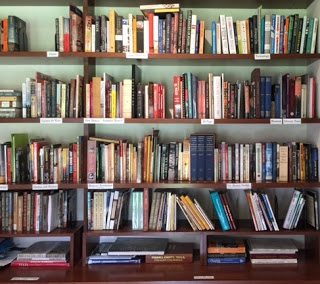
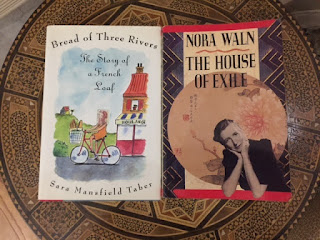
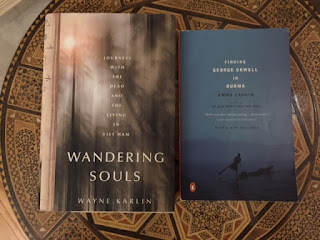
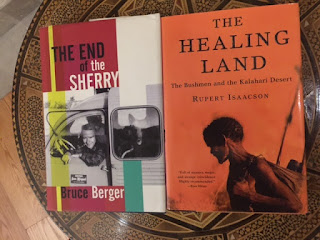
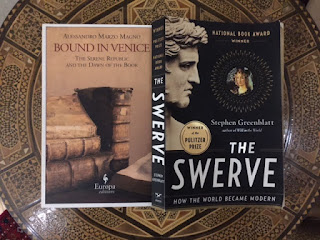
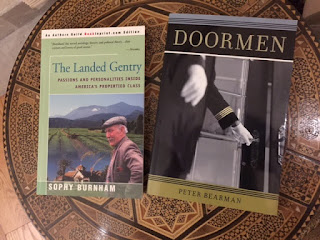
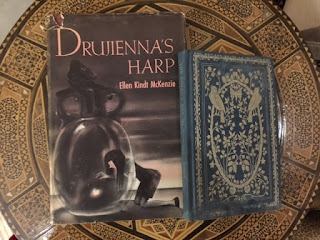
My personal and working library is at last in good order, and I am delighted to share with you, dear and thoughtful reader, just a few of the many old friends that sparked much joy:
Sophy Burnham is best known for her works on angels, but she has a sizable body of outstanding work of literary essay / sociology. Her The Landed Gentry was especially helpful for me for understanding some of the characters in one of my books. Doormen by Peter Bearman… that merits a post…
Drujienna’s Harp was one of my very favorite novels when I was first starting to read novels.As for The Golden Key, pictured right, my copy was left for some days by an open window in the rain back in 1960-something, but I have saved it and I always shall.
I welcome your courteous comments which, should you feel so moved, you can email to me here.
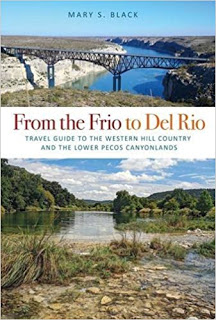
“Each year, more than two million visitors enjoy the attractions of the Western Hill Country, with Uvalde as its portal, and the lower Pecos River canyonlands, which stretch roughly along US 90 from Brackettville, through Del Rio, and on to the west. Amistad National Recreation Area, the Judge Roy Bean Visitors’ Center and Botanical Garden, Seminole Canyon State Park, and the Briscoe-Garner Museum in Uvalde, along with ghost towns, ancient rock art, sweeping vistas, and unique flora and fauna, are just a few of the features that make this distinctive section of the Lone Star State an enticing destination.
“Now, veteran writer, blogger, and educator Mary S. Black serves up the best of this region’s special adventures and secret treasures. From the Frio to Del Rio is chock-full of helpful maps, colorful photography, and tips on where to stay, what to do, and how to get there. In addition there are details for 10 scenic routes, 3 historic forts and 7 state parks and other recreation areas.”
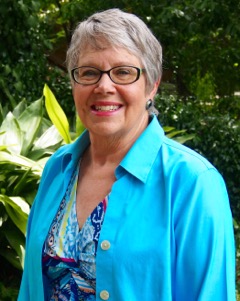
MARY S. BLACK: I think what inspired me was the land itself, and the history. The Lower Pecos Canyonlands are not well known by most people, but the landscape is incredibly majestic and unexpected. You can be driving 70 miles per hour down the highway through the desert, when, wham, a huge canyon veers off to the left like a sudden tear in the earth.
These canyons were inhabited by human beings for thousands of years. They lived off the land and made paintings on the canyon walls that illustrate their gods and belief systems. Over 300 of these paintings still exist, and you can visit some of them. They are a treasure of human culture, and I hope more people will learn to value them as something important for us to save. The people who settled this area historically were a diverse bunch with a lot of gumption. Do people know that word anymore? I guess in modern language, we might say they had a lot of guts.
C.M. MAYO: In your view, what is the most underrated place in this region?
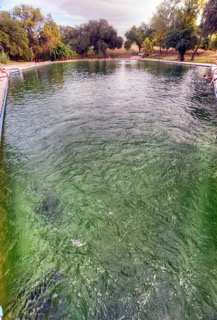
Las Moras Springs
MARY S. BLACK: If I have to pick only
one, I’ll say Las Moras Springs Pool at Ft. Clark in
Brackettville. I’m always looking for great swimming holes.
Las Moras Springs Pool is the third largest spring-fed swimming pool in Texas.
Crystal clear water at a year-round temperature of about 70 degrees comes into
the pool from a strongly flowing spring, yet very few people swim there because
they don’t know how to get access.
The pool is located on Ft. Clark, and old U.S. Army
fort originally built in 1849. You can get a day-pass for $5.00 at the guard
house to enter the fort, enjoy the pool or play golf on either of two gold
courses, and look at all the old stone buildings that remain from when the
place was an active Army fort. There is also a really interesting museum there
that is open on Saturdays.
C.M. MAYO: Which is your favorite place?
MARY S. BLACK: Hands down, the White
Shaman Preserve. The best studied of all the ancient murals is located there.
This is a polychrome painting about 25 feet long and 13 feet high done on
a rock wall overlooking the Pecos River. This painting tells a story about
creation and how the sun was born, according to Dr. Carolyn Boyd. You can visit
the preserve on Saturdays at noon if you make a
reservation online through the Witte Museum. Tours are
two-three hours long, and require a fairly strenuous hike down a canyon to a
rockshelter, then back up. But to be up there, to see the mural up close
and in person, to look out over the river and imagine the people who made this
painting, can change your whole perspective. It’s that powerful.
C.M. MAYO: Your favorite seasonal or annual event?
MARY S. BLACK: I have two: autumn color
near Lost Maples State Natural Area near Vanderpool, and tubing in the cold
Frio river in summer. Both are unique experiences in Texas and shouldn’t be
missed. An isolated stand of bigtooth maple turns orange and red in Sabinal
Canyon in late November. And swimming in the Frio at Garner State Park is
like heaven on a hot day.
C.M. MAYO: What surprised you in researching this book?
MARY S. BLACK: How fascinating the area
really is. The more I learned, the more I wanted to know. The region
has seven state parks and natural areas, nine ghost towns, three historic Army
forts, and many scenic drives. But the coolest part was reading about all the
crazy things that have happened there, like train robberies and early airplane
adventures. And Indian battles. When settlers from the US and Mexico
started coming in after the Civil War, the native Apaches and Comanches were
fighting for their lives. And of course the U.S. Army was trying to drive them
out. It gets complicated, but there were many interesting people involved in
all this, like the Black Seminole Indian Scouts at Ft. Clark, and others. One
of the first settlers in the Nueces River valley was a woman named Jerusha
Sanchez, who came in the 1860s. Later a widow named Elizabeth Hill and her
three sons also pioneered in the area. Blacks, women, immigrants from Italy,
Mexico, Germany, and other places, and Native Americans made the history what
it is.
C.M. MAYO: You offer an excellent bibliography for further reading. If you could recommend only three of these books, which would they be?
MARY S. BLACK: Hmm, they are so
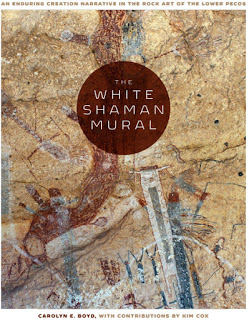
different, let me see. First I think Carolyn Boyd’s new book, which is
called simply The White Shaman
Mural, just published by University of Texas Press in 2016.
She details her 25 years of research on the painting in this book and explains
how she cracked the code on what it means, an amazing accomplishment.
Then I nominate Judge Roy Bean
Country by Jack Skiles, published in 1996, which is a
compilation of local stories of life in the Lower Pecos. The Skiles family has
been ranching in the area for over 75 years and can tell stories about mountain
lions and smugglers that will make you faint.
Finally, one I found fascinating was The Newton Boys: Portrait of an Outlaw Gang by Willis and Joe Newton as told to Claude Stanush, published in 1994. It tells how they became train robbers and learned to blow bank safes with nitroglycerin, which they did in Texas and the Midwest all through the 1920s. By the time they were captured, they had stolen more money than all other outlaws at the time combined.
P.S. As artist-in-residence I will be giving a free travel and nature writing workshop at the Guadalupe Mountains National Park over this Memorial Day weekend, details to be announced shortly on my events page.
Bitter Waters: The Struggles of the Pecos River by Patrick Dearen University of Oklahoma Press, 2016
When I closed the cover of Patrick Dearen’s Bitter Waters: The Struggles of the Pecos River it was with both gratitude and the unsettling sense of having arrived into new territory— raw, rich, appalling—in my understanding of Far West Texas. This is no minor thing to acknowledge; for some years now I have been at work on a book about that very region.
But first, for those who don’t have a jones for, shall we say, Wild Westerie, why bring Far West Texas into the cross hairs? And why give a hoededo about its skinny river so salty, to quote one of Dearen’s informants, that “a snake wouldn’t drink it”?
Texas is one of the most powerful economic and political entities in not only the United States but the Americas. At the same time, “Texas” is so hammered out into tinfoil-thin clichés of popular culture (and many of those informed by warmed-over 19th century war propaganda and Madison Avenue-concocted boosterism), that we have the illusion we know Texas, when in fact it enfolds concatenations of undeservedly obscure histories, stupendenous beauty, and the lumpiest of paradoxes. If Texas—and I mean the real one, not the confection of Marion Morrison aka John Wayne, et al—is still in many ways terra incognita, its “iconic” far west, profoundly moreso. What delineates Far West Texas from the rest of Texas is precisely that skinny, salty river. And a most peculiar body of water it is.
THE PECOS AND THE TRANS-PECOS
In Texas, to set foot on the western shore of the Pecos is to enter the Other Texas, the fritter-shaped, South Carolina-sized chunk of the Lone Star State also known as the Trans-Pecos.
No, Far West Texas / Trans-Pecos does not include Lubbock. Nor San Antonio. Nor South Texas, nor the Panhandle. Nor Austin, nor Dallas. Nor Midland, nor Odessa.
The southwestern border of Far West Texas is the Rio Grande, the border with Mexico; to the north, it shares a stretch along the 32nd parallel of salt fields and the Guadalupe Mountains with the state of New Mexico; and at its extreme west, the Trans-Pecos elbows into New Mexico at El Paso.
With the exception of El Paso, and the miniscule cowtown and artist-cum-hipster magnet of Marfa, few if any towns of the Trans-Pecos can raise an eyebrow of recognition outside the region.
The distances in the Trans-Pecos are stunning, never mind those to get out there from anywhere else in Texas. From the state capital in Austin, a straight shot west on Interstate 10 at the speed limit, no stops, gets you to the Pecos River near Iraan in a shoulder-stiffening four hours and twenty minutes. But the Pecos doesn’t look like much at that point—there’s a tiny sign—the highway sinks down pylons for a moment. Sneeze and you’ll miss it. You won’t catch the Pecos in your rearview mirror, either.
However, if from Austin you are game to drive four hours and thirty minutes southwest into the Lower Pecos Canyonlands, nearing the U.S.-Mexico border past Comstock you could rumble onto the high bridge over a wide and sparkling Pecos, a feat of engineering spanning a bright-walled gorge so spectacular it justifies that marathon of a drive.
And how’s this for an inkling of the scale of the Trans-Pecos itself: To drive from El Paso back to that Pecos River crossing near Iraan, 308 miles, would take at least four hours. El Paso actually lies closer to San Diego, California, on the Pacific Ocean, than to Houston on the Gulf of Mexico. (I Googled that so you don’t have to.)
West of the Pecos Texas becomes less southern, more western and more Hispanic, and drier—although there are notable ciénegas, or oases. In places the landscape rolls on as flat as a tortilla; but in others, especially around the Big Bend of the Rio Grande, the landscape turns so lasciviously volcanic it might belong to another planet.
Even as the Texians and the Mexicans contested the farmlands that became the Republic of Texas (and thereafter the state of Texas), and even as the Confederates drove out the soldiers of the Union, and in turn, a victorious Union imposed Reconstruction, in effect, the remote Trans-Pecos remained part of greater Apachería and Comanchería. (That said, the Comanches did not settle in the Trans-Pecos; they passed through it on the so-called Comanche Trail—more aptly, network of trails—to raid in Mexico.) Spanish mapmakers were not far wrong to label the area the Despoblado, or Empty Quarter. The few Spanish, then Mexican, then other explorers who survived their forays into the Trans-Pecos did not have pleasant stories to tell. And so many straggled up to the bitter waters of the Pecos hoping for refreshment for themselves and their livestock only to find death. (Horse lovers should avoid reading the 1858 report of Waterman Lily Ormsby, the first through-passenger on the Butterfield Overland Mail westbound stage. Suffice to say, Ormsby mentions beating the parched and exhausted animals with rocks.)
The impetus for the U.S. government to remove the indigenous peoples—the brutal Indian Wars—and bring this merciless territory into Texas was simply this: to get to California, it had to be crossed.
A few pioneers saw opportunities in Far West Texas. In this twenty-first century some of their enterprises are still ongoing, but the Trans-Pecos is littered with ghost towns, abandoned farms, ranches, mines, and here and there at lonely cross-roads, and even on the main thoroughfares of surviving towns—Fort Stockton, Marathon, Sierra Blanca, Valentine, Van Horn, among others—there are ruins, some boarded up, most not, of houses, motels, cafés, grocery stores, and gas stations. There are many reasons for these eyesores, but a persistent one is the decline in the quantity and quality of water. All over the Trans-Pecos springs and seeps have been disappearing. As for its rivers, after the Rio Grande, the Pecos is the most important, and of all the rivers in the American West, the Pecos is one of the bitterest, most abused, and most fragile. Writes Dearen, “the Pecos is under seige by problems so vast and varied that resolutions are challenging if not impossible.”
You might assume, as I once did, that given all the movies and novels from Zane Grey’s West of the Pecos to Dearen’s own To Hell or the Pecos, the Pecos would be a well-examined river. More to the point, while there is a library’s worth of nonfiction on the Trans-Pecos—from scholarly tomes on the Paleolithic hunters, to the Spanish conquistadors, to memoirs of cowpokes and modern-day naturalists, and Dearen’s earlier works, including the invaluable history Crossing Rio Pecos— astonishingly, Bitter Waters, published in 2016, is the first book-length environmental history of the whole of this river.
THE PECOS AND THE PERMIAN BASIN
Fed by snow, rain, and freshwater springs, the Pecos gushes down from its headwaters in New Mexico’s Sangre de Cristo mountains southeast towards Texas, but before it reaches the stateline it runs into the Permian Basin. For the most part a desolation dotted with mesquites and pumpjacks, the Permian Basin is the remains of what was, some 250 to 300 million years ago, an inland sea. Layers upon layers of its ancient salts cover over yet deeper layers of the fossilized remains of marine organisms—petroleum. Only a western swath of the Permian Basin lies within the Trans-Pecos; the great amoeba-shaped body of it spreads north and east into New Mexico, the Texas Panhandle, and almost as far as central Texas. Oil rigs started popping up in the Permian Basin in the 1920s; today the Permian Basin’s industrial center is the twin cities of Midland and Odessa, about an hour’s drive east of the Pecos River.
It bears underlining that, as Dearen writes, “[s]ince time immemorial, the Pecos and its tributaries have washed across a dead sea bottom and carried away its salts.” Literally, every day, for millions of years, brine springs have been pumping tons upon tons of salts into the Pecos.
But the saltiness varies. Dearen explains that as the Pecos winds though Texas it also drains other watersheds, and freshwater springs feed into it from the Davis Mountains. About two-thirds of its way from the top of the Trans-Pecos to its mouth at the Rio Grande, the Pecos receives yet more infusions of fresh water from creeks and springs originating in the Glass Mountains. It also receives infusions of agricultural run-off and debris, and a litany of other challenges—but this is to get ahead of the story.
“STUPID AND UNINTERESTING”
As a baseline, what was the condition of the Pecos before our time?
In the chapter “The River That Was,” Dearen provides an overview of pre-twentieth-century human encounters with the Pecos, from early peoples (some of whom, close to its source in present-day New Mexico, used its waters for irrigation), to the Spanish explorers who encountered it south of those brine feeder springs and so dubbed it the Salado (Salty River) and later the Puerco (Pig-Like). When mid-nineteenth century U.S. Army personnel encountered the “Puerco,” their reports soon began calling it the snappier-sounding “Pecos,” but they they too disdained it. Dearen quotes Second Lieutenant William F. Smith, echoing others, calling it “muddy, swift and narrow.” U.S.-Mexico boundary commissioner John Russell Bartlett, coming upon it in 1850, called its waters “brackish.” Wherever they drank from the Pecos, men and animals tended to suffer from gastrointestinal upset. In the desert, diarrhea could kill. Bartlett added: “Miserable grass.” One youthful explorer of the 1850s summed it up: “A more stupid and uninteresting river cannot be imagined.”
The first survey and and scientific study of the Pecos in the Trans-Pecos was not made until 1854, under Captain John Pope, whose mission was to find a route for the railroad to California. Pope identified areas for potential for irrigiation in the fertile lands north of the 32nd parallel, above the brine springs, in present-day New Mexico. But little could be done until after the Civil War and the conclusion of the Indian Wars.
In Texas, as early as the 1870s in the relatively less salty stretch below the town of Pecos to present-day Iraan, entrepreneurs began to divert water from the Pecos for irrigation. By the late 1880s farming commenced when the Pioneer Canal Company began to dig extensive ditches, reservoirs and small dams. These early efforts to farm in this northeastern corner of the Trans-Pecos were repeatedly wiped out in flash floods.
In 1907 a visionary rancher named T.A. Ezell decided that what Texas needed was a mega-dam on the Pecos. It would be called Red Bluff, and it would be built nearly three decades later, in the depths of the Great Depression. By that time, the banks of the Pecos River had been utterly transformed, infested by saltcedars.
THE PECOS DAMMED
In the twentieth century the Pecos River underwent a series of dramatic changes that have left it severely compromised and increasingly fragile. Apart from the saltcedars, these largely resulted from three major dams: Red Bluff (near the border with New Mexico, built in 1936); Imperial (between the farm towns of Grandfalls, Imperial and Pecos, 1912); and Amistad (on the U.S.-Mexico border, 1969). Asserts Dearen, “Repeatedly, knowledgable observers point to the damming of the Pecos as transformational.”
Of course, the benefits of dams are substantial: they can provide water for irrigation, municipal needs, hydroelectric power, recreation, and they can help control floods, a vital concern in the Trans-Pecos, where rainfall, however rare, tends to generate devastating flash floods. (Second-order benefits may include higher asset prices, more employment, and, going to the third-order, greater fiscal revenues.)
But dams and reservoirs have ecological impacts, not all of them foreseen at the time of their construction. Above all, they tend to promote salinity. And in the already bitter Pecos, increased salinity quickly became a problem.
In Red Buff, beginning in the 1980s, blooms of golden alga began to appear. Golden alga is an invasive, possibly from England. As Dearen details in his chapter “A Fiend Unleashed,” golden alga attacks fish in two ways: its toxin affects their gills, and it depresses the levels of dissolved oxygen in the water. The fish kills at Red Bluff were so severe that for a time, Texas Parks and Wildlife closed it to fishing.
Decreased flow in the Pecos has also contributed to higher salinity. Some of this decrease can be explained by the proliferation of groundwater pumps and other irrigation wells. Farming in New Mexico draws away much of the water that might otherwise flow down into Texas (and Dearen provides lengthy discussion of the disputes). In the Trans-Pecos in the neighborhood of Imperial, twentieth century irrigation works set off a boomlet in cotton, alfalfa, vegetable and fruit farming. By the 1960s, however, with the water table down and the quality of the soil eroded, farming went into decline. (Area farms still grow the famed sweet Pecos cantaloupe, though in ever-smaller quantities).
Then there are the questions of long-term drought and climate change, which Dearen addresses briefly in quotes from residents offering their personal observations, as well as from experts. The outlook appears grim.
RECLAMATION AND ROCK ART
My two quibbles about Bitter Waters both have to with the context for these dams.
First, the discussion of issues at-hand and scope for future policy for the Pecos River would have been better grounded by an introduction, however brief, to Reclamation. For the uninitiated, The Reclamation Act of 1902 created the juggernaut first called the Reclamation Service, later the Bureau of Reclamation. Its mission is to promote development in the Western states with water projects such as dams, powerplants, and canals, and to undertake water management and water conservation. According to its official website, www.usbr.gov, the Bureau of Reclamation has constructed over 600 dams and reservoirs, including Hoover Dam, and is today the largest wholesaler of water and the second largest producer of hydroelectric power in the United States. To quote Patricia Limerick in The Legacy of Conquest: The Unbroken Past of the American West, Reclamation “put the national government in the center of the control and development of water, the West’s key resource.” The political and environmental implications have been monumental, as Reclamation’s dams, to quote Limerick again, “have changed Western rivers into giant plumbing systems.” In short, it would be impossible to understate Reclamation’s influence over the economics and environment of the West—including that of the Trans-Pecos.
Second, Bitter Waters makes no mention of the rock art of the Lower Pecos, an unparalleled cultural legacy, some of it many thousands of years old, an important portion of which was inundated by the Amistad Reservoir. The rock art sites that survive are imperiled by the rise in humidity, slight as it may seem in the desert air, from that same reservoir. The most spectacular of these sites is White Shaman, so named for its central headless white anthropomorph, which sprawls across the back wall of a rock shelter—from which one can glimpse the high bridge over the Pecos. I refer interested readers to Harry J. Schafer’s anthology, Painters in Prehistory: Archaeology and Art of the Lower Pecos Canyonlands, and Carolyn E. Boyd’s works, including The White Shaman Mural: An Enduring Creation Narrative in the Rock Art of the Lower Pecos. The latter, published in late 2016, makes a brilliant argument that White Shaman tells the story of creation, and hence it should be considered the oldest surviving “book” in North America.
INVASION OF THE SALTCEDARS
Among the most fascinating and valuable contributions of Bitter Waters is the history of the arrival of the saltcedars and subsequent attempts to eradicate them. Also known as the tamarisk, this “tree to admire and loathe,” as Dearen calls it, arrived in Far West Texas in 1886 on the wagon of one C.E. Buchholz, his idea being that saltcedars could help protect against floods. Two years later, the Pioneer Canal Company imported a second species of saltcedar from California. Native to the Levant and Central Asia, the scraggly-looking saltcedars quickly infested the Pecos. Thickets of them also cropped up along the Rio Grande, and indeed everywhere else there might be water. The list of environmental impacts includes displaced alamos (the stately native willow trees); degraded habitat for various species of birds, fish, grasses; and—ironically—a reduction of the Pecos’ ability to channel flood waters, leaving large zones in greater danger of flooding.
Bureau of Reclamation experts believed that saltcedars both raised the Pecos River’s salinity and reduced its flow. In the early 1960s the bureau launched a massive eradication campaign that, in the Trans-Pecos alone, covered 21,000 acres. Writes Dearen, “Amid soaring early expectations for a significant increase in the river’s base flow, something strange happened—nothing happened.”
In the following decades, after the construction of Red Bluff and Amistad Reservoirs, both of which increased the Pecos’ salinity, experts still took it on faith that saltcedars were displacing staggering quantities of water. Dearen quotes one expert claiming that a single large saltcedar could take up two hundred gallons a day. Ergo, so it seemed at the time, eradicating the saltcedars “had the potential to improve both the quality and vitalty of the Pecos.”
In several campaigns beginning in 1999 Red Bluff District authorities dispatched helicopters to dump Arsenal, a herbicide, on some 12,766 acres. But again, the river’s flow did not respond. One of numerous theories to account for this was that the destruction of the canopy promoted algae. Certainly algae had become a problem. In any event, the saltcedars returned, and worse: in torrential rain in 2014, the still unburned debris of those thousands of poisoned-to-death trees swept down the upper Texas stretch of the Pecos, causing half a million dollars’ worth of damage to croplands and infrastructure.
The widely quoted assertion that a single saltcedar could suck up two hundred gallons a day? That was pulled out of someone’s Stetson. As for saltcedars contributing to the Pecos’ salinity, Dearen notes a 2008 study that showed that saltcedars were not, after all, significant.
Nonetheless, a more exotic scheme to attack the saltcedar was afoot. In its Old World native habitat, the saltcedars had insect predators… As I read Dearen’s account of a U.S. government entomologist importing leaf beetles in his land-luggage, I could not help but envision this as the opening scene in a tragicomic novel.
To date, a number of different species of saltcedar munching beetles have been released on the Pecos. Jury’s out.
AN ESSENTIAL FOUNDATION
In his preface Dearen expresses the hope that Bitter Waters might “provide an essential foundation for the next generation of endeavors and policies.” Unquestionably it does, and its detailed maps and photographs help bring an amply-documented narrative into especially crisp focus.
But Bitter Waters also represents a stellar contribution to the literature on the Trans-Pecos itself, and as such, to the environmental history of Texas and the Southwest, for the Pecos River is fundamental to understanding the region in all its many facets, not only ecological, but also cultural, economic, geological, historical, and political.
And more: in the microcosm of this environmental history of the Pecos River, we may more clearly perceive the macro-catastrophe of our planet’s degradation, and, in my view, its three powerful motors: First, what economists call “the tragedy of the commons”—in the absence of well-specified and enforced limits, we to tend to overexploit shared resources; second, ye olde Road to Hell, that is, the one paved with good intentions—interventions that did not anticipate systemic consequences; and third, the advent of the oil industry, for without oil to fuel agriculture, construction, and transportation, such rapacious demands upon this bitter river, and projects to manage it, would never have been viable.
I welcome your courteous comments which, should you feel so moved, you can email to me here.
In the shadow of the National Palace: La Casa de la Primera Imprenta de América, the House of the First Printing Press in the Americas, Mexico City. Photo by C.M. Mayo, 2017.
…There is one more a pearl of a place that cannot go unmentioned in any discussion of our sister republic’s literary landscape…
From the Claustro de Sor Juana, in less than twenty minutes’ walk north and slightly east—weaving your way through the shoppers, touts, tourists, beggars, businessmen—honking cars and buses and motorbikes—and a skate-boarder or two—blaring music, freighters with their trolleys piled to toppling with boxes—don’t get run over by the pedicabs—and once at the Zócalo, wending around the Aztec dancers in feathers and ankle-rattles, the toothless shouter pumping his orange sign about SODOM Y GOMORRA MARIGUANA BODAS GAY, and an organ grinder, and to-ers and fro-ers of every age and size, you arrive, out of breath, at a squat, terracotta-colored three-story high building.
This is where the first book was printed in—no, not just in Mexico—then New Spain—but in the Americas. La Casa de la Primera Imprenta de América.
To step into the foyer of its museum and bookstore is to relax into an oasis of peace.
The uniformed guard hands me a pen to sign the guest book. It’s late afternoon; I am the third visitor for the day.
I take a gander at the exhibition of contemporary textile art—a few pieces reference one of Frida Kahlo’s drawings in the Casa Azul of a tentacled monster of paranoia, each limb tipped with a staring eye.
In the second gallery I find the replica of our continent’s first printing press soaking in sun from the window. The wooden contraption is taller than I am, but so spare, it occurs to me that it might serve to juice apples.
How my Mexican amigos scoffed at the auction of the Bay Psalm Book in 2013. Not about the record sum—14.2 million US dollars—for which that little book, printed in Cambridge, Massachusetts, in 1640, went to a private collector, but about the report in the international media that the Bay Psalm Book was “the first book printed in America.”
To Mexicans, America is the continent, not their sister republic. Mexico is part of the same continent, of course, and so the first book printed in America—or, as we estadounidenses prefer to say, the Americas—was
Breve y más compendiosa doctrina Cristiana en lengua Mexicana y Castellana (Brief and Most Comprehensive Christian Doctrine in Nahuátl and Spanish), printed right here, in Mexico City, in this building, in 1539.
Mexico beats out Massachusetts by 101 years! But this sinks to silliness. That printer in Cambridge, Massachussetts, was English, and the one in colonial Mexico City, a native of Lombardy named Giovanni Paoli, Hispanicized to “Juan Pablos.” The technology that found its way to the Americas with these printing pioneers—to the north, Protestants, to the south, Catholics, separated by religious schism and the whirlwinds of European politics, and that century, and moreover, by the staggering distance of desert, swamplands, oceanic buffalo-filled prairies, and sunless and unmapped forests—had one and the same root: the fifteenth-century workshop of a German goldsmith by the name of Johannes Gutenberg.
Gutenberg was inking his little pieces of movable type more than half a century before Christopher Columbus “sailed the ocean blue,” and the indigenous on this continent chanced to hear the first stirrings of vaguest rumors and weird omens.
Still, 1539 is an early date indeed for that first book printed in the Americas: only eighteen years after the fall of Tenochitlán. Three years after Cabeza de Vaca’s miraculous arrival in Mexico City. Fray Sahagún was still a year away from launching the research that would result in the Historia general de las cosas de la Nueva España, or the Florentine Codex. The lodes that would turn Mexico into an industrial-scale silver exporter had not yet been discovered. The Manila Galleons, treasure ships bringing porcelain, spices, and silks from China to Acapulco, would not begin their annual crossings for another twenty-six years.
In England, Henry the VIII was between wives three and four. It would be sixty-eight more years until the first, disastrous English settlement at Jamestown. The Pilgrims who would land at Plymouth Rock? As a religious community they did not yet exist.
Tucked in the shade of the National Palace and a block east from Mexico’s cathedral, the Casa de la Primera Imprenta was built, it turns out, over the ruin of the Aztec Temple of Tezcatlipoca, Smoking Mirror, trickster god of the night sky, of time, and of ancestral memory.
Aztec snake head on display, 2017.
Who knows what still lies beneath in the rubble? Dug up in the eighteenth century during a renovation, a gigantic Aztec stone snake head was, no doubt with a shudder of horror, reburied. But we live in a different time with a very different sensibility. In 1989 when renovations unearthed that same Aztec stone snake head—elegant with fangs, nostrils, scales, eyes the size of melons—it was carefully excavated and cleaned by archaeologists. This monumental sculpture, heritage of the nation, is now displayed atop a roped platform in the Casa de la Primera Imprenta’s Juan Pablos bookstore, surrounded by a shelf of fiction, a table of poetry, and a sign informing us that the Aztec snake head is carved from grey basalt and weighs approximately one and a half tons.
The Juan Pablos bookstore, named for that original printer Giovanni Paoli, retails books from the press of Mexico City’s Universidad Autónomo Metropolitana (UAM). Such are my interests du jour: I came away with a copy of the first Spanish translation of an eighteenth-century Italian’s journey to Mexico and the 2015 El territorio y sus representaciones.
A splendid and very important book: El territorio y sus representaciones by Luis Ignacio Sainz Chávez and Jorge Gonzlález Aragón Castellanos, winner of the 2016 Premio de Investigación. Published by the Universidad Autónoma Metropolitana, Mexico.
UPDATE: “Dispatch from the Sister Republic or, Papelito Habla,” my long essay pon the Mexican literary landscape and the power of the book, is now available in Kindle at amazon.com.