To learn how to write fiction and creative nonfiction you need teachers, however, they need not be local, Zoomed in, nor even living, because, happily for us all, so many have written books on the craft of writing. Here is my list of favorites. May one or some or even all of these prove as helpful to you as they have been for me.
Fussell, Paul, Poetic Meter & Poetic Form More than a little bit crunchy and most of it won’t interest the average prose writer, but the chapter on scansion is worth the price of the book, and, for any prose writer aiming to achive vividness in their writing, worth rereading multiple times.
Gardner, John, The Art of Fiction: Notes on Craft for Young Writers Forget the subtitle, “for young writers,” this is a book for writers of any age, and not necessarily beginners. I read the chapter “On Common Errors” so many times my copy fell apart and I had to buy another. Also highly recommended for writers of creative nonfiction.
Oliver, Mary, A Poetry Handbook This one is short and sweet. Finally, an articulate answer to the question, Why is a rock not a stone? An excellent resource for poets, as well as prose writers, who should never – ever – underestimate the importance of the poetry in their prose.
Scarry, Elaine, Dreaming by the Book Essential for understanding how and why specific sensory detail “works” to create a vivid picture in the reader’s mind.
Sims, Norman, and Mark Kramer, editors, Literary Journalism: A New Collection of the Best American Nonfiction A bit dated now, but nevertheless an outstanding selection. The introduction on the art of literary journalism (the more fashionable term these days is “creative nonfiction”) is vital.
Smiley, Jane, Thirteen Ways of Looking at the Novel Includes her reviews of 100 novels. A treasure of a book by one of our greatest contemporary novelists.
Snyder, Blake, Save the Cat! A snazzy book that reads like, well, your buddy explaining the ropes. It’s for screenplay writers but the basics on story structure are useful for short story writers and novels as well.
Happy New Year! This first Monday of 2021 finds me rolling along at 80 MPH with writing my book about Far West Texas and, concurrently, editing the Marfa Mondays Podcasting Project episode # 22 about Sanderson (listen in to the other 21 Marfa Mondays podcasts here). Those of you who follow this blog well know that I’ve been at work on this book and the related podcast series for a whale of a while. One of many reasons for that is, to quote J.P. Bryan, a past president of the Texas State Historical Association, “More books have been written about [Texas] than any state in the union. In fact, there are more books about Texas than all the rest of the states combined.” Having been reading intensively about Texas for some years now, I believe it.
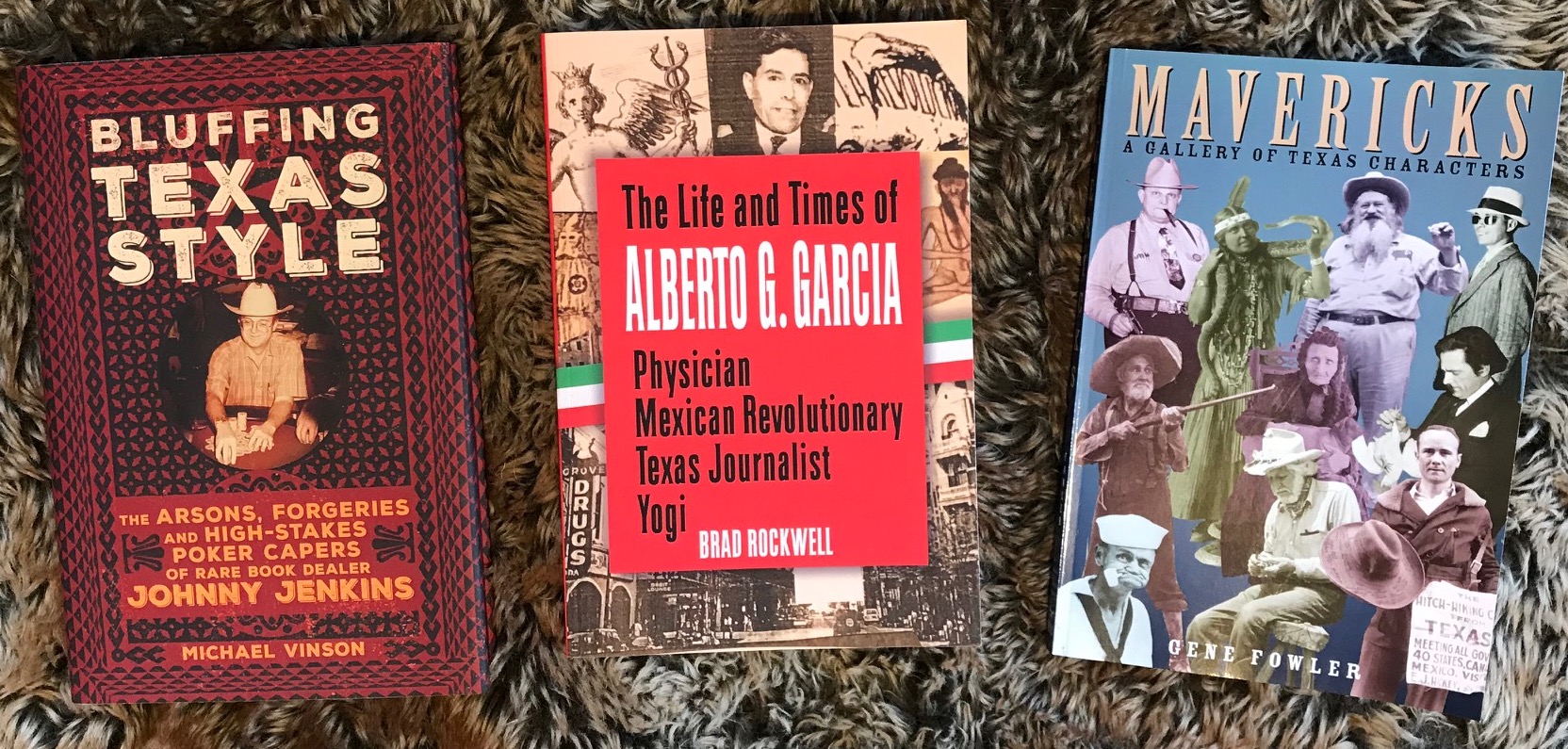
Starting this year, 2021, I’ll be dedicating the first Monday of the month to sharing with you some of the more interesting books in my working library. This post features a trio of biographies, two recent, and one I’d call an oldie but yummie.
Michael Vinson’s Bluffing Texas Style: The Arsons, Forgeries, and High-Stakes Poker Capers of Rare Book Dealer Johnny Jenkins(University of Oklahoma Press, 2020). Splendidly well-written and deeply researched, this page-turner about criminal rare book dealer Johnny Jenkins is by none other than Michael Vinson, a leading rare book dealer himself, and so a biographer with an insider’s knowledge of the business. Rare books and documents are the DNA of the stories we tell about our history; burning them or presenting forgeries is to mess with something sacred. This is not a simple story, and the subject was an extremely unusual person.
Gene Fowler’sMavericks: A Gallery of Texas Characters (University of Texas Press, 2008). I cannot recall how I first came upon Fowler’s work, but whenever it was, count me a fan. He writes high faultin’ art criticism and is himself a performance artist (e.g., “Astroturf Ranchette”). Now that I think about it, it may have been his wild-ride of a book, Border Radio… Or maybe it was Mystic Healers and Medicine Shows… or Crazy Water? (P.S. Maverick Bobcat Carter just might decide to pop into my book.)
Brad Rockwell’sThe Life and Times of Alberto G. Garcia: Physician, Mexican Revolutionary, Texas Journalist, Yogi(Alegría Press, 2020) I was delighted to give this book a blurb: “Dr. Alberto G. Garcia was Texas’ pioneer yogi, and so much more… This first biography of this extraordinarily accomplished man opens a new and strange window onto Austin history, Texas history, Mexican-American history, the Mexican Revolution, and the transnational development of esoteric movements and philosophies.”–C.M. Mayo
*
What can you find here at ye olde Madam Mayo blog in 2021? As noted above, this year I am dedicating the first Monday of the month to selected treasures in the Texas Bibliothek, that is, my personal working library. As in 2020, the second Monday of the month will be for my writing workshop students and anyone else interested in creative writing; the third Monday for my podcasts and publications, should I happen to have a new one; the fourth Monday Q & A with a fellow writer; and the fifth Monday, when there is one, for my newsletter and cyberflanerie.
“Every single person alive today was born in a world in which the Odyssey, the Mahābhārata, Don Quixote, and many other classics have been around for centuries. I decided to write Ascent for readers interested in understanding how One Hundred Years of Solitude was made and became a classic that keeps entering the lives of people on all continents.” —Álvaro Santana-Acuña
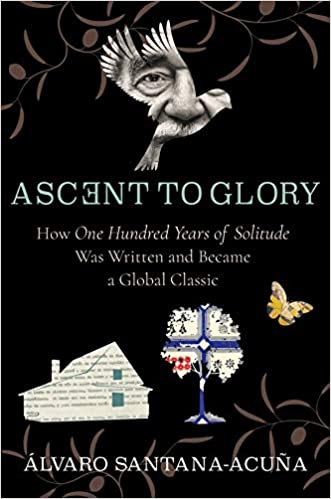
It was my amigo translator Harry Morales who alerted me to this fascinating, thoroughly researched, elegantly argued, and altogether extra-super-crunchy book by sociologist Álvaro Santana-Acuña: Ascent to Glory,about the rocket-into-the-stratosphere international success of Gabriel García Márquez’s epic novel One Hundred Years of Solitude. As a novelist myself (The Last Prince of the Mexican Empire), I will admit to, maybe, a smidgette of curiosity about the secret sauce behind the marketing of García Márquez’s book. Suffice to say, I found Ascent to Glory so illuminating that I expect to reread it more than once. Apart from opening a window onto this classic novel and Latin American and international cultural history, Ascent to Glory is also vital reading for anyone interested in the history of publishing per se— there is much to learn about the Latin American publishing industry over the second half of the 20th century, and this history is especially important to appreciate now that we are all in this nuevo mundo or, perhaps I should say, on a nuevo planeta, with digital media and amazon.com.
Álvaro Santana-Acuña earned his PhD from Harvard University and is currently Assistant Professor of Sociology at Whitman College. He is a contributor to The New York Times, The New York Times en español, and El País. Recently for the Harry Ransom Center he curated “ Gabriel García Márquez: The Making of a Global Writer,” the first major exhibition featuring documents from the García Márquez’s archives, alongside other materials by William Faulkner, Ernest Hemingway, James Joyce, Virginia Woolf, Jorge Luis Borges, and Julio Cortázar. Look for this exhibition at the Museo de Arte Moderno in Mexico City in 2021.
Here’s the official catalog copy from Columbia University Press for Ascent to Glory:
Gabriel García Márquez’s novel One Hundred Years of Solitude seemed destined for obscurity upon its publication in 1967. The little-known author, small publisher, magical style, and setting in a remote Caribbean village were hardly the usual ingredients for success in the literary marketplace. Yet today it ranks among the best-selling books of all time. Translated into dozens of languages, it continues to enter the lives of new readers around the world. How did One Hundred Years of Solitude achieve this unlikely success? And what does its trajectory tell us about how a work of art becomes a classic? Ascent to Glory is a groundbreaking study of One Hundred Years of Solitude, from the moment García Márquez first had the idea for the novel to its global consecration. Using new documents from the author’s archives, Álvaro Santana-Acuña shows how García Márquez wrote the novel, going beyond the many legends that surround it. He unveils the literary ideas and networks that made possible the book’s creation and initial success. Santana-Acuña then follows this novel’s path in more than seventy countries on five continents and explains how thousands of people and organizations have helped it to become a global classic. Shedding new light on the novel’s imagination, production, and reception, Ascent to Glory is an eye-opening book for cultural sociologists and literary historians as well as for fans of García Márquez and One Hundred Years of Solitude.
C.M. MAYO: In brief, what inspired you to write Ascent to Glory?
ÁLVARO SANTANA-ACUÑA: It all happened the fall of 2007, in October or November. I had just started living in Cambridge, Massachusetts. By then, I have read a lot about the city’s history, especially its world class universities MIT and Harvard. But I knew nothing about its weather. That fall it was raining almost non-stop for days. One afternoon I was walking with my umbrella under the rain. I was heading towards Lamont library on the Harvard University campus and, while climbing the stairs next to the building, I could hear my footsteps on the water puddles and the rain drumming on the umbrella. It was at this moment, cornered by the water, that I said to myself out loud “gosh, it rains like in Macondo.” Right there, it hit me the connection between the never-ending rain in Cambridge and in Macondo, which in One Hundred Years of Solitude went on for more than four years. The rain in Cambridge did not last long but it gifted me the idea for Ascent to Glory.
C.M. MAYO: As you were writing, did you have in mind an ideal reader?
ÁLVARO SANTANA-ACUÑA: At first, I wanted to understand why I made such a personal connection between the rain in Cambridge and Macondo. I was puzzled by it because the two cities are so different—to begin with, one is real and the other is fictional. Also, at that time, I had never been to Latin America, where One Hundred Years of Solitude takes place, and I had read the book more than ten years earlier. When I started doing the research for Ascent, about a year after the rain epiphany, I realized that my experience was similar to that of millions of readers whose lives are touched by classics. At some point, classics enter our lives in unexpected ways, stay with us for years, and eventually outlive us. Every single person alive today was born in a world in which the Odyssey, the Mahābhārata, Don Quixote, and many other classics have been around for centuries. I decided to write Ascent for readers interested in understanding how One Hundred Years of Solitude was made and became a classic that keeps entering the lives of people on all continents.
C.M. MAYO: Now that it has been published, can you describe the ideal reader for this book as you see him or her now?
ÁLVARO SANTANA-ACUÑA: I worked on Ascent for eleven years. During that time, I ran into all kinds of people, from apple farmers to taxi drivers to Nobel laurates, interested in my book. To my surprise, they were eager to share their memories of when, how, and why they first read One Hundred Years of Solitude. Many told me great things about the novel and many also expressed their disapproval. They all had something meaningful to say about the book. Thus, over the years, the ideal reader for Ascent has grown beyond sociology to include fans of literature and classics at large.
C.M. MAYO: In your researches, what are the one or two things that most surprised you to uncover?
ÁLVARO SANTANA-ACUÑA: One thing I learned about me is that, in order to write a better book, I refused to take any shortcuts. Let me give you one example. The manuscript was done in early 2017. But in May I received a fellowship from the Harry Ransom Center in Austin, which holds the personal archives of García Márquez, including documentation about the making of One Hundred Years of Solitude. I ventured into his archives with one goal: to factcheck what I had already written. Days passed and I got more and more immersed into his correspondence, notes, and manuscripts. I realized then that I had to choose between doing some facelifting to the manuscript or rewriting it. I decided to sit down and rewrite. This meant that finishing Ascent took me two more years. I think it is a better book because of this choice. Maybe García Márquez had something to do with it, too. As I was going through the manuscripts of his works, I understood his approach to writing, his craftmanship, his obsession with arriving at the best manuscript he could write. For One Hundred Years of Solitude, it took him seventeen years to reach that point.
To make future research about his novel more difficult, García Márquez destroyed all his notebooks and preliminary drafts. If I wanted to tell readers how he actually wrote it, I had to understand that myself first. For years I found myself looking for clues between the lines of unknown manuscripts, rare interviews, and cryptic letters. It was then when I remembered what Umberto Eco said about the writing of The Name of the Rose. His novel tells the story of characters who try to read what is in Aristotle’s famous volume on comedy. The truth is that nobody knows what is in the lost volume of Aristotle’s Poetics. But in the process of writing his novel, Eco discovered it and shared it with his readers. For me, one of the most surprising things I share with Ascent’s readers is information about the alternative beginnings and ends for the novel, the removal of characters, the transformations experienced by others like Remedios the Beauty, and the edits in places where I know he deleted words, sentences, and full paragraphs. I felt at times that I was watching over his shoulder, seeing him typing the story on his electric typewriter. Witnessing that moment has been an incredible experience. Imagine that you could stand next to Shakespeare as he was writing Hamlet. Readers of Ascent will learn how García Márquez wrote his masterpiece.
C.M. MAYO: Can you share any surprises for you about your book’s reception?
ÁLVARO SANTANA-ACUÑA:Ascent has been well received so far, including generous reviews by literary critics, scholars, and common readers in Latin America, the United Kingdom, France, Germany, Bulgaria, Turkey, India, Australia… One of Latin America’s leading literary critics suggested that Ascent may become a “canonical study.” In the United States, a young reviewer, who truly dislikes One Hundred Years of Solitude, wrote a review, highlighting the facts in Ascent that, in her opinion, prove that García Márquez’s novel is pretty bad and overrated. Paradoxically, this is one of the findings in Ascent: bad press helps to build a strong reputation. Classics become classics not only thanks to readers’ praise but also thanks to their entrenched criticism. In the case of One Hundred Years of Solitude, over half a century after its publication, its haters are as bellicose an army as its lovers. So, the global reception of Ascent has brought full circle the point about how One Hundred Years of Solitude has become a global classic.
C.M. MAYO: Which writers have been the most important influences for you as a writer of narrative nonfiction? And for Ascent in particular?
ÁLVARO SANTANA-ACUÑA: I have always been attracted to historical narratives and I have learned a great deal from the works of E.P. Thompson, Eric Hobsbawm, and especially Carlo Ginzburg, author of the classic The Cheese and the Worms, a fascinating study of a 16th-century miller executed by the Italian inquisition. A book that I often reread is Max Weber’s The Protestant Ethic and the Spirit of Capitalism, one of the most powerful sociology narratives ever written. Other nonfiction influences include Lévi-Strauss’s Tristes Tropiques, Foucault’s The Order of Things, and Margaret Mead’s Sex and Temperament in Three Primitive Societies. Above, I mentioned Umberto Eco, whose fiction and nonfiction work speaks to me from an early age. More recently, I follow the work for large audiences written by one of my grad school teachers Nicholas Christakis. Finally, an important influence has been García Márquez himself, who was a masterful nonfiction writer, too.
C.M. MAYO: Which writers are you reading now?
ÁLVARO SANTANA-ACUÑA: I just finished writing Primeras personas by writer, editor, and journalist Juan Cruz, who recalls his encounters and friendships with some of the most important literary figures of the last half century. Believe or not, I just started reading One Hundred Years of Solitude, once more; this time because I am working on the Spanish version of Ascent.
C.M. MAYO: How has the Digital Revolution affected your writing? Specifically, has it become more challenging to stay focused with the siren calls of email, texting, blogs, online newspapers and magazines, social media, and such? If so, do you have some tips and tricks you might be able to share?
ÁLVARO SANTANA-ACUÑA: While I am writing, I minimize interruptions, including turning off my cellphone and notifications. I only turn it back on when I am having a break. In general, I try to use social media as little as possible. What I do is to log in, scroll down a few posts, and, if I have to post something, I do it and then log off. The truth is that, when we are on social media, we easily loose ownership of our time, which we put for free at the disposal of these companies. We become their workers. I prefer to use my time for other things.
C.M. MAYO: Another question apropos of the Digital Revolution. At what point were you working on paper? Was working on paper necessary for you or problematic?
ÁLVARO SANTANA-ACUÑA: Back in the 1990s, I started writing my manuscripts in longhand and I copied them out on a mechanical typewriter. Shortly after, I transitioned to an electric typewriter and eventually a computer. It took me a few years before I dared to write directly on the computer. Even today I continue to use a paper notebook. I also use my cellphone as a digital notebook for ideas that afterwards I put on paper. I prefer to do the most demanding writing in the morning, usually for up to four hours. After that, my eyesight gets fatigued from the computer screen. Like most people I know, I have become a writing cyborg—an organism that combines mechanical and digital techniques and devices to write.
C.M. MAYO: For writers of narrative nonfiction keeping notes and papers organized can be more than tremendously challenging. Would you have any tips to share?
ÁLVARO SANTANA-ACUÑA: Narrative nonfiction must rely on real facts. Paper management is crucial to organize the facts you need to write your story. For this reason, one tip is to annotate your data’s location in full when you are doing the research and when you are writing a draft. If you are working on something for a few days or weeks, you probably can track down that incomplete reference fast. But when you have done research for eleven years for a book like Ascent, which contains facts from over forty foreign languages, ninety countries, fifty years, and five hundred people and organizations on all continents, it is impossible to recall the location of everything you are using to create the narrative.
Another tip is to not confuse rigor with pointless erudition. It is tempting to cross the fine between the two in search of a surprising detail. But every fact has to contribute to move the narrative forward. Otherwise, you lose your reader.
A final tip is to know when to stop. One can accumulate facts and facts, hoping to have a more detailed narrative and never finish it. I recall that the summer of 2018, when I was about to finish a new full version of the manuscript, I was back in Cambridge, doing research at Harvard’s Widener Library. I gathered data that I was hoping to add to the manuscript. To do so, I would have had to rewrite the second part of Ascent, about three chapters. Luckily, my grad school advisor Michèle Lamont was in town that summer and over lunch, as I explained to her my work on the manuscript, she told me that it was ready to go.
C.M. MAYO: For those looking to publish, what would be your most hard-earned piece of advice?
ÁLVARO SANTANA-ACUÑA: Write as well as you can, take no shortcuts, and surround yourself with people who truly understand why and what you write.
C.M. MAYO: What important piece of advice would you give yourself if you could travel back in time eleven years?
ÁLVARO SANTANA-ACUÑA: Since I did not know back then I was writing a book, I would say to myself to enjoy the process from the moment the Cambridge rain hit my umbrella.
C.M. MAYO: What’s next for you as a writer?
ÁLVARO SANTANA-ACUÑA: I am now working on the Spanish version of Ascent, entitled Ascenso a la gloria: biografía de Cien años de soledad. It is not really a translation but a new book, including new data. I feel the book’s tone has to be different for Spanish readers. I know this is unusual. In nonfiction books, most authors just oversee the translation and change a few things. Some authors add a new prologue to the translated version and only handful go as far as to write a new chapter. I am trying here something new in writing; Ascent and Ascenso will be twin books.
After Ascenso, I will start writing a new manuscript, for which I have already done the research. It is a history book about one of the things made in France that arguably have most shaped the world. And it is not the croissant, but a particular way of representing space: the land survey maps called cadastre. What inspired me to write that book was not the rain but a conversation with an immigrant taxi driver as he drove down a Parisian boulevard.
This is the time of year for cooking, and with the pandemic, that means even more cooking. My partners in this endeavor, otherwise employed as my writing assistants, communicate by means of dagger-looks which I, by long experience, know to translate as “Gimme me the ham!” and then again, “Gimme the ham!” And then: “Gimme the ham!” Thank goodness for podcasts!
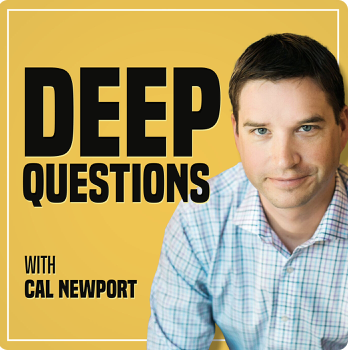
My go-to podcast for the past week has been Cal Newport’s “Deep Questions.” He’s the Joyce Carol Oates of best-sellerdom, that is, to say, how in thundernation does he manage to do so much (and be a tenured professor of computer science)? He tries to explain it in his podcast! As I stir soup and chop the potatoes (…and, as commanded, distribute tiny bites of ham…) I find his podcast strangely soothing.
My mantra is, your best teachers are the books you have already read and truly loved. One way to extract the lessons they can provide to you as a writer is by way of what I call emulation-permutation exercises.
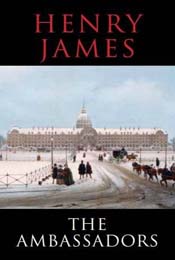
I especially admired this fragment in Henry James’s The Ambassadors :
the sky was silver and turquoise and varnish
so I broke it down as follows:
the sky was [some kind of metal] and [some of stone] and [some kind of liquid].
Mine:
the sky was gold and sapphire and milk.
the sky was tin and coal and whiskey.
the sky was brass and amber and bootblack.
Try doing as many of these as you can, whether one, two, or seventeen. Then, circle the one that strikes you as the most vivid and/ or apt for the manuscript you are currently working on.
Another example:
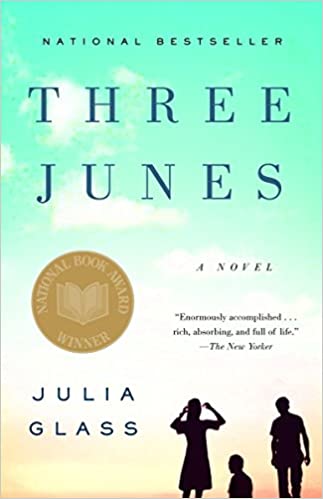
In reading Julia Glass’s novel, Three Junes, I admired this passage:
“Paging through the news from afar, he finds himself tired of it all. Tired of Maggie Thatcher, her hedgehog eyes, her vacuous hair, her cotton-mouthed edicts on jobs, on taxes, on terrorist acts.“
So, breaking this into chunks:
her [name of uncommon animal] eyes,her [quirky adjective] hair,her [adjective describing mouth / voice] [some form of speech] on [noun], on [noun], on [noun].
At the time I was writing The Last Prince of the Mexican Empire and struggling for a vivid description of one of my key characters, Princess Josefa de Iturbide, then an aging and overpowering spinster who has taken over the care of her nephew– from the point of view of another character, who was disinclined to be sympathetic. I used this basic structure (with a little wiggle room) to come up with the following:
Her lizard eyes, her coiled-up hair, her sharp-tongued pronouncements on his toys, his nap-times, his hot milk with sugared bread.
I decided I quite liked just the first part – her [name of uncommon animal] eyes, her [quirky adjective] hair – so I kept going just for fun (I didn’t use any of these):
Her angel-fish eyes, her dumpy hair Her ferret eyes, her over-blown hair Her Shetland pony eyes, her indecisive hair His raccoon eyes, his ludicrous toupee His weasel eyes, his cockamamie comb-over
and so on…
Once you’ve done a few, or several, circle the one that most appeals to you.
January 25 “Emulation-Permutation” Take a particularly vivid and rhythmic sentence or two from someone else’s book or story, and then exchange the verbs and/or adjectives and/or adverbs and/or whatever to make it your own. For example, while reading Conversations with Gore Vidal(edited by Richard Peabody and Lucinda Ebersole), I came across this vignette in the piece by Larry Kramer, “The Sadness of Gore Vidal”:
“He is very fat. His face is lined. His hair, all of which he still has, looks like its in the end stages of a coloring job. He says he has to worry about his health. He orders a steak.”
Here’s my emulation-permutation on that:
She is very thin. Her face is as smooth as a child’s. Her hair, which is sparse and frizzed, reminds me of what might be a fried mermaid’s. She says she is ravenous. She orders the sardine sandwich.
And another:
He is huge. His face appears to have been inflated. His hair has been slicked back with a strong-smelling lotion. He says he hasn’t time for more than a quick bite. He orders the brisket.
Do as many emulation-permutations as you can on this, or on another selection– preferably from your own favorite reading. No rules.
P.S. You can find the archive of workshop posts here.
It’s the fifth Monday of a month: time for the newsletter. Since my previous newsletter post, back in August, as usual, every Monday I have posted here to the Madam Mayo blog, with the second Monday of the month dedicated to the workshop and the fourth to a Q & A with a fellow writer.
No workshops are scheduled for the rest of this year. As for next year… it might be interesting. Meanwhile, the PDF of the handout from “Poetic Techniques to Power Up Your Fiction and Narrative Nonfiction,” the workshop I gave for the Women Writing the West virtual conference last month, is still available (free) at this link.
PODCAST
This finds me still editing the Marfa Mondays Podcast #22, a wide-ranging interview with Bill Smith about the history of Sanderson, the Cactus Capital of Texas. Stay tuned. Meanwhile, you can listen in anytime to the other 21 Marfa Mondays podcasts here.
Lynne Kelly’s TED Talk on memory. In the new year I’ll be blogging about more her jaw-dropping work on these ancient and surprisingly powerful technologies of the imaginal.
*
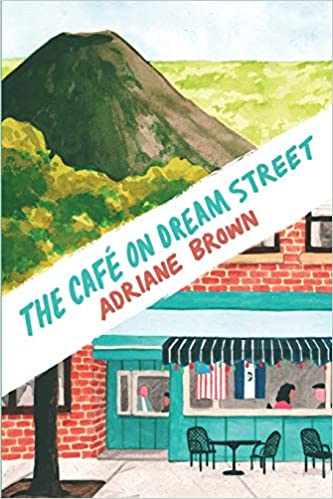
Adriane Brown writes: “Many years ago, (2004, I believe), you taught a class at the Bethesda Writers Center called the Art and Craft of Writing. In that class, you had us write a 300 word exercise called ‘The Chef.’ You were very encouraging, and I continued to work on that piece over the years. It took a long time, but on July 30, 2020, it was published by Columbus Press as a 484 page novel titled The Café on Dream Street. It is currently for sale on Amazon, Barnes and Noble.com, and Indiebooks. You can also check out my website at www.adrianebrown.com .”
Adriane Brown, my warmest congratulations to you! Write on!
On the literary travel writing front: Count me a mammoth fan of Padraig Rooney’s The Gilded Chalet, on literary Switzerland, which I’ll be nattering on about, possibly, in my top books read in 2020 list, to be posted next month. Check out Rooney’s essay on Annemarie Schwarzenbach in Iraq, 1934.
Also, check out the trailer for Werner Herzog’s Nomad, about the incomparable literary travel writer Bruce Chatwin:
More Youtuberie: My favorite example du jour of “finding a niche.” The title is “Handy Spielen,” which I would translate from the German as “Playing with My Smartphone.” This is two German teachers teaching German to Taiwanese.
*
Ja, I’ve got this German thing going on. By the way, here’s a fantastic BBC documentary on The Art of Germany.
For those who have an interest in the Mexican Revolution, as I do, an excellent conference on Jornadas Culturales de la Revolución en la Frontera:
*
And, somewhat related, PBS reports on the Whitney and Mexican muralism:
“Many poets find their voice and stick to a sort of signature style their entire careers. That has never appealed to me. I’d get bored chewing on the same poem for eternity like an indigestible hunk of gristle. My eclectic nature in regards to style and voice remains driven by my eclectic reading habits. I like to read all sorts of things.”—Matthew Pennock
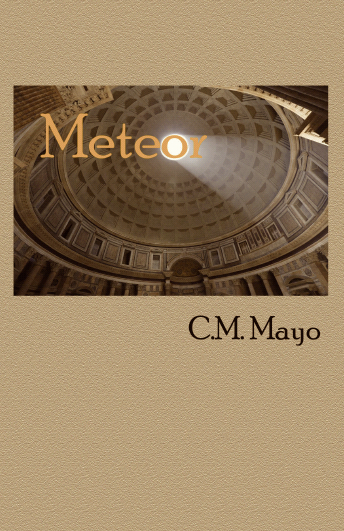
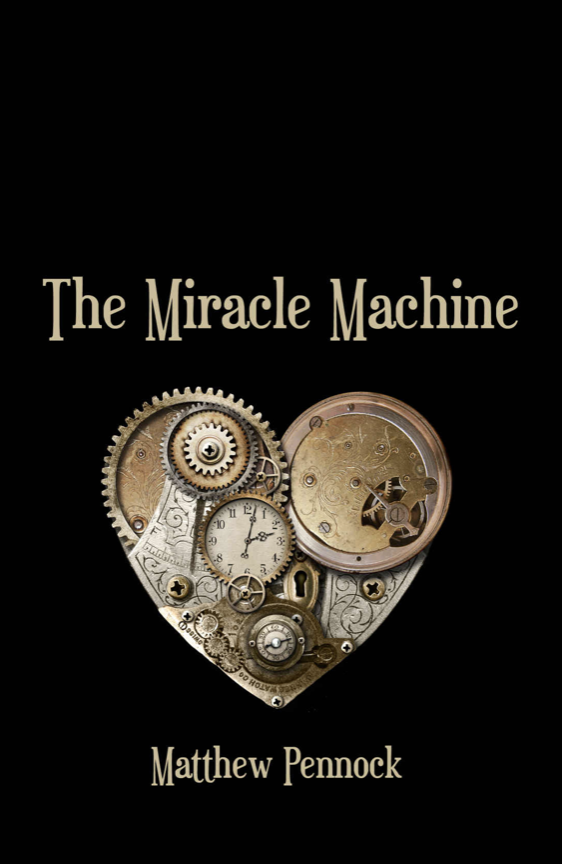
Last year my book, Meteor, won the Gival Press Poetry Award and, as per the contest rules, I served as the judge for this year’s award. In an impressive batch of finalists Matthew Pennock’s The Miracle Machine was the shining standout. Here’s my official blurb:
“With a craftsman’s deftest precision and a thunder-powered imagination on DaVinci wings, the author recreates a lost world within a lost world that yet—when we look—shimmers with life within our world. Elegant, wondrously strange, The Miracle Machine is at once an elegy and a celebration, tick-tock of the tao.” —C.M. Mayo
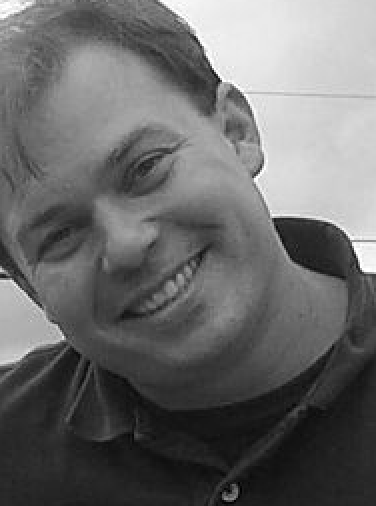
Matthew Pennock
By the way, the judge for the Gival Poetry Award does not know the names nor anything about the poets who submit their manuscripts. I only found out that the author of The Miracle Machine was Matthew Pennock—whom I have not yet had the pleasure of meeting in person—when Gival Press’s editor, Robert Giron, let me know by email. Well, it turns out that, no surprise, I had selected the work of one very accomplished poet. Pennock received his MFA from Columbia University and his PhD from the University of Cincinnati. His poems have been widely published in literary magazines, including Gulf Coast, Denver Quarterly, Western Humanities Review, Guernica, New York Quarterly, and LIT, and his first book, Sudden Dog (Alice James Books, 2012), won the Kinereth-Gensler Award.
Dear writerly reader, this is one of the pleasures of hosting a blog: I get to talk to people I might not otherwise. Right now, of course, the covid makes most meetings impossible anyway. So here we are, and may you find Pennock’s answers as interesting as I did. And at the end, a treat: one of his poems.
C.M. MAYO: What was the spark— what inspired you to write these poems?
MATTHEW PENNOCK: With too many of my poems, television provides the spark. I had been watching “Mysteries at the Museum,” which is like the TV version of clickbait. They start an interesting little teaser story, and you have to wait through a commercial break (watching commercials, how novel!) to get to end, and then the process starts anew. I think I’ve seen every episode.
Needless to say, I was lying there and this story came on the screen about an automaton in the Franklin Institute in Philadelphia. I have always had a fascination with automata, like the miracle monk Juanelo Turriano created for Charles V, or the fraudulent Mechanical Turk, but I had not heard of this one. I did a little more research and found it on the Franklin’s website. I was delighted by the breadth and quality of the drawings it could create, and the fact that it wrote poems was the clincher. I felt I had to write a poem about the mechanical boy that wrote poems. One poem became two, and then I thought, why not a short series? The more research I did for the poems took me to new places and new characters, and the project just kept growing until it became its own book.
C.M. MAYO:As you were writing, did you have in mind an ideal reader?
MATTHEW PENNOCK: Not particularly. When I wrote the poems that comprised my first collection, I definitely knew who I was writing to, but this time was different. I wrote these for myself. By that, I mean I used them to make sense of the world as I saw it. This book began during a heated election year, not the 2016 election but the 2012. Due to the Trump era, I think many people have idealized the entirety of the Obama administration, and seemed to have forgotten how nail-bitingly close the 2012 election was until a few weeks before the denouement. That combined with the subsequent four years of obstructionist politics by Boehner and McConnell gifted us what seemed like a weekly Armageddon of debt ceiling crises and fiscal cliffs. In 2008, for a brief teasing moment, there was so much hope and potential for us to finally start tackling the ills that had so long plagued our country: healthcare, climate change, perpetual war, racism, etc. To have it all come to so little felt truly devastating. Then, of course, came Trump. I finished this book about a year into his reign, so I think that’s why the whole thing has such an elegiac tone.
I do want to make clear though that this book is not solely a political work, I think that reading of it exists, but that’s mainly because of the atmosphere in which it was scrawled, but I hope that’s only one dimension of it. I poured all the angst and joy I had into it, so the book is deeply personal for me, and delves into my struggle with so many other things: time, and its passage; love; the nature of reality, and so forth.
C.M. MAYO:Now that it has been published, can you describe the ideal reader for this book as you see him or her now?
MATTHEW PENNOCK: No, I can’t. I’m sort of a firm believer in once my work has entered the world, it has ceased to be mine. I really don’t have much control over what happens to it, and I’m fine with that. Every person who takes the time to read it has a right to see what they want in it. I really do not want to speculate who would get the most from it, or who would understand it the best. I’d inevitably be wrong, and I would feel like a parent telling my child that they must be a lawyer because I was a lawyer, or something like that.
C.M. MAYO:Which writers and poets have been the most important influences for you?
MATTHEW PENNOCK: I always struggle with this question. I don’t have any writers I return to over and over like a blessing of personal Olympians to whom I must pray. In creative writing, it’s hard to get very far before you’ve heard someone talking about “finding their voice.” A famous poet who led a workshop I was in during grad school once told me I’d never write a successful poem because I was too shifty and couldn’t stick to a consistent voice. I didn’t like that. Many poets find their voice and stick to a sort of signature style their entire careers. That has never appealed to me. I’d get bored chewing on the same poem for eternity like an indigestible hunk of gristle. My eclectic nature in regards to style and voice remains driven by my eclectic reading habits. I like to read all sorts of things.
In addition to fiction and poetry, I love narrative non-fiction about anything: history, science, politics, etc., and I get something from almost everything I read, or watch for that matter. The beautiful thing about writing a book like The Miracle Machine was that I did a good amount of research, and it took me so many places. I took influence from history books about pre-modern medicine, alchemy and mysticism; documentaries/movies like Ken Burn’s The Civil War, and Martin Scorsese’s Gangs of New York; Novels like Cloud Atlas, by David Mitchell; and still other things like Offenbach’s opera The Tales of Hoffman. I studied epic poetry and other long form works of poetry. Too many to list really, A few favorites: The Ring and the Book, by Robert Browning, Eugene Onegin, by Alexander Pushkin, Orlando Furioso by Ludovico Ariosto, and of course, The Dream Songs, by John Berryman.
C.M. MAYO:Which writers are you reading now?
MATTHEW PENNOCK: Books that I physically have a book mark in right now an am switching between: The Path between the Seas, by David McCullough, Snake, by Erica Wright, Dream of the Unified Field, by Jorie Graham, and I just finished Number 9 Dream, by David Mitchell and Toy Medium: Materialism and the Modern Lyric, by Daniel Tiffany, which was recommended to me by the great Timothy Donnelly after he blurbed my book.
C.M. MAYO:How has the Digital Revolution affected your writing? Specifically, has it become more challenging to stay focused with the siren calls of email, texting, blogs, online newspapers and magazines, social media, and such? If so, do you have some tips and tricks you might be able to share?
MATTHEW PENNOCK: I am not particularly prolific. I do not write every day, and I’m often distracted by all the shows I can stream, and podcasts I can listen to. Social media has never really appealed to me, so I am okay there, but other than that, someone needs to give me some tips about how to get a little more done.
C.M. MAYO:Another question apropos of the Digital Revolution. As a poet, at what point were you working on paper? Was working on paper necessary for you or problematic?
MATTHEW PENNOCK: I kept a romantic attachment to paper for a little while, but once we got into the late aughts, and I made the permanent switch from having a home desktop to having a laptop I could carry around, writing directly on the computer became way too convenient. I can’t imagine going back to paper now. After all, the internet makes looking stuff up as you write so much easier. You never know when you might need to know an obscure fact about the health of Lake Champlain’s ecosystem, or whatnot.
C.M. MAYO:For those looking to publish, what would be your most hard-earned piece of advice?
MATTHEW PENNOCK: I don’t think I have to tell anyone that getting published is hard, the odds are long and the expense is hard to justify. I really dislike it when people try to gloss over that fact, and paint a rosy picture of the contest model. I spent nine years with Alice James Books, six of those years as Chair of the Editorial Board, and during that time, I saw around a thousand manuscripts for various contests. The best advice I can give is be adaptable, never stop looking for ways to improve your book. I saw manuscripts reappear unchanged year after year, while others would continuously change and improve. Those in the latter category would eventually break through, if not with us, then elsewhere. Good work will find a home, but sometimes, it takes longer than any of us want.
C.M. MAYO:What important piece of advice would you give yourself if you could travel back in time ten years?
MATTHEW PENNOCK: Forget about academia, go find something else to do to earn your rent.
C.M. MAYO:What’s next for you?
MATTHEW PENNOCK: I’ve been working on a manuscript for a novel. It involves an awful lot of research about foxes.
BROADWAY & ANN by Matthew Pennock From The Miracle Machine (Gival Press, 2020)
My writing assistants advise me that winter is coming. It’s chicken soup time, they say, pumpkin time, cozy all the time– except when it’s time for the walk!
This finds us still working on the next Marfa Mondays podcast. I’m almost finished transcribing a fascinating 4 hour interview recorded in the Cactus Capital of Texas, which I’ll be editing down to a listenable 45 minutes (or thereabouts). Stay tuned. Meanwhile, with the peculiarities of the past in mind, herewith, a book review from the archive:
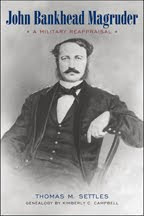
Thomas M. Settles’ John Bankhead Magruder: A Military Reappraisal
Originally published on this blog and my Maximilian-Carlota Research Blog (sharing research on Mexico’s Second Empire / French Intervention), February 15, 2011
As the subtitle indicates, most of Thomas M. Settles’ splendid biography of John Bankhead Magruder (1807 – 1871) is dedicated to a detailed examination of his role in the U.S. Civil War, specifically, his audacious if nonetheless inevitably doomed defense of Richmond, and later, Galveston. Though this part of the narrative does not have direct bearing on Mexican history, it informs the portrait of an unusually flamboyant Confederate who, in defeat, looked south to a future in Maximilian’s Mexican Empire.
Based on three decades of archival research, this biography must have been a titanic task, for Magruder left no diary and many of his most important papers were lost in a San Francisco fire. Worse, he was much maligned during his lifetime, victim of both malicious gossip from his Confederate rivals and less than sympathetic Federals– just the sort of thing to send a biographer down blind alleys. In addition, there were misunderstandings, as when earlier historians, in recounting what appeared to be a less-than honorable leave-taking from Washington DC at the start of the Civil War, confounded Magruder with a relative.
General John Bankhead Magruder was, as Settles convincingly argues– backing every point with what sometimes seems a forest of footnotes– a Civil War general whose tactical ingenuity and tenacity are deserving of far greater respect than he has been accorded. Most of the book details his early military career, from West Point to a garrison duty and recruiting at various army posts from the Carolinas to Maine, until, with the invasion of Mexico in the late 1840s, his fortuntes took a radical turn. Along with many of the men who would later play major roles in the U.S. Civil War– Grant, Lee, and McClellan, among them– Magruder distinguished himself in several major battles against the Mexicans. (Magruder’s artillery was, in fact, the first to fire upon Chapultepec Castle.) Following the U.S.-Mexican War, Magruder served in California, where in Los Angeles, briefly, he ran a saloon.
He was on a visit to Europe when recalled to Washington DC in 1861, only a month before his native state of Virginia seceded. He had not wanted to leave the U.S. Army, but as “he could not fight against his own people,” he resigned, calling it “the most unhappy moment of my life.” He walked across the Potomac, offered his services to the Confederacy and, in short order, was reporting to Robert E. Lee.
Settle’s treatment of Magruder’s return to Mexico in 1865, in the final chapter, “Postwar Odyssey,” is a relatively brief one; nonetheless, it is an important contribution to understanding the nature and role of the ex-Confederates in Maximilian’s government.
At the end of the U.S. Civil War, General Magruder was one of several thousand ex-Confederates who pulled up stakes for Mexico. In 1865 the French Imperial Army, considered the greatest in the world, occupied most, if not all of Mexican territory, while the ex Archduke of Austria, Maximilian, a direct descendant of the King of Spain during the Conquest, reigned as Emperor. Though by the late summer and fall of 1865, when the ex-Confederates began arriving en masse, the French occupation was beginning to fray at the edges, Maximilian and his consort, Carlota, still presided over a court and elaborate palace balls and other festivities that were, to Americans at that time, considered the height of glamor. In the words of journalist William V. Wells, this was the “high noon” of the empire, when it was impossible for many to even imagine the catastrophe that would, in only a matter of months, befall the “cactus throne.”
Some ex-Confederates came to Mexico because they could not bear living in a defeated South, others, because they had expected to participate in a dynamic plantation economy under the French-backed Maximilian (who, to entice the ex-Confederate colonists, proclaimed slavery legal in Mexico). But others, such as General Magruder, simply felt pushed out. As Settles writes:
“It must have been extremely difficult for so proud a man as John Bankhead Magruder to have signed the articles surrendering the Trans-Mississippi Department. But when the Federals began arresting and imprisoning high Confederate officials, he resolutely refused to submit to such personal humiliation. He was not eligible for the amnesty proclaimed by President Lincoln on December 8, 1863, or that proclaimed by Andrew Johnson on May 29, 1865”
Although I had spent several years researching Mexico’s Second Empire under Maximilian for my novel, The Last Prince of the Mexican Empire, until recently, I was flummoxed as to the background of the author of the exceedingly rare English language memoir, Sketches of the Last Year of the Empire, Henry R. Magruder. It turns out he was the son of General John Bankhead Magruder and I now know, from Settles’ biography, that father and son did not arrive in Mexico via the same route. General Magruder came down overland from Houston with General Shelby, while his wife, son Henry, and unmarried daughter, Kate Elizabeth, arrived via Veracruz, for they had come from Florence, Italy, where they had been residing for some years.
As Settles explains:
“[B]ecause of the hardships of travel, uncomfortable living conditions, and extremes of climate found in the remote locales where magruder was stationed during his military career, [Mrs Magruder] found it more practical to live and raise her children in the comforts of Baltimore, where she could stay closer to family business interests. She remained there until 1850 when, as a consequence of [daughter] Isabella’s ill health, she took her children to Europe. Mrs Magruder had relatives in Germany, but she moved to Italy, living briefly in Rome, then in Florence.”
From Texas, not yet reunited with his family, Magruder headed straight down to Monterrey and then to Mexico City, arriving in the summer of 1865.
Writes Settles:
“Magruder checked into a room on the first floor of the fashionable Iturbide Hotel, and there he received several distinguished visitors, including Matthew Fontaine Maury and his old friend Marshal Francois-Achille Bazaine, now in command of the imperial forces in Mexico. He also met with the British minister to Mexico, Sir Peter Campbell Scarlett, whose nephew, Lord Abinger, had married Magruder’s niece, Helen Magruder, in Montreal several years earlier.”
It appeared Magruder felt as at home as an American could be in Mexico City. He bought himself a new wardrobe, “‘a cut-a-way suit of salt and pepper color, with a tall dove-colored hat and patent leather boots,’ and then went to the palace of Montezuma [the Imperial Palace], which Scott’s army had victoriously occupied eighteen years earlier.”
Soon after a successful interview with Maximilian and Carlota, Magruder, now a naturalized Mexican citizen, was appointed head of Maximilian’s Land Office of Colonization. The idea was to establish colonies along the main route inland from Veracruz to Mexico City, on land Juarez (under the Republic) had expropriated from the Church.
Settles covers the rapid collapse of the scheme along with Maximilian’s government, and Magruder’s return to the U.S. In 1867– surprisingly, for memories of the Civil War remained fresh— he attempted to set up a law office in New York City. His family had returned to Italy, but he remained in the U.S. to work the lecture circuit with a crowd-pleasing talk on Maximilian and Carlota. He was on that tour when, in a Houston hotel in 1871 he died of a stroke.
The following examples of musical writing I took from what I had handy at the moment, e.g., a magazine article, a newspaper movie review, however, for the most part, from old favorites on my bookshelves. Notice how the rhythms and sounds provide energy and meaning.
There he is, in all his glory, Brad Pitt, that beautiful, chiseled chunk of celebrity manhood. You want him? Go see “Fight Club.” You want action, muscle, and atmosphere? You want boys bashing boys in bloody, living color? “Fight Club” is your flick, dude. —Desson Howe, The Washington Post. 10/1999
The first technique Howe uses here is the rise with questions, then a contrasting downward thrust with commands or assertions:
You want him? Go see “Fight Club.” You want boys bashing boys in bloody, living color? “Fight Club” is your flick, dude.
Howe also uses poetic alliteration— repeating sounds in adjacent or nearby words:
Brad Pitt, that beautiful, chiseled chunk action, muscle, and atmosphere boys bashing boys in bloody “Fight Club” is your flick
I could give many excellent reasons for my dislike of large dinner-parties, soirées, crushes, routes, conversazioni and balls. —Aldous Huxley, “The Traveller’s-Eye View”
Here Huxley also uses poetic listing, made poetic in part by his use of alliteration (crushes… conversazioni).
#
Philadelphia, I was told in New York, was so slow that it was safe for people to fall out windows—they just wafted down like gossamer… —P. Gibbs, People of Destiny, 1920
Brilliant use of the arrangement of stressed and unstressed syllables in this one. For more about that, see my post on Grokking Scansion.
#
Further fun examples:
We knew you were wondering, and the answer is no. Mohair is not the hair of the mo. —Jonathan Raush, “The Golden Fleece”
#
No typos in this one, by the way (not that I could find anyway); this is how Armstrong wrote it:
We don’t think that we could be more relaxed and have better neighbors any place else. So we stay put After all— we have’ a very lovely home. The house may not be the nicest looking front. But when one visit the Interior of the Armstrong’s home they’ see a whole lot of comfort, happiness + the nicest things. Such as that Wall to Wall Bed— a Bath Room with Mirrors Everywhere‘ Since we are Disciples to Laxatives. A Garage with a magic up + down Gate to it. And of course our Birthmark Car‘ a Cadillac’ (Yea). The Kids in our Block just thrill when they see our garage gate up, and our fine Cadillac ooze on out. They just rejoice and say, “Hi—Louis + Lucille— your car is so beautiful coming out of that rise up gate,” which knocks me out. —Louis Armstrong, In His Own Words
Tony Morrison said, “The function of freedom is to free someone else,” and if you are no longer wracked or in bondage to a person or a way of life, tell your story. Risk freeing someone else. Not everyone will be glad that you did. Members of your family and other critics may wish you had kept your secrets. Oh, well, what are you going to do? Get it all down. Let it pour out of you onto the page. Write an incredibly shitty, self-indulgent, whiney, mewling first draft. Then take out as many of the excesses as you can.” —Anne Lammott, Bird by Bird
I stepped onto the hot tarmac of Tan Son Nhut air base to the ear-splitting howl of jet fighters. These jets had an aura of aggression, with their pointed noses painted as sharks hurtling down the runway, bombs tucked under wings, afterburners aglow. The energy of the war was awesome. —Jon Swain, River of Time
…hold on with a bull-dog grip and chew and choke as much as possible — President Lincoln to General U.S. Grant
“When somebody threatens me,” he says, “I usually tell them to pack a picnic and stand in line.” — Mikey Weinstein quoted in “Marching As to War” by Alan Cooperman, Washington Post
There is about our house a need… We need someone who’s afraid of frogs. We need someone to cry when I get mad, not argue. We need a little one who can kiss without leaving egg or jam or gum. We need a girl. —George H. Bush, letter to his mother, 1953
#
What are your favorite books? I would venture to suggest that those, the books you have already read and most truly enjoyed, are going to be your best teachers. I’m betting that, as you comb through them, abundant examples of musical writing will be easy to find.
What are your favorite books? I would venture to suggest that those, the books you have already read and most truly enjoyed, are going to be your best teachers.
P.S. To really make this sink into your writing mind, I would suggest that you try marking the stressed and unstressed syllables, and also identifying some of the author’s poetic techniques.