Una ventana al mundo invisible (A Window to the Invisible World): Master Amajur and the Smoking Signatures

Una ventana al mundo invisible. Protocolos del IMIS
Editorial Antorcha, Mexico City, 1960.
[A Window to the Invisible world: Protocols of the IMIS]

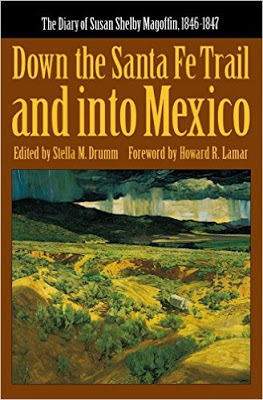
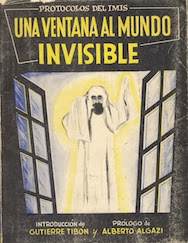
I was a long ways into into the labyrinth of research and reading for my book, Metaphysical Odyssey into the Mexican Revolution, when I happened into Mexico City’s Librería Madero, expressing a vague interest in Francisco I. Madero and “lo que sea de lo esotérico.” When the owner, Don Enrique Fuentes Castilla, set this book upon the counter, I confess, the cover, which looks like a Halloween cartoon, with such childish fonts, did little to excite my interest. But oh, ho ho (in the voice of the Jolly Green Giant):

A Window to the Invisible World: Protocols of the Mexican Institute for Psychic Research Mexico City, 1960

This book, Una ventana al mundo invisible, is nothing less than the official, meticulously documented records of the dozens and dozens of research-séances of the Instituto Mexicano de Investigaciones Síquicas or IMIS (Mexican Institute of Psychic Research) from April 10, 1940 to April 12, 1952, members of which included– the book lists their names and their signatures— several medical doctors and National University (UNAM) professors; an ex-Rector of the UNAM, the medical doctor and historian Dr. Fernando Ocaranza; several generals; ambassadors; bankers; artists and writers, including José Juan Tablada; a supreme court justice; an ex-Minister of Foreign relations; an ex-director of Banco de México, Carlos Novoa; Ambassador Ramón Beteta, ex Minister of Finance; and… drumroll… both Miguel Alemán and Plutarco Elías Calles. *

Close up of the subtitle. Madam Mayo disapproves of the font. (Dude, what were you smoking?)

*I hate giving wikipedia links but as of this writing, the official webpage for the Mexican presidency doesn’t go back more than four administrations.

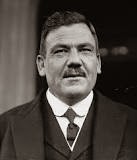
For those a little foggy on their Mexican history, Plutarco Elías Calles served as Mexico’s President from 1924-1928, and Miguel Alemán, 1946-1952. At the time of the séances documented in Una ventana al mundo invisible, Calles was in retirement, having returned from the exile imposed on him by President Cardenás in the 1930s.

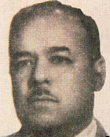
President of Mexico, “El Jefe Máximo” Plutarco Elías Calles. In retirement he joined the IMIS and was a regular participant in the research-séances documented in Una ventana al mundo invisible

When Una ventana al mundo invisible was published in 1960, Alemán was long gone from power, and Calles had passed away. 

I had heard, as has anyone who goes any ways into the subject, that Alemán and Calles and other Mexican “public figures” were secret Spiritists, but here, dear readers, in the Protocolos del IMIS, are the smoking signatures.

Yes,  There are Other References to 
Una ventana al mundo invisible

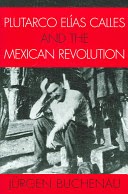
Mexican historian Enrique Krauze was one of the first to cite Una ventana al mundo invisible in his chapter on Calles in Biography of Poweras does Jurgen Burchenau in his biography, Plutarco Elías Calles and the Mexican Revolution. But, as I write these lines, Una ventana al mundo invisible remains surprisingly obscure.

The Revolution as dolor de cabeza

Of course, I googled. A Mexican writer,  Héctor de Mauleón, had discovered Una ventana al mundo invisible in a different Mexico City antiquarian bookstore and written up a summary for the October 2012 issue of Nexos. (But he complains of his copy’s missing the picture of the conjured spirit, “Master Amajur.” More about that in a moment.) And also recently, Grupo Espírita de la Palma, a Canary Islands Spiritist blog, which has posted several important bibliographic notes as well as a bibliography of Spanish works on Spiritism, posted this piece about the Jesuit Father Heredia’s involvement with the IMIS–thanks to his friend, none other than Calles–and about this book.

How about WordCat? Yes, there are several copies of the 1960 edition of Una ventana al mundo invisible in libraries in Mexico City. And three copies in the United States: the Library of Congress, the New York Public Library, and (why?) the University of West Georgia. Ah, and WorldCat also shows several copies in Mexico of an edition © 1993 and published in 1994 by Planeta and another, expanded edition published by Posadas in 1979.

(A research project for whomever wants it: to delve into the Mexican hemerotecas of 1960-61 for any newspaper coverage, and 1979 and 1994 for anything about the Posadas and Planeta editions. My guess is, not much, for the press was largely under the thumb of the ruling party and this sort of information about Mexican Presidents would have been, to say the least, unwelcome. But that’s just my guess.)

So, Now, Delving into the Contents…

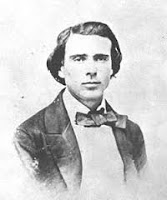
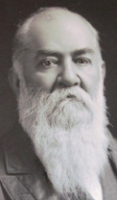
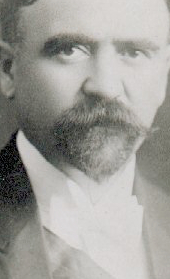
Rafael Alvarez y Alvarez (1857 – 1955), Mexican banker and founder of the Instituto Mexicano de Investigaciones Síquicas (IMIS)

The copy Don Enrique was offering, and for a very reasonable price, still had its dust jacket, small tears in places along the bottom and the top, but intact (the image on this blog post is a scan of my copy). The rest of it was pristine; the pages had not even been cut. Don Enrique slit open a few for me in the bookstore, and once home, I continued with my trusty steak knife (read about my other steak knife adventure here.)

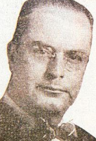
I dove right in and learned that the founder of the IMIS, to whose memory the book is dedicated, was Rafael Alvarez y Alvarez (1887-1955), a distinguished Mexican banker, a president of the Monte de Piedad, and a congressman and senator. (Looking at his portrait with my novelist’s eye– that gaze! the bow tie!– yes, the intrepid maverick.)

The introduction is by Gutierre Tibón, an Italian-Mexican historian and anthropologist, professor in the National University’s prestigious faculty of Philosophy and Literature, and author of numerous noted works, including Iniciación al budismo and El jade de México.

A Brief Bit of Background
on 19th Century Parapsychological Research

The goal of the IMIS was to progress in the tradition of pioneer American, English, and European parapsychological researchers. From my book, Metaphysical Odyssey into the Mexican Revolutionthe first chapter, which provides 19th century background for Madero’s ideas about Spiritism, which he considered both a religion and a science:

“The exploits of mediums such as the Fox sisters, D.D. Home, the Eddy Brothers, and later in the nineteenth century, prim Leonora Piper (channel for the long-dead “Dr Phinuit” and the mysterious “Imperator”), and wild Eusapia Palladino (whose séances featured billowing curtains, floating mandolins and, popping out of the dark, ectoplasmic hands), spurred the studies of investigators, journalists and a small group of elite scientists. Noted German, Italian, and French scientists, such as Nobel prize-winning physiologist Charles Richet undertook the examination of these anomalous phenomena, but the British Society for Psychical Research, founded in 1882, and the American Society for Psychical Research founded three years later, led the fray. Though their ranks included leading scientists such as chemist William Crookes, naturalist Alfred Russel Wallace, physicist Oliver Lodge, and William James (the Harvard University professor considered the father of psychology). Yet their researches almost invariably met not with celebration, nor curiosity on the part of their fellow academics, but ridicule, often to the point of personal slander.”

On that note, for anyone interested in learning more about 19th century parapsychological research, a very weird swamp indeed, I recommend starting with science journalist Denorah Blum’s excellent Ghost Hunters: William James and the Search for Scientific Proof of Life After Death. (See also Blum’s website.)

Medium Luís Martínez
and “Spirit Guide” Dr. Enrique del Castillo

Luis Martínez, Mexican medium

As James et al had Leonora Piper, and Richet and Lombroso, Eusapia Palladino, the IMIS employed the medium Luis Martínez, who was able to evoke a broad spectrum of phenomena, from ringing bells to apports, ectoplasm, breezes, raps and knocks, levitation, and so on. 

In séances with Martínez, the IMIS heard from its spirit guide on the “other side,” one Dr. Enrique del Castillo, a Mexican doctor of the 19th century. According to Dr Tibón in his introduction to Una ventana al mundo invisible (p. 20, my translation):

“The way he looked was perfectly well known because once he “aported” his photograph, which was later made into a larger size, framed and displayed the Institute’s workroom. Another aport of Dr. del Castillo were his spectacles, identical to those in the portrait. He brought them on October 24, 1944, at 10:30 pm, in a séance that was documented in Cuernavaca, and he said these words, directing them to Rafael Alvarez y Alvarez: ‘In leaving my spectacles to you, dear son, it is with the wish that you will see clearly the future road we must take. May these spectacles take you on the path where we will always be companions.'”

Enter “Master Amajur”

Of special note was the séance on the evening of September 24, 1941, when Plutarco Elías Calles invited Carlos de Heredia, S.J., author of a book debunking Spiritism– and Father Heredia, sufficiently awed (and according to Calles, converted)  affixed his signature as witness to genuine phenomena. That séance is documented in its entirety in Una ventana al mundo invisible. From Dr. Tibón’s introduction (p.21, my translation):

“That memorable night there materialized another spirit guide for the circle: an oriental doctor named Master Amajur; and he did not only show himself completely to Father Heredia, he also spilled a glass of water, saturated it with magnetic fluid, and gave it to him to drink. Then there appeared the phantom of Sister María de Jesús and, before the astonished cleric, illuminated her face in a most unusual manner. Finally, Dr Enrique del Castillo appeared, surrounded by many tiny lights. These levitated the medium, chair and all– the equivalent of raising almost 100 kilos– and silently left him in the other end of the room. This phenomenon was verified for the first time. Later, I had the fortune to attend its repetition and I literally saw the medium fly two meters into the air.”

Master Amajur started showing up from the first documented séance of May 8, 1940 (p. 89, my translation of some of the highlights):

“Master Amajur [appeared] very clearly, he touched all of us and he wrote a message which says: Go forward and I will help you. When we asked him [for a message] he left a message for Colonel Villanueva that says: It would be good for you to attend a séance. [… ]The first materialization produced an electric spark above the lightbulb that was loose in its socket[… ] There was an aport: a small bottle of perfume and its essence sprinkled above us. The music box passed over our heads. The Master gave us his cloak to touch, which seemed to all of us a piece of gauze. One again he produced a fresh breeze: it smelled of ozone.

On June 12, 1940 (p.90, my translation):

[…] the Master came in. This manifestation appeared first as a human hand covered with a veil, imitating a human figure. Then it increased in size and luminosity until it came txo a height of about 1.5 meters. Only the head and bust could only be seen. It was covered in a bluish white veil which I touched with my face. It gave me the impression of being a cotton fabric… It gave me a large glass of water to drink… It put flowers in our hands, it gave us a perfumed air, and when luminous blobs passed near my face I perceived the smell of phosphorous.”

On June 22, 1941 (my translation, p. 92):

“In front of all of us, Amajur left on the wall an inscription that said: Go forward. Upon request, he gave fluid to a magnolia and then he began to cut the petals. One by one these were deposited in the mouths of the participants.”

And so on. Séance after séance after séance–96 in all–with sparks, music, levitations, ectoplasmic this & that, perfumes, flowers, and frequent appearances not only by Master Amajur and sundry others, but also a childlike spirit, “Botitas” (Little Boots), who would tug on the participants’ pant legs. 

Photographing Master Amajur

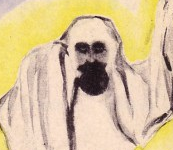
Close up of “Master Amajur” From the cover of Una ventana al mundo invisible

Skipping ahead to the séance of June 17, 1943– which Plutarco Elías Calles attended– Master Amajur has agreed to pose for a photograph. At first this doesn’t work; the photographer only captures a hand and then, suddenly, falls into convulsions. But then, after some further bizarre phenomena and friendly intervention by the spirit Dr. del Castillo, the photograph is achieved (p. 194, my translation):

“According to Mrs. Padilla [wife of Ezequiel Padilla, ex Minister of Foreign Relations, also in attendance on this occasion], and in agreement with all the other participants, at the moment of the explosion or flash from the photographer’s lamp, in the shadow could be seen the complete figure of the master, as if a statue of about 2 meters covered in a cloak, from head to foot. It was also noted that Master Amajur received a powerful shock and on asking him if he would permit another photograph to be taken, he said no.”

According to the dust jacket flap text, this is the very photograph that adorns the cover of the book. But, um, it looks more like a drawing to me. (As, by the way, many purported “spirit photographs” do. Google, dear reader, and ye shall find. Lots on eBay, by the way.)


Madame Blavatsky. The monumental figure of modern esotericism. Author of The Secret Doctrine and Isis Unveiled, etc. Founder, Theosophical Society

For historians of the metaphysical, it is interesting to note that Master Amajur claimed to be a member of the Great White Brotherhood, a term which came into use in the West with Madame Blavatsky, co-founder of the Theosophical Society, in the 19th century. She claimed that her teachers, who often met with her on the astral plane, were the Great White Brothers or Mahatamas, the Ascended Masters Koot-hoomi (Kuthumi) and Morya. Later, her follower A. P. Sinnett expanded on this topic in a sensational book of its day, The Mahatma Letters (1923). Over the decades, other psychics claimed to receive channeled messages from various Ascended Masters, most notably “St. Germain” and Alice Bailey’s “Djwahl Khul” or “The Tibetan.” It would seem that “Master Amajur” falls into this rather blurry and ever-morphing category.* 

*So are the terms Great White Brother, Mahatma, and Ascended Master one and the same? In this article in Quest, modern-day Theosophist Pablo B. Sender elucidates. 

Interesting to note also that a google search brought up the tidbit that “Amajur” was the name of an astronomer of 10th century Baghdad– though I hasten to add, according to the IMIS reports in Una ventana al mundo invisible, “Master Amajur” spoke Mexican Spanish. And of further note: there are Spiritist groups that continue to channel messages from Master Amajur today.

Dear readers, conclude what you will, and whether this finds you embracing a gnosis that “resonates” with you, cackling like a hyena, or just numbly confused, surely we can agree that this is all very remarkable.

So What, Pray Tell, Does All This Have to Do
with Don Francisco I. Madero?

Francisco I. Madero, President of Mexico 1911-1913; leader of the 1910 Revolution; and as “Bhima,” author of the 1911 Spiritist Manual

My book, Metaphysical Odyssey into the Mexican Revolution, is about Madero as leader of the 1910 Revolution and President of Mexico, 1911-1913 and how his political career was launched as an integral part of his Spiritist beliefs. (The book includes my translation of his secret book of 1911, Spiritist Manual, which spells it all out– all the way to out-of-body travel and, yes, interplanetary reincarnation.) 

Not all– Enrique Krauze, Yolia Tortolero Cervantes, Javier Garciadiego, Alejandro Rosas Robles, Manuel Guerra de Luna, among others, are important exceptions– but most historians of Mexico and its Revolution sidestep, belittle, or even ignore Madero’s Spiritist beliefs. In my book, I have quite a bit to say about why I think that is (key words: cognitive dissonance), but in sum, few have any context for Madero’s ideas which, for most educated people in the western world, fall into the category of absurd nonsense and “superstition.” 

My aim in my book– and this blog post– is not to convince the reader of the truth or falsity of any religious beliefs (ha, neither do I poke tigers with sticks for the hell of it), but to provide a sense of the history and richness of the matrix of metaphysical traditions from which Madero’s beliefs emerged. And with this context, I believe, we can arrive at the conclusion that Madero was not mad, nor so naive and weak as many have painted him, but that, in fact, he was a political visionary of immense courage who found himself on a counterrevolutionary battlefield of such rage and chaos that, if it was fatal for him, would have been for almost anyone else as well. 

Madero did not, like some mad alchemist, cook up his ideas by himself; they fit into what was then and is now a living tradition. Madero’s Spiritism was French, itself an off-shoot of American Spiritualism, and with roots in occult Masonry and hermeticism and mesmerism; in the early 20th century, Madero also adopted ideas from a wide range of difficult-to-categorize mystics, such as Edouard Schuré, and from the Hindu holy book so beloved of the Theosophists, Thoreau, and Mohandis Gandhi: the Baghavad-Gita.

After Madero, on the one hand, we see Spiritism melding with folkloric and shamanistic traditions, as with the mediumistic healers Niño Fidencio, Doña Pachita, and the “psychic surgeons” of Brazil and the Philippines. On the other hand, a very small and adventurous group of what was primarily members of the educated urban elite– as we see in Una ventana al mundo invisible– continued the international tradition of parapsychological research that, as we know from his Spiritist Manual and his personal library, Madero greatly admired.

Relevant Links:

>My book, now in paperback and Kindle: 
Metaphysical Odyssey into the Mexican Revolution:Francisco I. Madero and His Secret Book, Spiritist Manual

>En español (Kindle):
Odisea metafísica hacia la Revolución Mexicana.Francisco I. Madero y su libro secreto, Manual espírita

>Resources for Researchers: Blogs, Articles, and More

>Mexico City’s incomparable Librería Madero

Why Translate? The Case of the President of Mexico’s Secret Book

Translating Across the Border

A Visit to El Paso’s “The Equestrian”

#

Find out more about
C.M. Mayo’s books, articles, podcasts, and more.

Bruce Berger’s “The End of the Sherry”

Blue collar and provincial Puerto Real in the police state that was Franco’s Spain might seem an unlikely venue for an amusing, eccentric, and very sensitive artist’s memoir. A graduate of Yale and a grad school drop out, pianist and writer Bruce Berger’s whole life seems unlikely, lived wildly out of sequence, and in The End of the Sherry, the Spanish chapters thereof beset by, in his words, “a curious passivity.” From the moment Berger washes up in a bar in Puerto Real, he and his beer-slurping dog drift and bob in the flow of happenstance. There are gigs with a rock band, a flash-in-the-pan career as a fishmonger, a pointless foray into Tangiers– yet always with sails set toward his true loves, music and writing.

I first came across Bruce Berger’s work in his travel memoir of Baja California, Almost an Island, and was enchanted by the beauty of his language, his courage in always pushing past clichés, and, best of all, his scrumptiously puckish sense of humor. Yes, I laughed out loud a lot in reading The End of the Sherry, too, and shook my head in wonder at the strangeness of his adventures and enthusiasms, and prodigious talent for cross-cultural friendships. Masterfully poetic, this belated coming-of-age / travel memoir throws a weird and wonderful lava-lamp light on his other works, even while standing solidly on its own, an exemplar of those genres.

In sum, a five star read.

Q & A with Bruce Berger on A Desert Harvest

On the Trail of the Rock Art of the Lower Pecos

A Visit to the Casa de la Primera Imprenta de América in Mexico City

Visit my website for more about my books, articles, and podcasts.

Writers’ Blogs (and My Blog): Eight Conclusions After 8 Years of Blogging

This is the edited transcript of my talk for the Associated Writing Programs conference panel discussion “Homesteading the Digital Frontier: Writers’ Blogs.”

How to blog, how not to blog… that was a hot topic a few years ago, when blogging was new, and indeed in 2008, for the Maryland Writers Association conference I gave a talk on the best practices for writers’ blogs. But that was then and this is now. Now I don’t have so much advice; what I have are some conclusions about what’s right for me and, sort of maybe kind of, by extension, for other literary writers. There isn’t any one right way to do this– what might annoy this reader enchants another, and anyway, someone is always barging in with something new.

To switch metaphors: this genre is built of jelly. Electrified jelly in rainbow hues.

I started blogging with Madam Mayo back in the spring of 2006. I kept at it, blogging once, twice, sometimes more often, every week. By the end of this March it will have been eight years. What have I concluded?

# 1. Maybe not everyone else is, but I remain charmed by the name of my blog, Madam Mayo. 

It seems almost nobody gets that it’s a play on Madam Mao. Oh well! It still makes me chuckle.

As a reader, I appreciate fun or at least memorable names for blogs. A few examples:
Mr. Money Mustache
Pigs, Gourds and Wikis (Liz Castro)
Jenny Redbug (Jennifer Silva Redmond)
E-Notes (E. Ethelbert Miller)
Real Delia (Delia Lloyd)
Cool Tools (Kevin Kelly)
The Metaphysical Traveler (John Kachuba)
The Blue Lantern (Jane Librizzi)
Chico Lingo (Sergio Troncoso)
Quid Plura? (Jeff Sypeck)
Poet Reb Livingston’s now unavailable blog, Home Schooled By a Cackling Jackal, that was my all-time fave.

#2. Whoa, blogging has an opportunity cost!

For me, looking back at eight years, it’s probably a novel that didn’t get written, plus a few essays and articles in newspapers and magazines that didn’t get polished up, submitted and published. Do I regret that? Yes, but not hugely because in those eight years I did manage to publish three books (Mexico: A Traveler’s Literary Companion; a novel, The Last Prince of the Mexican Empire; and Metaphysical Odyssey into the Mexican Revolution: Francisco I. Madero and His Secret Book, Spiritist Manual), plus I published several Kindles (Miraculous AirFrom Mexico to MiramarThe Building of QualityEl último principe del Imperio Mexicano), plus I promoted a paperback edition of my travel memoir; I also published several articles, scads of book reviews, poems, more translations, and over 30 podcasts. Oh, and I wrote an ebook of writing exercises and an ebook, Podcasting for Writers. So you can’t say I’m not a productive writer. But yes… (sigh)… I do wish I could have written that novel.

# 3. But on the plus side, like a workout sprints for a marathoner, blogging helps me stay in shape as a writer.

Indeed, if I hadn’t been blogging over these past 8 years, perhaps I would not have been as productive as a writer. So maybe the opportunity cost was the other way around! But that’s probably wishful thinking. My sense is I blogged just the right amount for me at the time. I blogged more frequently the first couple of years, back when I was still trying to get my mind around the nature of the genre. Looking forward: Best for me to blog once a week, maybe twice.

# 4. Although my ego would like Madam Mayo blog to draw legions of passionate followers, all perched at the edge of their seats for my next post, ready to fly to their keyboards with their hailstorm of comments…  The fact is, writing that strives for an ever-larger following is not the best strategy for me as a literary artist or as a person.

Egos are like big dogs. They protect you, they love you, but they bark a lot and sometimes they slobber. For me—a literary writer whose focus through several books in multiple genres has been examining various regions and aspects and periods of Mexico in an international context, numbers of followers… well, let me put it this way: If what I’d really wanted was a mass following, I wouldn’t be writing the kinds of books I’m writing. QED.

# 5.  Not all, certainly, but a sizable number of people who trouble to comment on blogs seem stuck in Emotional Kindergarten.

One day they shall evolve to their next educational opportunity; meanwhile, I am not in the business of managing snotty little brats pushing each other off the swings in Blogland. Therefore I do not manage nor publish comments on my blog. But because I hope I am not shouting into the wind here— I do care about hearing from thoughtful, civilized readers— I always include a link that goes to a contact page on my website. So, with two clicks away from my blog post, any reader can send me an email. What I have very happily learned is that spammers and trolls don’t bother. That extra click and knowing in advance that their comment will probably not be published, wow, that is a Mount Rainier-sized barrier. With my no comments but email link in place, so far, fingers crossed, I have yet to receive an email from anyone but the readers I want to have, that is, courteous and intelligent people.

# 6. Blogging is very much like publishing a literary short story or book— it goes out into the world to an opaque response. 

We might scare up some numbers, say, as how many people clicked on a blog post and at what time of day via which search engine, or how many bookstores ordered how many copies of a book. But even with endless hours of crunching through, say, Google Analytics, we may never know the reaction of every single reader. All of us read thousands of things we never comment on, dozens and dozens of books we will never review, we will never write to the author—although some of these works may prove deeply meaningful to us in the course of our lives. As anyone who has published a blog or a book knows, sometimes the silence can be downright eerie. So if you want to write a book or a blog post, it helps to have the tough-mindedness to accept that maybe… you will never know the true, full nature of the response. Maybe the person who will most appreciate a given blog post has not yet been born. Or maybe my best blog post will find its biggest fan next week. Maybe what I said yesterday changed someone’s life today in… Australia. I don’t know. And that’s OK. I write anyway. That is the kind of writer I am.

# 7. More on the plus side: sharing what I call cyberflanerie and celebrating friends and colleagues and books and all wonder of things is a delight.

(In ye olden days, we would take scissors and cut things out of magazines and end up with overstuffed files full of yellowing papers. Difficult to share.)

# 8. Madam Mayo blog is not so much my so-called “platform,” but rather, a net that catches certain special fish— the readers who care about the things I care to write about.

This last conclusion is the one that took me the longest to reach. It seems obvious to me now, and it probably will for you also, but back when blogs were new it was difficult to appreciate both their nature and their potential. Back when, most people thought of them as a diary—a web log— which is how we got the term “blog.” The idea, supposedly, was to talk about yourself, frequently. I know it turned off a lot of writers at the time. I had zero interest in blogging about my personal life.

Another way writers thought about blogs— and at first I had a foot in this camp— was as a digital newspaper column. If you were good, if you put out well-crafted and witty and super informative posts, you’d get readers. You’d be famous! You could sell more of your books! Wow, maybe even sell ads and ka-ching, ka-ching! 

But of course, anybody can start a blog. The gates blown open, suddenly, there popped up a million wonderful and a zillion crappy blogs, and everything in between, all muddled up together. Back in 2007, 2008, most serious writers I knew turned their noses up at blogging, as something for wannabes, for kids. But by 2009, 2010, those same writers, nagged by their publishers’ marketing staffs, had started blogging to promote their books. (From what I can see from all those blogs that petered out once the book tour was over, or sometimes not even halfway through, if marketing a book is the only goal, one is unlikely to be able to sustain the energy to keep at it for more than a few months, at best.)

But here’s the wonder: The diary and the newspaper column of yore were not searchable the way digital material is. The paper diary was tucked in someone’s drawer; the newspaper, after a day, lined the bottom of the proverbial parrot cage. OK, a very few people might go search things cataloged in a library. And a collection of newspaper articles might end up in a book… one day. But basically, massive an audience as some newspapers columnists enjoyed, before the digital revolution, their writing was ephemeral.

A blog, however, can be found at anytime by anyone anywhere (OK, maybe not in Burma). As people search for words, phrases, topics, names, and come upon Madam Mayo, and its many blog posts with many links to whatever interests me and all about my works, books, ebooks, podcasts, articles, newsletter, and so on and so forth, it serves as a kind of net that catches a certain kind of fish. Over time, as I continue to blog, to add tags and links, my fishnet grows. So now, after 8 years, I have a very big fishnet. And some very nice fish have come in. Though I don’t know who you all are, I sincerely appreciate you, dear readers. Cheers to you!

More anon.

The Manuscript is Ready—Or is it? What’s Next?

“The Typewriter Manifesto” by Richard Polt, 
Plus Cyberflanerie on Technology

An Interview with Alan Rojas Orzechowski 
about Maximilian’s Court Painter, Santiago Rebull

My Uncool “Cool Tool”: Grandma’s Recipe Box Solution to Internet Password Management (The Backstory and Two Lessons for Me as a Writer)

THE BACKSTORY AND TWO LESSONS FOR ME AS A WRITER

Oh, what a chuckle I had the other day morning to find my post about Grandma’s Recipe Box Solution to Password Management on Kevin Kelly’s Cool Tools blog. Though I admit, I was dismayed by the  torrent of grouchy comments. After having published several books, I’m an old war horse for this sort of thing, but this time, ouch, even as I chuckled, I took a little shrapnel.

Since I thought it might be useful for other writers, here’s the backstory– and the two lessons for me as a writer.

Backstory: I’m a huge fan of Kelly’s Cool Tools blog. Featured tools range from the beautiful free ebook, Butterick’s Practical Typography, to the Weber Rapidfire Chimney Charcoal Starter (a $15 miracle), a solar lamp,  a book on how to grow your own seeds, and the $600 Hilty PX-10 Transporter. Whether high-tech or low-tech, new or ancient, it’s a blog about tools– whatever works. So when I saw a call out for Cool Tool blog posts, I thought, ah ha, I’ll write up my low-tech, super cheap but amazingly useful desk tool: a plastic recipe box and index cards for keeping track of my ever-proliferating Internet passwords.

In its humble way, this system works beautifully for me. I remember how I used to struggle to keep all the many email addresses and passwords in some semblance of order– and how others I know struggle with that, too. (For instance, one relative keeps his passwords on Post-Its stuck to his computer monitor, another pins them to a bulletin board by his desk, and another, alas, keeps them, or rather it, in her head: the same easy-to-remember password for everything.)

I dashed off my Cool Tools blog post in about 5 minutes. The blog editor said he liked it, send more.

Well, fine for my ego, but I had not stopped to consider my readers. (Which is ironic; I just spent most of this year thinking very deeply and very carefully about my audience for a book about a controversial and, for some, disturbing subject.) Distracted by the holidays, I just hit that “submit” button to Cool Tools as sunny, helpful me. And as my readers here at Madam Mayo— also a sunny, helpful and literary bunch– would probably appreciate it, so I thought, oh, I’ll just rerun the Cool Tools post on Madam Mayo when it comes out, two birds with one stone.

If I’d thought about it for, like, a split second, it would have occurred to me that, not all, but probably most readers of the Cool Tools blog are younger, tech-savvy guys– or at least they want to see themselves that way, surfing in for their daily dose of cool. A blog post about Grandma’s recipe box method for keeping Internet passwords would most likely rub their fur the wrong way. 

A head-slapper, I know.

Immediately comments came in like, April’s Fool Day, right? And, Did Cool Tools get hacked?

The multitude of indignant comments have not enlightened me about using encrypted on-line services for managing Internet passwords; I knew all about that back when. (I didn’t grow up in Palo Alto for nothing.) And I can certainly understand that mobility– having one’s passwords in the palm of one’s hand at all times– is key for many people (you know who are, texting in your sleep). For many, their office is the last place they’d want to leave all their passwords. And, gosh, an astonishing number of people seem to think their house is more likely to burn down than their computer get hacked!! (Could be true if they live in certain parts of California…)

I do love my Internet password management system, I stand by it, and I am confident– and subsequent, more positive, commenters have noted– that it could work well for many people. But if I could rewrite the opening of my Cool Tools blog post, I would have said:

This is a low-tech and easy-to-grok system for those with the following profile:

* A less than photographic memory; 
* An appreciation for the need to use unique and difficult-to-guess passwords for their various Internet accounts (shopping, blog, twitter, FB, YouTube, websites, etc); 
* No (or a very low) need for digital access away from one’s desk;
* A highly secure and private home office or studio;
* An appreciation for why the KGB recently bought typewriters.

So this system might not be for you– although it just might be for someone you care about who happens to fit this profile. 

The lesson for me is not that such an opening could have avoided negative comments. It’s a free country (or at least pretends to be), different people have different opinions, and if some have nothing better to do than spew in the comments section of a blog, well, may they be Buddha in their next incarnation! When writers publish, whether in print or on-line, there are always reactions of all kinds. Taking negative comments seriously, ruminating about them, that’s an amateur’s game. But when comments do bother me… and the overall tone of these did… it’s because some part of me knows that I could have done better. In this instance– lesson number one– I could have more respectfully considered my probable audience.

Or, as Grandma would have put it, not everyone likes duck stew, but whatever you do, don’t serve it cold.

What’s the second lesson? Under the crap, find the pony. The comments of those so indignant at the uncoolness of my paper-based system got me thinking: why paper? And what’s the problem with assuming a digital solution is always superior? Later that afternoon, I went for a walk and couldn’t help noticing how many people were shuffling along like zombies, twiddling their thumbs on their hand-helds. And it occurred to me that old-fashioned paper systems– when appropriate for the user– can, ironically, serve as the most avant garde of tools to help loosen the digital leash. That is my next Cool Tools blog post, if they’ll have it: The Filofax planner.

[ UPDATEFilofax review has been posted on Cool Tools.]

Key idea: the power of organization in service of a productive and creative life– a life requiring digital prowess, yet rich with large swaths of digital-free time. How to balance that, the digital and the digital-free? On other words, how to leave the hand-held at home and yet remain on-the-ball? Highly efficient paper systems can come in.

I’m also thinking about how this ties into collections of rare books. It’s all about organizing, organizing as adding information.

More anon.

#

Grandma’s recipe box solution to password management
By C.M. Mayo

Originally published in Cool Tools, January 8, 2014

When the Web was new (I climbed on board in 1995) like everyone else, I started accumulating passwords. Slowly at first, but with two websites to manage and a fondness for on-line shopping, by 1999, I was pinning scraps of paper to my bulletin board, jotting in notebooks, tucking them into my wallet, in various files in the filing cabinet, and, oh heck, just sticking Post-Its to my computer monitor. And more times than I’d like to admit, I forgot to write them down at all. I knew some people who kept their passwords straight by using the same one for everything, but that seemed to me an invitation to hackers. 

About ten years ago, I started noting each password on its own 4 x 6 inch index card, then filing it alphabetically by service (e.g., Amazon.com under “A”) in a little box that looks just like my grandmother’s cookie recipe box. 

Call it the Grandma’s Recipe Box Solution to Password Management.

On each index card I note:

Name of Service (e.g., Amazon.com)
My password
My username
My email address for this account
Any other relevant information

Now that I’m still on-line in 2014 and managing a plethora of websites, a batch of blogs, two YouTube channels, Vimeo, three Twitter accounts, and do my banking on-line, use PayPal, and have not set foot in a shopping mall in more time than I can remember, I have accumulated a prodigious stack of index cards. But my little plastic index card holder, with its alphabetical tabs, is still right here by my desk, doing the job. 

I have found that there are several advantages to this method: 

1. I can keep all my passwords at my fingertips (so when it’s time to check my bank balance or tweet or shop on-line, if I cannot recall the one I need password, I just pluck it out); 

2. Filing the cards alphabetically allows me to plunk one back in quickly (and find it again just as
quickly); 

3. I can use longer and more varied passwords without having to remember them nor go through the hoops of waiting for it to be resent to my email, and then having to click on some link to confirm;

4. If I need to change a password, I just pluck out the card, note the change, and put it back;

5. When I had to cancel one of my email accounts, I was able to whip through the stack of index cards to see which accounts needed updating;

6. It’s cheap and after 10 years the plastic index card holder still looks like new;

7. Its small enough to stash in a locked drawer;

8. Finally, should anything happen to me, my family knows where to retrieve all my passwords to put my affairs in order. That’s a gruesome thought, but a realistic one. Last I checked, no one gets off this planet alive (except astronauts, and only temporarily). 

Translating Across the Border

James McWilliams’ The Pecan: A History of America’s Native Nut

Cal Newport’s So Good They Can’t Ignore You

Jiddu Krishnamurti and “The Lives of Alcyone”

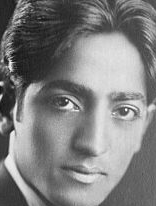
Jiddu Krishnamurti

Still revising the introduction for my translation of Francisco I Madero’s Spiritist Manual of 1911… and the introduction is turning into a book itself… meanwhile, here’s a brief excerpt from a new bit about the Theosophists— it’s the part where I go through Madero’s personal library. (For those of you new to the blog, Francisco I. Madero was the leader of the Mexican 1910 Revolution and President of Mexico 1911-1913. His Spiritist Manual has never before been translated.)

. . . . One book apparently did not belong to Madero: Las últimas treinta vidas de Alcione, Federico Climet Terrer’s 1912 Barcelona translation of Annie Besant and C.W. Leadbeater’s Lives of Alcyone, inscribed to Sara Pérez Vd. de Madero, Habana, Oct 18 1918. (Sara Pérez, Widow of Madero).

Now, as we see in Madero’s own library, Spiritist and Theosophical ideas so overlapped and intertwined, it behooves us to venture a little ways down another rabbit hole for the answer to the question, Who, pray tell, was Alcyone?

Alcyone (and Other Lives) in the 20th Century

Greek answer:A star-nymph, daughter of Atlas and lover of Poseidon.
Literal answer: Jiddu Krishnamurti, a sickly Brahmin boy.
The Theosophists’ answer:  As revealed by the Mahatmas, the vehicle for the Lord Maitreya, the Christ, the World Teacher.

It was C.W. Leadbeater who had discovered the adolescent Krishnamurti playing on a beach in 1909, identifying him as said vehicle by clairvoyant means. Alas, no story of the Theosophical Society gets told without the taint of Leadbeater’s, shall we say, intimate involvement with other young boys. Prior to this, in 1906, after vociferous complaints from parents, Leadbeater was obliged to resign. By 1909, however, his old friend and fellow Initiate before the Mahatmas, and expert on the Bhagavad-Gita, Annie Besant, had taken the reigns of the Theosophical Society and readmitted Leadbeater. In the Theosophical Society’s headquarters in Adyar, together Besant and Leadbeater arranged Krishnamurti’s care and education, and almost immediately, Leadbeater, by psychic means known only to himself, began researching the “Akashic” or astral records, on the lives of “Alcyone,” that is, the previous incarnations of Krishnamurti, in which Annie Besant appeared under the code-name “Heracles,” Leadbeater as “Sirius,” and various other Theosophists under various other names in mind-numbing permutations reaching back to 22,662 B.C. Mary Lutyens, daughter of the Theosphical Society’s benefactress Lady Emily Lutyens, and both childhood friend and biographer of Krishnamurti, in her memoir, To Be Young, recalled of the Lives of Alcyone, “a great deal of heart-burning and snobbery.”

“Are you in the Lives?” Became the question most constantly asked by one Theosophist of another, and, if so, “How closely related have you been to Alcyone?”

At night, by means of their astral bodies, Leadbeater took Krishnamurti to study with “Master Kuthumi,” that “Great White Brother” first introduced to this world by Madame Blavatsky, and in the morning, in his octagonal office, Leadbeater obliged Krishnamurti, whose English and writing skills were what one would expect of a little boy whose first language was Telegu, to record what he could remember of those lessons. Flash forward two decades to 1929, and the world traveling, English-educated World Teacher, venerated Head of Leadbeater and Besant’s creation, the 43,000 member-strong Order of the Star in the East, took the stage at Erde Castle in Holland before 3,000 members and, with a solemn salaam, dissolved that order. Krishnamurti did not deny being whatever they conceived him to be; he said:

“I maintain that Truth is a pathless land, and you cannot approach it by any path whatsoever, by any religion, by any sect… I do not care if you believe I am the World Teacher or not… I do not want you to follow me… You have been accustomed to being told how far you have advanced, what is your spiritual status. How childish! Who but yourself can tell you if you are incorruptible?… You can form other organizations and expect someone else. With that I am not concerned, nor with creating new cages, new decorations for those cages. My only concern is to set men absolutely, unconditionally, free.”

That, as one might guess, signaled the decline (though not the disappearance) of the Theosophical Society, as well as Annie Besant’s health. But fantastically, Krishnamurti’s career, unmoored from official disciples, continued to flourish. Like Teresa Urrea and the Niño Fidencio, Krishnamurti had a serene and childlike quality and an ability to draw and mesmerize crowds, but unlike them, Krishnmurti exuded an urbane polish, and he wrote some 30 books that articulated a philosophy of freedom and that appealed to such diverse figures as physicist David Bohm, writer Aldous Huxley, Indira Gandhi, and the Dalai Lama.

On YouTube, I found an old film of the white-haired Krishnamurti holding forth in a tent in Ojai, California, and what struck me was not anything he said—he sounded halting and vapid to my ears— but the faces of the hundreds of people sitting on the lawn before him, eyes shining, jaws slack. I could not help but think of Niño Fidencio— and the strange power I had seen in Francisco Madero in the films and photographs of his political rallies.

I welcome your courteous comments which, should you feel so moved, you can email to me here.

Why Translate? The Case of the President of Mexico’s Secret Book

Reading Mexico: 
Recommendations for a Book Club of Extra-Curious 
& Adventurous English-Language Readers

Biographers International Interview with C.M. Mayo: 
Strange Spark of the Mexican Revolution

Francisco I. Madero’s Commentary on the Baghavad-Gita (or Bhaghavad-Gita)

One of the most crucial things I discuss in the introduction to my translation of Madero’s Spiritist Manual of 1911 (***UPDATE My book, Metaphysical Odyssey Into the Mexican Revolution, is now available***) is his treatment of the Hindu holy book, the Baghavad-Gita (also spelled Bhagavad-Gita, and with or without the dash and various accents). Madero’s commentary was originally published in the Mexican Spiritist magazine, Helios,Tomo VII, 1912– while he was serving as President of Mexico– and it is reprinted in José Vasconcelo’s Estudios Indostánicos,  of which I found the third edition of 1938. Herewith Vasconcelos’ introduction (in italics), then Madero’s commentary, and finally, in italics again, Vasconcelos’ conclusion. English translation coming ASAP.

(Note that Madero here refers to the warrior Bima, but used Bhima with the added “h” as his pen name for the Spiritist Manual. What was going on with that h, I have no idea. The bold text is as as I found it.)

Ya hemos indicado en los apuntes históricos que el Mahabharatta corresponde al segundo periódo del pensamiento indostánico. No se conoce la fecha del poema, pero por las doctrinas y referencias que contiene, se deduce que es posterior a los Upanishads y probablemente anterior al budismo. El episodio más importante del Mahabharatta es el libro conocido con el nombre Baghavad-Gita. Nada se sabe del autor de la obra sino que se llama Vyasa, un nombre, por lo demás, muy común en la literatura hindú. El poema está escrito en sánscrito.

Comienza con un diálogo entre Arjuna, el jefe de un ejército y Krishna, el dios que lo auxilia en la batalla. Los cuernos de la guerra han anunciado que va a comenzar el combate, las flechas comienzan a volar por el aire, y entonces Arhuja pide a Krishna que le permita ver el ejércit enemigo. Krishna interpone su carro luminoso y por un momento interrupte el combate. Arjuna pasa revista a sus enemigos. Allí esta Bima, su rival, fuerte y rodeado de atrevidos guerreros, acompañado de las tribus y de los mismos parientes y amigos de Arjuna. Al contemplar a todos estos hombres, Arjuna siente que no los odia, y se duele de tener que luchar con ellos;  vacila y pregunta a Krishna: ¿cómo podré yo cambatir contra Bima y Drona, si entre todos los hombres ellos son los más dignos de mi respeto? Preferiré mendigar mi pan por el mundo, antes que ser el asesino de estas gentes… No podría decir si es preferible que nos derrotan o qye nosotros los derrotemos. Pues los enemigos que allí nos esperan, con los pechos llenos de rencor, son los hijos del pueblo de Dhiritarashtra, si si hubieren de perecer por mi mano, yo no desearía vivir… no los combatiré…

Krishna contesta, haciendo ver a Arjuna la futilidad de la vida lo mismo que la imposibilidad de la muerte, la imposibilidad de matar el espíritu, etc. Le hacer ver también que si huye y no combate, el enemigo lo atribuirá a cobardía; en cambio, una vez iniciado el combate, si mueres, le dice Krishna, irás al cielo; y si vences, el mundo será tuyo. En el curso de su disertación, Krishna instruye al guerrero en las doctrinas del yoga activo y en la salvación que se logra mediante las acciones justas y el abandono de los deseos; le expone la doctrina de la reencarnación y de la liberación.

En el capítulo tercero, Krishna sigue su discurso, explicando la salvación que se logra por la ejecución adecuada de las acciones. En el cíatulo cuarto, se habla del conocimiento espiritual.

A partir de este capítulo cuarto, suspendo mis notas, remitiendo a los lectores al admirable texto original, que es muy fácil de obtener; pero quiero cerrar mi capítulo con un comentario que es quizás el primero que se escribió en México, del Baghavad-Gita;  un comentario que procede del extraordinario y nobilísimo espíritu, que enyre nosotros fue apóstol, pensador y presidente mártir, y que conocimos con el nombre terrestre de Francisco I. Madero. Del comentario de Madero posee sólo un fragmento, que dice textualmente:

“Este capítulo (el 4o.) trata de la verdadera devoción, en términos tales que merecen meditarse seriamente, porque demuestran cuán profundas y grandiosas son las enseñanzas del Baghavad-Gita; cuán amplio es su espíritu de tolerancia y cómo concuerda conlas enseñanzas de Jesús, quien consideraba como ley principal el amarnos los unos a los otros. Así el Baghavad-Gita dice en este capítulo, versículo 4, que el principal culto que debe rendirse al Ser Supremo y el camino que él conduce, consiste en refrenar los sentimientos, equilibrando el entendimiento y complaciéndose en el bien de todos los seres.

“Se vé, pues, que el  modo más eficaz de adorar a la divinidad es “complacerse en el bien de todos los seres”, o lo que es lo mismo, amar a nuestros hermanos, como decía Jesús.
“Es indiscutible que también es necesario refrenar y dominar los sentidos, pues de otra manera los deseos y las pasiones nos ofuscan e impiden amar a nuestros semejantes y desear su bien.

“En los versículos 5 y 6 explícase que: “ardua por demás es la tarea de aquel cuya mente se halla fija en lo Inmanifestado”; refiriéndose a la gran dificultad que implica concentrar por completo la mente en lo divino y permanecer en constante meditación o adoración. Y en verdad, cualquiera que haya intendado concentrar su mente en ese sentido, habrá observado cuán pocos son los minutos en que se puede lograr  tal resultado, siendo casi imposible evitar que otros pensamientos vengan a perturbar y distraer la atención.

“Así dice que ese camino está lleno de dificultades, pero en cambio, no es indispensable tal práctica, sino que basta con renunciar en El todas sus acciones y que El constituya el idea supremo, para que lo salve sin tardanza del piélago de a muerte y de la existencia.
“Por renuncia en El de todas sus acciones, debe entenderse que todos nuestros actos deben tener un fin altruísta, un fin bueno; el de servir los designados de la Divinidad, trabajando en cualquier forma por acelerar la evolución de la humanidad y por ayudar a nuestros semejantes.

“Todas las acciones que tengan un fin de tal naturaleza y no busquen recompensa terrenal, sino que se ejecuten con el propósito de servir a la Divinidad, son las que más pesan en su balanza. 

“Los que obran de esta manera, indudablemente consideran a la Divinidad como su ideal supremo, puesto que sus principales aspiraciones consisten en colaborar de acuerdo con sus designios a la realización del grandioso plan Divino.

“En los versículos 8, 9, 10, 11 y 12 vuelven a expresarse las mismas ideas, considerando siempre superior a la renuncia las obras, al conocimiento, la práctica perserverante y a la meditación (Versículo 12).

“El versículo 8 recomienda la concentración de nuestra mente para adorar al Ser Supremo; pero como esto es muy difícil obtenerlo, según acabamos de exponer, entonces el versículo 9 recomienda toda clase de prácticas religiosas, las cuales ayudan a concentrar la atención y a aumentar la devoción. Si aun  esto se dificulta, recomiendo el versículo 10 dedicarse a ejecutar obras por consideración a El tan sólo. Como este concepto parace semejante al que se expresa en el versículo inmediato, consideramos que debe interpretarse en el sentido de: consagrarse al culto de la Divinidad, afiliándose en alguna sociedad u orden religiosa, puesto que un sacerdote de cualquier culto indudablemente se dedica a ejecutar obras por consideración a la Divinidad a cuyo servicio dedica todos sus esfuerzos desde el momento de su consagración.

“Por último, si aun esto no es posible, entonces recomienda refugiarse en El por medio de la Unión Espiritual, y, subyugándose a sí mismo, renunciando por completo al fruto de sus acciones.

“Todo esto puede efectuarse llevando la vida mundana, sin necesidad de recluírse en un claustro, no de abandonar la familia y las ocupaciones ordinarias. Es, por consiguiente, posible llegar al grado máximo de virtud y evolución que puede alcanzar el ser humano, dedicándose a la vida ordinaria, a la profesional, a la agricultura, a los negocios, a la política y a todas las ocupaciones que exige la moderna civilización, así como la constitución de un hogar y de una familia; basta para ello unirse espiritualmente con el Ser Supremo, es decir, llegar al resultado de que todos nuestros actos tengan un fin bueno y útil a la humanidad, o sea, que todos ellos estén en harmonia con el Plan Divino, porque tienden favorecer el bienestar del género humano y su evolución. Para lograr este resultado, es indispensable, como dice el mismo versículo, “subyugarse a sí mismo”, porque de otra manera las pasiones nos impiden tener la serenidad de espíritu y la rectitud necesarias para obrar siempre bien.

“Por último, estando unificados espiritualmente con la Divinidad y habiéndonos subyugado a nosotros mismos, “debemos renunciar al fruto de nuestras acciones”. Ya hemos explicado que por “renunciar al fruto de nuestras acciones” debe entenderse que al ejecutar cualquier acto meritorio no debemos hacerlo en vista de la recompensa que de él esperamos, sino por considerar que tal es nuestro deber y que de esa manera servimos al Ser Supremo: lo cual debe ser para nosotros la principal y la más honda de las aspiraciones. Servir a la Divinidad, convertirnos en agentes de su voluntad, en colaboradores, y buscar como recompensa la satisfacción qie se siente con la conciencia del deber cumplido, con la paz que se disfruta cuando ningún deseo ni pasión nos agita, tal debe ser nuestra aspiración suprema.

“El resto del capítulo expresa la idea de que los hombres de ideas benévolas, compasivos, indiferentes en medio del placer y del dolor, pacientes en las ofensas, contentos con su suerte, constantamente harmonizados dueños de sí mismos, firmes en sus resoluciones, con la mente y el discernimiento fijos únicamente en la Divinidad y devotos en ella, así como aquel que no turba al mundo ni por el mundo se ve turbado, que está libre de las emociones causados por la alegría, la cólera y el temor, etc., son dignos de la estimación, el aprecio y el afecto de la Divinidad.

“También son acreedores a este afecto los que se muestran iguales ante el amigo y el enemigo, indiferentes en el honor y en la ignominia, imperturbables a la alabanza y al vituperio, etc.

“Insistiendo sobre la idea ya expresada anteriormente, afirma que es el objeto de la predelicción del Ser Supremo, aquel que lleno de fe sigue la ley que confiere la inmortalidad (complacerse en el bien de todos los seres y renunciar en la Divinidad todas sus acciones), asimismo al que hace del Ser Supremo el más alto ideal de sus aspiraciones, idea que debe entenderse según la hemos expresado en los comentarios de este capítulo.

“Como se ve, son grandiosas todas las concepciones que encierra el Baghavad-Gita, y está muy lejos de recomendar esas prácticas supersticiosas tan en boga en la mayoría de las religiones, aun de las que actualemente profesan los pueblos civilizados, y, según las cuales se da más importancia a determinadas prácticas religiosas que al cumplimiento del deber, sin considerar que cumpliendo con el deber, es como se favorece en un plano más vasto y extenso el bienestar y progreso de la humanidad.

“Indudablemente un guerrero, que va a la lucha por el bien de sus semejantes, hace un acto más meritorio ante la Divinidad que el sacerdote que se dedica exclusivamente a sus prácticas religiosas ‘, sin unir a la oración la acción. Este sacerdote, si acaso, se limita a tener buenos deseos para la humanidad, si no es que, como acontece generalmente, piensa únicamente en la salvación de su propria alma, y con tal objeto e inspirado en un sentimiento egoísta, se dedica a las prácticas religiosas más extrañas.

“No queremos terminar el comentario de este capítulo dejando inadvertido el versículo 8o. en lo relacionado con la idea panteísta, pues viene a confirmar nuestras constantes observaciones sobre el Baghavad-Gita, y es que en esta obra no tienen cabida las ideas panteístas, contrariamente a las deducciones hechas por investigadores superficiales.

“En este versículo dice: “Fija, pues, tu mente en Mí, penetra en Mí tu entendimiento y sin duda alguna, después de tu muerte, viviras en Mí en las alturas.

“Vivirás en Mí en las alturas”, no significa ir a absorbernos en el Ser Supremo y a formar parte de El mismo, sino que nos acercaremos a El, y llegando a identificarnose con sus designios, viviremos para El y dentro de El; pero siempre conservando nuestra propia individualidad, así como la inmensa y muy respetable distancia que nos separa de Aquél “que con una partícula de Sí mismo dio origen y actividad al Universo entero y sigue existiendo” (capítulo X, versículo 42).

“Por ese motivo, cada uno de nosotros, parte infinitesimal de ese Universo, no puede pretender llegar a ser tan alto como El, que lo creó con una partícula de Sí mismo.

“Nuestro destino es muy glorioso y muy alto el lugar que llegaremos a ocupar entre los que rodean al Ser Supremo y del gobierno del Universo; llegarán nuestras aspiraciones a confundirse con sus designios; pero por más que nos identifiquemos con el plan divino, nunca perderemos nuestro Yo, nunca llegaremos a ser parte del Dios, que no está integrado por millares de seres, sino que es Uno e Indivisible.”

 Impresionante resulta imaginar los pensamientos de Madero cuando llegó a encontrarse en los campos mexicanos, en la situación de Arjuna dispuesto a combatir un ejército de enemigos que no odiaba, pero que era su deber destruír. Venció a esos enemigos, el Arjuna de México, en la noble lid de la fuerza, y después perdonóles con tierno espíritu cristiano; más para ser víctima de Judas, en la más negra y cruel de las tradiciones.

I welcome your courteous comments which, should you feel so moved, you can email to me here.

Ignacio Solares’ “The Orders” in Gargoyle Magazine #72

Why Translate? The Case of the President of Mexico’s Secret Book

My Interview About Francisco Madero a “Classic Reboot” 
on Jeffrey Mishlove’s “New Thinking Allowed”– 
Plus From the Archives: 
A Review of Kripal and Strieber’s The Super Natural 
(and Reflections on Mishlove’s The PK Man)

So How’s the Book Doing? (And how many books have you sold? And what was your print run?)

My amiga the crackerjack memoirist and writing teacher Sara Mansfield Taber has posted an oh-so-true toe-curling but chuckle-worthy blog post over at She Writes: “Writing Is a Humiliation Banquet.”

Sara Mansfield Taber

It reminds me of how gallery owners complain that customers (more often lookyloos) don’t know “gallery etiquette.” It’s the same with nonwriters and writers. Nonwriters usually mean well when they ask a writer, “So how’s the book doing?” Though alas, this is often followed by the more knife-like, “How many books have you sold?

Uyyy doubly rude…

What they don’t realize is that (in most instances) this is akin to asking someone who was just turned down for a long overdue promotion, or maybe even fired, “So how much do you make?” because, as Sara Taber so eloquently points out, the book is almost never doing as well as its author had hoped it would, and for most literary books earnings tend to hover well below the level at which one might cobble together a non-food-stamps-worthy living. Furthermore, publishers report sales with such a long lag, a writer never really knows her overall sales numbers at any given moment.

Herewith some of my favorite replies (and if you’re an author with a book out, may they serve you):

(With a wink): I’m getting away with it… How about you?
(This is thanks to Paul Graybeal of Marfa’s Moonlight Gemstones, by the way.)

(Breathily, Nancy Reaganqesque): Why my dear, that’s like asking a woman her age! How have you been?

(Beaming, ready-to-judo): Oh, great! It’s been such fun! You know, I think everyone should write a book. Do you have a book you’d like to write?

(Shrugging, Jimmy Fallonesque): Well, I haven’t moved full-time onto my yacht– yet. But thanks for asking. How are you?

(Sweetly smiling): Not nearly enough. Would you like to buy one . . . or 6 for your friends?
(Thanks to Julia Bricklin for this one)

(Gleaming stare, revealing teeth): Sooooo verrrrrrrry welllllllll… in fact… my doctor has been able to… reduce my meds… (Continue staring silently for three beats…) Just kidding! How are you?

Notice, the trick is to lob that conversational ball back into their court. Unless you might have something aside from your book to offer them, for instance:

Won-der-fully! Thanks for asking! Oh, and by the way, I’ll be doing an event at the bookstore next Thursday at 6 pm, it would be wonderful if you could come!

Great! Oh, and by the way, if it works for your book group / workshop / class, I’d be delighted to come talk about the book! 

The thing is, I don’t think most people asking these rude questions have any idea they’re being rude; I doubt they care all that much about one’s answer; they’re just asking out of innocent curiosity, to show enthusiasm, usually, and as casually as an acquaintance might ask about your kids (whom they don’t know), or your kitchen remodeling project, or even just chat about the weather (get any of that hail?).

Some who ask the rude question really do care, they do mean well– why, they’re delighted to know a real-live published author! For those folks, the “I’m getting away with it,” or “wonderfully, thanks for asking!” works fine.

But then there are those, usually with a toe in the publishing business, or ambitious to write / publish themselves–and usually they are men– who persist with the outrageous, “What was your print run?” (Yes, this has happened to me several times.)

Well, I say, bless ’em. Because they need blessing. I answer, “You know, I have no idea. I am so busy with my next book… ” and when they insist (yikes, some of them do), “What do you mean, you don’t know what was the print run?” I put on the Scarlett O’Hara:

“Why, golly gee, numbers just go in one ear and out the other.”

Or, to be a little more nose-in-the-air-y:

“Nowadays, you know, it’s almost all POD… print-on-demand.”

When a writer has spent several years working on a book she has more emotion invested in it than the casual reader would guess. So if it’s another writer who is asking and your book is doing splendidly, why rub in the salt? (327,583 as of last Tuesday! Take that!) Or, more likely, since your book isn’t selling anything like Dan Brown’s latest, why make your neighbor (oh, say, like the divorce lawyer with the car wash franchise who is going to write a novel “one day”) view you with head-shaking pity?

It’s NOTB, none of their business, they shouldn’t ask such questions, but they do, so… So what?

Dear writerly reader, why not consider “the question” an opportunity to practice your charmfest of impromptu dialogue writing skills?

why not consider ‘the question’ an opportunity to practice your charmfest of impromptu dialogue writing skills?

But I don’t find writing a “humiliation banquet,” quite the contrary. I am grateful that I have the skill and (most days) focus to write and that, in one way or another, my work finds readers. I’m always happy to see more royalties but I don’t measure my success as a writer by numbers alone. A single  reader who approaches my work in a spirit of respect and intellectual curiosity, and to whom my book makes a meaningful difference, is worth more to me than 10,000 readers who just want a beachside page-turner.

(Bless you all who write beachside page-turners! May you all live happily ever after on your yachts! But I don’t read such books and wouldn’t have the wherewithal to write one, and anyway, even if I had a hundred bagilliwillion bucks, I couldn’t be bothered with a yacht. To start with, I’d have to deal with the yacht dealer, and then I’d have to decide on the floor plan, and then the upholstery, and then engine specifications, and then I’d have to staff it, and then I’d have to insure it… my God, I am falling into a dead snore just thinking about it!)

So how, with book sales presumably well under 327,583 as of last Tuesday, does one make a living as a writer? All I can say is, if you want to make a living writing literary books you’ll need to be (a) wildly lucky (b) incorrigibly persistent (c) exuberantly productive (d) more hard-headed than a rhino in a steel helmet inside a Panzer tank and (e) totally flummoxed by shopping (except for books, of course). And by the way, most literary writers don’t make a living from their books but from teaching, freelancing, editing, and/or other work / income.

The “humiliation banquet” comes with the promotion part… and for that, thank goodness for the vast and ever-growing literature on sports psychology!!

P.S. Check out my Conversations with Other Writers podcast, an interview with Sara Mansfield Taber about Born Under an Assumed Name, her fascinating and beautifully written memoir about growing up with a father who was an undercover CIA agent.

UPDATE: Susan J. Tweit offers this:

“Whenever someone asks me how much money I make from my writing or how many books I’ve sold, I have two responses, one of which I use when I feel like they’re serious and really interested in why anyone would write for a living, and the other of which is designed to flip the question back at them. The first is, ‘My freelance article work, teaching, and speaking make a small but comfortable living. My books are my passion projects, and I write them to change the world, not to earn a living or become famous.’ With this response, I’m inviting the questioner into a conversation about why we do the work we do, and whether our work lives up to the values we profess to hold.

“The second response is for those people who I don’t think are up for a serious conversation: I say, ‘You go first: How much money do you make?’ That usually shuts down the conversation right away. I think people are curious about making art for living, and in my experience from teaching writing workshops for a couple of decades, a lot of men think of writing as a way to earn some income in retirement. Which is so not the point of why I write!”

Q & A with Sara Mansfield Taber, 
Author of Chance Particulars: A Writer’s Field Notebook

Literary Travel Writing: 
Notes on Process and the Digital Revolution

Translating Across the Border

Find out more about
C.M. Mayo’s books, articles, podcasts, and more.

Five Links from “A Dual Inheritance” That Traverse the Globe

Delighted to host the widely-lauded novelist and cyber amiga de Todos Santos, Joanna Hershon, guest-blogging about her novel– pub date yesterday!– A Dual Inheritance (Ballantine Books). Here’s the catalog description of what promises to be fabulous read:

Autumn 1962: Ed Cantowitz and Hugh Shipley meet in their final year at Harvard. Ed is far removed from Hugh’s privileged upbringing, yet his drive and ambition outpace Hugh’s ambivalence about his own life. These two young men form an unlikely friendship, bolstered by a fierce shared desire to transcend their circumstances. But in just a few short years, not only do their paths diverge, but their friendship ends abruptly, with only one of them understanding why. Can a friendship define your view of the world? Spanning from the Cuban Missile Crisis to the present-day stock market collapse, A Dual Inheritance asks this question, as it follows not only these two men, but the complicated women in their vastly different lives. And as Ed and Hugh grow farther and farther apart, they remain uniquely—even surprisingly—connected.

Five Links from A Dual Inheritance that Traverse the Globe
By Joanna Hershon

1) A Dual Inheritance starts in 1962 at Harvard, and this article about an iconic restaurant (and the site of a scene in the novel) and it’s closing, evokes both the place– so international and campus-glamorous– and a sense of nostalgia, which seems appropriately representative of this book.
 
2) This film, The Nuer by Robert Gardner, is the inspiration for Chapter Six. Hugh Shipley graduates from Harvard in 1963 and goes to Africa with a film crew to assist his mentor. It’s there in Ethiopia where his career path changes focus and takes a surprising turn. Writing about a young man on a precipice of his life, in the middle of the bush, so vulnerable to not only the elements, but to his own fragile psyche, was challenging, and while I was writing this chapter, I’d watch this film over and over and revel in its beauty and its otherness

3) My Pinterest board for A Dual Inheritance. What a pleasure it was to dream visually about the worlds of my novel. It didn’t occur to me to even look at Pinterest until long after I was finished writing, when my imaginary worlds were so much more real than any photographs. 

4) Chapter Sixteen is set in Shenzhen, China in the late 1980’s. There’s very little online about this part of the world during this particular time, which was fascinating, in itself. I found a great deal on Chinese delicacies. Here’s a gateway into that culinary world. 

5) Here is a link that’s sure to amaze and inspire. Make sure to spend some time watching the incredible film footage. I went to high school with Dr. Amy Lehman, who happens to be an extraordinary thinker, doctor and leader. She is building a floating health clinic on Lake Tanganyika, which makes up 18 percent of the world’s fresh water supply. The lake’s surrounding communities (spanning four countries – Tanzania, the Democratic Republic of the CongoBurundi, and Zambia) are currently without basic healthcare. Dr. Lehman and her ideas continue to influence and inspire. 

–Joanna Hershon 

Find out more about C.M. Mayo’s books, shorter works, podcasts, and more at www.cmmayo.com.

Why Aren’t There More Readers? A Note on Curiosity, Creativity, and Courage

I live books. I read books every day. I review bookstranslate booksedit books, and write books. I have always had a hard time fathoming why other people don’t shimmer with the same enthusiasm. Perhaps they never developed the habit of reading– it does take some effort to learn, after all; perhaps they simply don’t have a clue about what treasures await them, silently gathering dust upon an infinite number of shelves (both real and digital, pay and free, as in archive.org); or, perhaps they find it too frightening to reach beyond the incuriosity of those around them. (What if they were to arouse some bully? “Hey, Egghead!”)

Of course, many citizens have been gypped– there is really no other word– by their public education system. But over the centuries, and particularly the past two, some of the least privileged, by luck and pluck, have become avid readers and writers. (I speak as a descendant of Irish immigrants.) And indifference and even hostility towards reading and books can be found all across the social spectrum. Some of the wealthiest people, graduates of private schools, don’t have anything beyond a coffee table book and maybe a thriller in their mansions– though, true, some hire decorators who order books by the yard. (One dead giveaway: when the maid rearranges the books by size and no one objects.)

In today’s New York Times David Toscana laments the lack of readers in Mexico and the woeful state of public education. Though I celebrate Mexico’s vibrant and long-standing literary tradition, I have to agree with his sad portrait, alas. And it is not just the less fortunate Mexicans who do not read. When I taught the thesis seminar for seniors at a leading private university in Mexico City, I found the general level of reading and writing skills, shall we say… underwhelming. But why light on Mexicans? Plenty of people in other countries, including my own country, the United States, don’t read. A few years ago, I used to do PEN Writers in the Schools visits in some Washington DC public high schools. In one instance, in their assignment about my collection of short stories, seniors were allowed to draw pictures with crayons instead of writing an essay (I am not kidding). Many graduates of even the finest U.S. colleges don’t read much, either, and oftentimes, in terms of any aesthetic or intellectual nutrition, what they read would be about on par with, say, a Big Mac.

A book is not necessarily expensive. There are public libraries, Internet archives, free Kindles… In Mexico City, I’ve seen street vendors by the metro stations offering scads of used books, many for the price of a glass of orange juice. So why do so many people, whether well off or poor, ignore the riches around them? This is actually a very interesting question. We all do it some way, and not just with books. I don’t pretend to have all the answers. But I believe the future belongs to those with curiosity, creativity, and courage– and anyone with those three attributes, and the opportunity to do so, is more likely than not to end up in a library, either bricks-and-mortar or on-line, and with heartfelt zest.

Toscana writes, “Books give people ambitions, expectations, a sense of dignity.”

I know, I know in my bones, this is true.

Meteor, Influences, Ambiance

So How’s the Book Doing? (And how many copies have you sold? And what was your print run?)

Notes on Poultney Bigelow,
Author, World Traveler, and Pioneer Editor of
“Outing: An Illustrated Monthly Magazine of Recreation”

Find out more about
C.M. Mayo’s books, articles, podcasts, and more.

Ingo Swann, Bon Voyage

This morning Ingo Swann passed away after a long illness. I never met Ingo Swann but knew many people who had and perchance I crossed paths with him in the early 70s without realizing it in Palo Alto, where I went to high school and where my grandfather, chemist Frank R. Mayo, was at Stanford Research Institute when Ingo was there formulating the protocols for controlled remote viewing. Ingo’s books– already highly prized collector’s items– are genuine head-shakers. I think it would difficult for the average educated person to take them seriously, for they’re written in a confoundingly baroque style and filled with such fantastic stories and assertions, they seem to orbit a galaxy of their own. And yet, over a period of several years in the past decade, in five of Lyn Buchanan’s workshops, I learned the protocols for CRV, most of which, though later modified, were originally developed by Ingo Swann. I have two words for them: breathtaking genius. And though CRV has its practical applications, for me the value of it isn’t so much about being able to retrieve information in whatever time and space, it’s opening windows and doors and cubbyholes into one’s own mind, into exploring consciousness itself. We are, we human beings, so much more than we appear in the material world, so vastly more than mainstream Western culture yet recognizes, and Ingo Swann, eccentric as he may have been, was a consciousness pioneer in the grandest, most courageous tradition.

Remembering Ann L. McLaughlin

Great Power in One: Miss Charles Emily Wilson

On Seeing as an Artist or, Five Techniques for a Journey to Einfühlung